
IU study: More women wanted in political positions of power – structural hurdles remain
Results of the representative study "Women and Men in Politics" by IU International University of Applied Sciences show clear gender stereotypes and voting preferences in Germany and the USA
Please insert a summary (as short as possible - e.g. like the SEO description without Call-to-action) - max. 250 characters as orientation.
- The majority of respondents believe that the world would be better governed if more women were represented in positions of political power.
- Most respondents state that men in politics tend to be perceived as assertive in difficult situations, while women tend to be perceived as emotional in similar situations.
- In Germany, politicians are expected above all to show integrity and honesty, followed by expertise in political and economic issues, crisis competence and strong leadership.
Erfurt, Germany, 26 November 2024. More women should be in positions of political power – this view is held equally in Germany and the USA. According to a recent study by IU International University of Applied Sciences (IU), 63.5 per cent of respondents in Germany are convinced that the world would be better governed if more women were represented in political leadership roles. However, despite the desire for more women in politics, structural hurdles are visible: 69.8 per cent of respondents in Germany believe that men are more likely to be elected - even when equally or better qualified women are available.
A similar picture emerges in the USA, as the study results from before the most recent presidential election show: 69.2 per cent of respondents agreed completely or somewhat that the world would be better governed if more women were in positions of power. At the same time, 76.3 per cent of respondents in the USA believe that men have an advantage, even if women have comparable or even better qualifications.
Gender roles: Men assertive, women emotional?
The IU study shows that stereotypical role models are still deeply rooted in the perception of politicians - both in Germany and in the USA. In Germany, 73.5 per cent of respondents agree with the statement that men tend to be perceived as assertive in difficult situations. At the same time, women are more likely to be perceived as emotional in similar situations (69.3 per cent).
The picture is even clearer in the USA, where 80.8 per cent of respondents agree completely or somewhat that men in politics tend to be perceived as assertive in difficult situations.
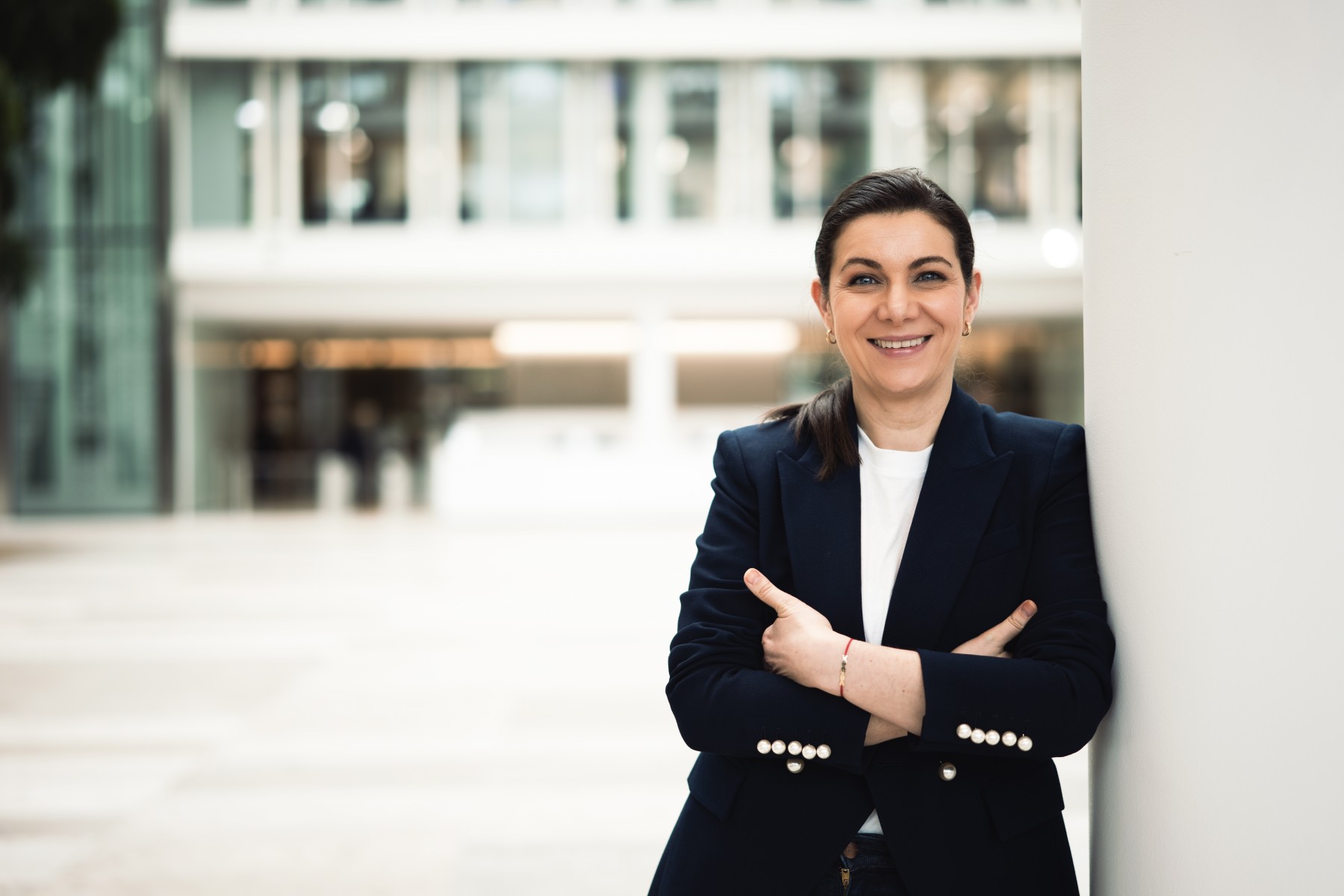
"These results illustrate how deeply rooted gender stereotypes characterise the perception of political leaders. They not only influence how politicians are perceived by the public but also have an impact on women's careers and opportunities to rise to leadership positions. Prejudices such as the image of the assertive man and the emotional woman mean that women are often passed over despite having equal or even better qualifications. These deeply rooted stereotypes not only make individual advancement more difficult but also hinder social progress towards a fairer and more diverse political landscape," says Prof. Dr Alexandra Wuttig, chancellor of IU International University of Applied Sciences and professor of innovation and entrepreneurship.
Expectations of political leadership in Germany
In addition to gender-specific aspects, clear values and competences are at the centre of expectations of politicians. In Germany, integrity and honesty (38.0 per cent) are the most frequently mentioned characteristics, followed by expertise in political and economic issues (35.9 per cent), crisis competence (34.5 per cent) and leadership skills (31.4 per cent).
Diversity in politics – a look at Germany
The results also confirm that diversity in political leadership is perceived as an advantage: 66.8 per cent of respondents in Germany see advantages in a diverse leadership that takes aspects such as gender, age and origin into account.
"The study underlines the German population's desire for value-oriented and more diverse politics," emphasises Wuttig, adding: "At the same time, it shows that stereotypical role models still represent a barrier that women in political leadership positions need to overcome."
About the study
The study "Women and men in politics" by IU International University of Applied Sciences examines attitudes towards equality and diversity in political leadership positions as well as the perception of gender-specific role models in Germany and the USA. For the study, IU surveyed 1,200 people between the ages of 16 and 65 in Germany and the USA respectively, representative of the German and US population by age, gender* and federal state or Census Region (and Divisions). The survey was conducted from 25.09.2024 to 03.10.2024.
About the expert
Alexandra Wuttig is chancellor of the IU International University of Applied Sciences and professor of entrepreneurship, innovation and law in the IU distance learning programme. She is an expert in political and social equality. In addition to her duties at IU, she is committed to equality for women and is co-founder of several start-ups.
*Although gender requires more than a binary classification into female and male, the data currently available for such an analysis is limited. In general, the numbers are too small to allow a breakdown by additional variables. Therefore, gender is only considered in a binary system in this study.
With over 120,000 students, IU International University of Applied Sciences (IU) is the largest university in Germany. The private, state-recognised educational institution, based in Erfurt, began teaching in 2000 and now has 24 campuses as well as a virtual campus. IU stands for maximum flexibility in study: whether through dual study, distance learning or on campus – students from over 160 nations tailor their educational path to suit their individual circumstances. With more than 200 degree programmes at bachelor’s, master’s and MBA level, IU imparts practical skills. Innovative learning concepts foster targeted, future-proof skills for an increasingly AI-driven world of work. A modern, digitally supported learning environment and the use of artificial intelligence enable effective, personalised learning. As a pioneer in this field, IU has developed its own digital learning companion, ‘Syntea’, which has been in use since 2023. A network of over 15,000 companies – including Motel One, Vodafone, AWO and Deutsche Bahn – makes IU a strong partner in the training of skilled workers and consistently links academic teaching with practical experience. Further information at: iu.org
Contact

|
IU International University of Applied Sciences Press Department |