
More educational opportunities through flexible study programmes
Survey shows: Private universities are expanding access to education
The representative “University Experience Study 2026” shows: Private universities are expanding access to education. See more results!
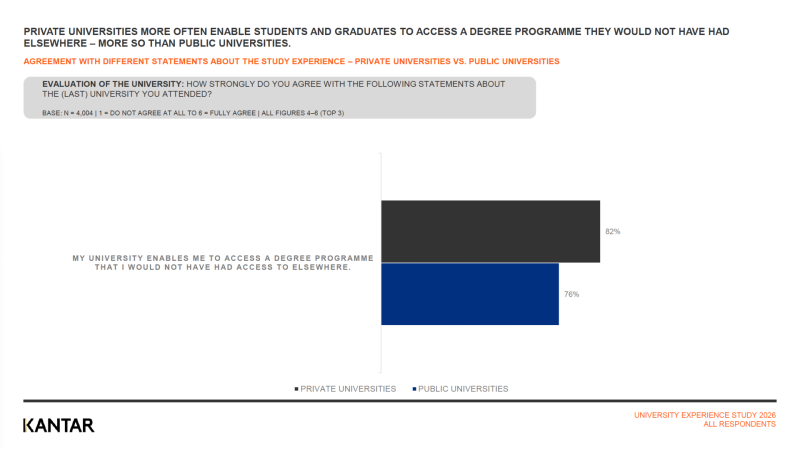
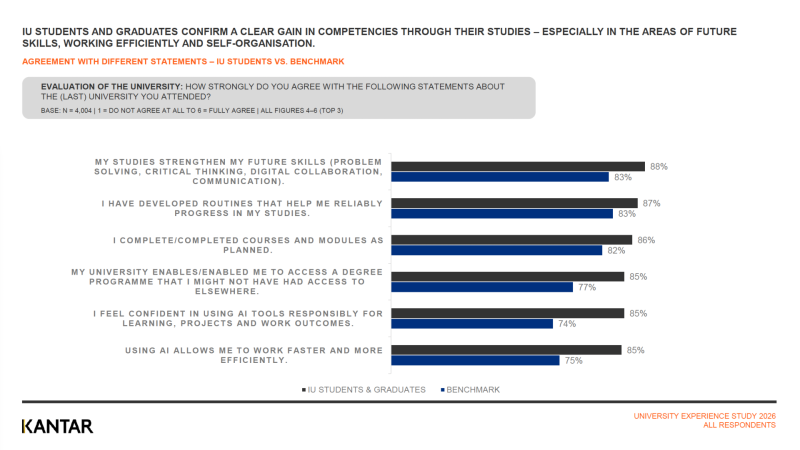
Erfurt, 28 September 2026. Private universities open up educational opportunities for many students that would otherwise have remained out of reach. This was the finding of the representative “University Experience Study 2026”. 82 per cent of all students and graduates from private universities surveyed stated that their university had enabled them to undertake a course of study that they would not have been able to undertake elsewhere. Among respondents from public universities, the figure is 76 per cent. At IU International University of Applied Sciences (IU), this figure stands at 85 per cent (benchmark: 77 per cent). Over 4,000 students and graduates were surveyed by Kantar Profiles on behalf of IU International University of Applied Sciences (IU).
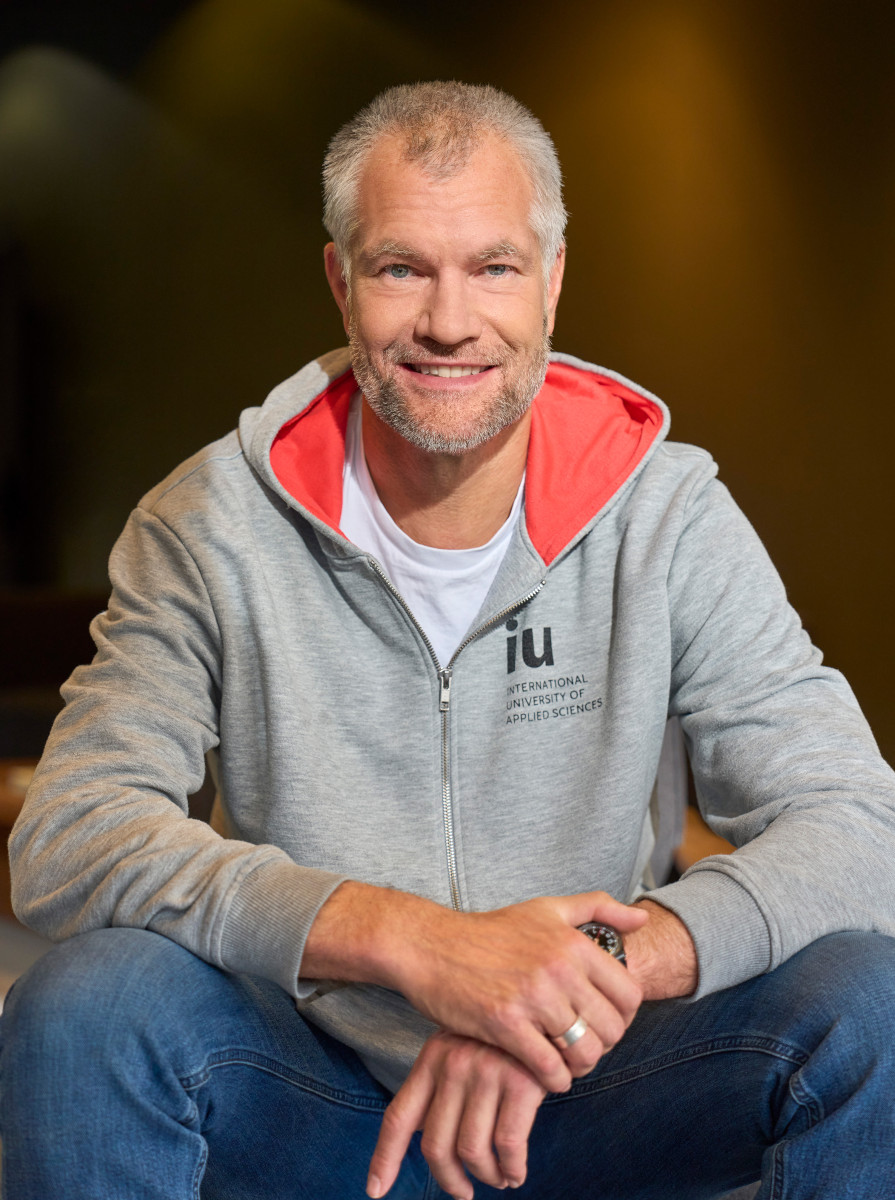
“Educational equity today is not just about whether someone is allowed to study – but whether people can realistically integrate a degree programme into their lives,” says Dr Sven Schütt, CEO of IU International University of Applied Sciences. “This requires programmes that suit different life circumstances – for example, for working people, those with family responsibilities or first-time university students.”
At IU, for example, around 70 per cent of students come from non-academic backgrounds¹. Around two-thirds have a part-time job alongside their distance-learning programme², and over a quarter of first-year students state that they have children living in their household³. “We create opportunities for people who would otherwise have had no chance of studying – for example, by offering part-time distance-learning programmes or financial support for students from non-academic backgrounds,” explains Schütt. “The latest survey shows that this is well received.”
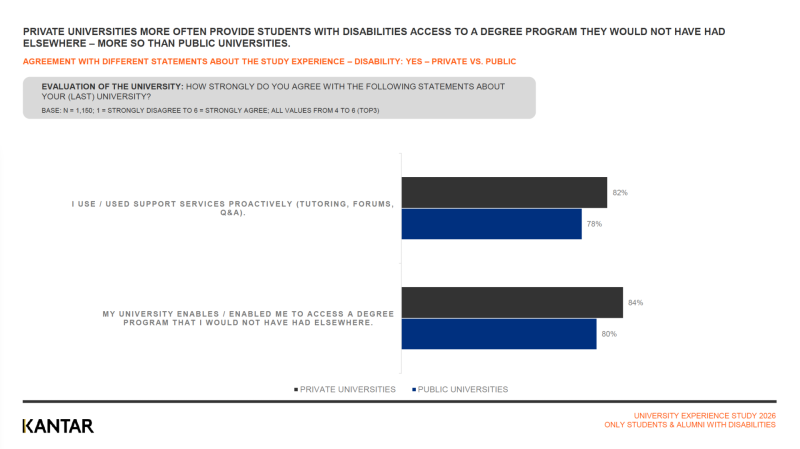
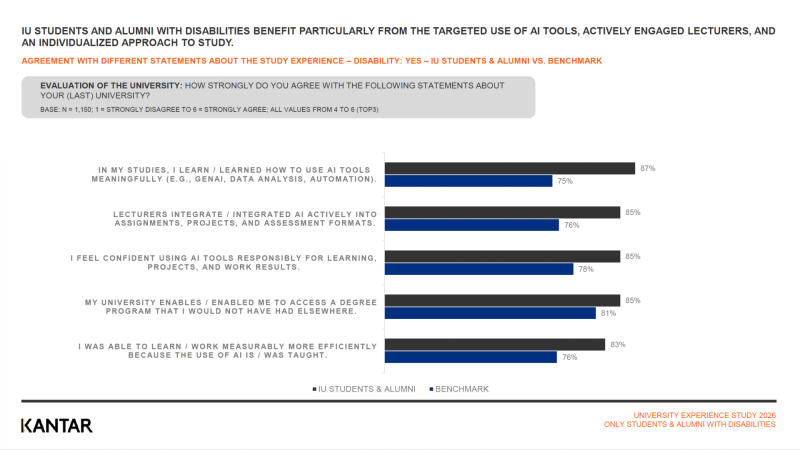
The survey makes it clear that private universities play a particularly important role for people who often have to overcome additional hurdles on their path to higher education. For example, 84 per cent of respondents who state that they live with a disability say that their private university has enabled them to access higher education in a way they would not have been able to elsewhere (public universities: 80 per cent). At IU, 85 per cent agree with this (benchmark: 81 per cent).
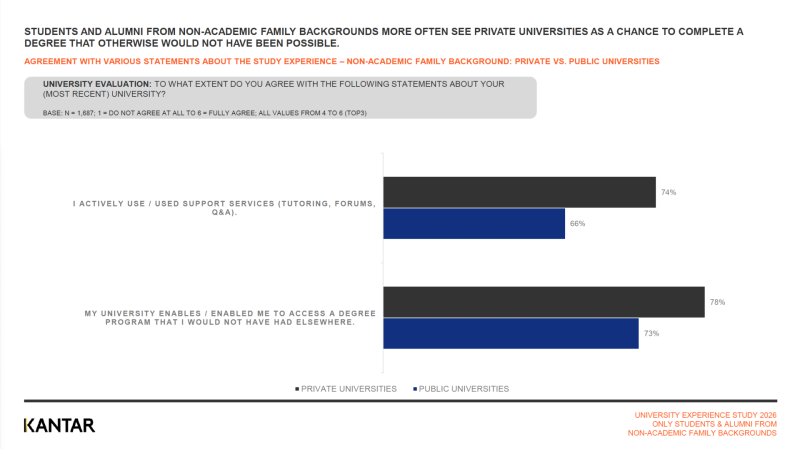
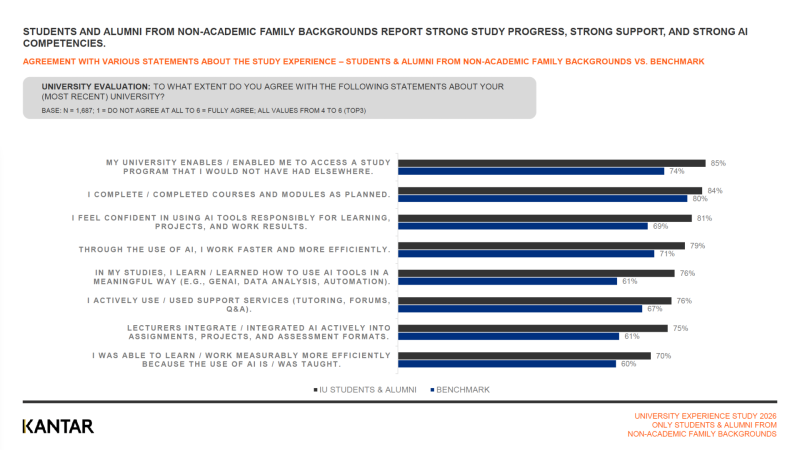
The picture is similar among respondents from non-academic backgrounds, with almost eight in ten (78 per cent) stating that their private university had given them the opportunity to study. At public universities, 73 per cent say the same. Among students and graduates of the IU from non-academic backgrounds, this figure stands at 85 per cent (benchmark: 74 per cent).
See figures 1 - 6 below
Support and personalised guidance for greater equality of opportunity
The study shows that private universities in particular offer added value to those who wish to study independently of time and location and who value individuality.
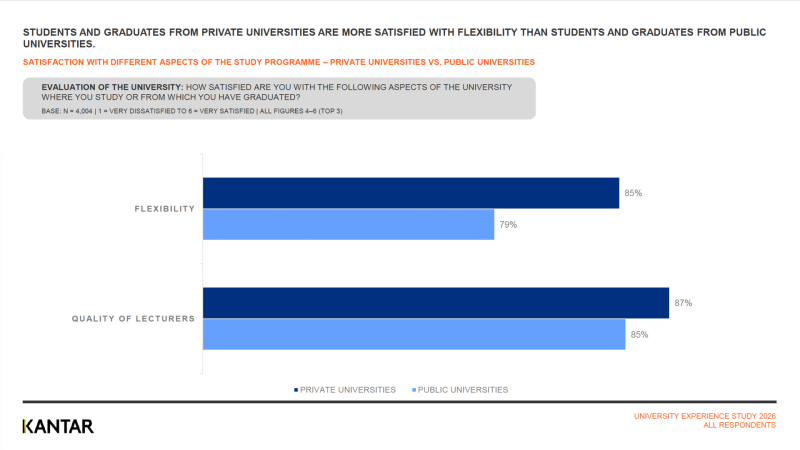
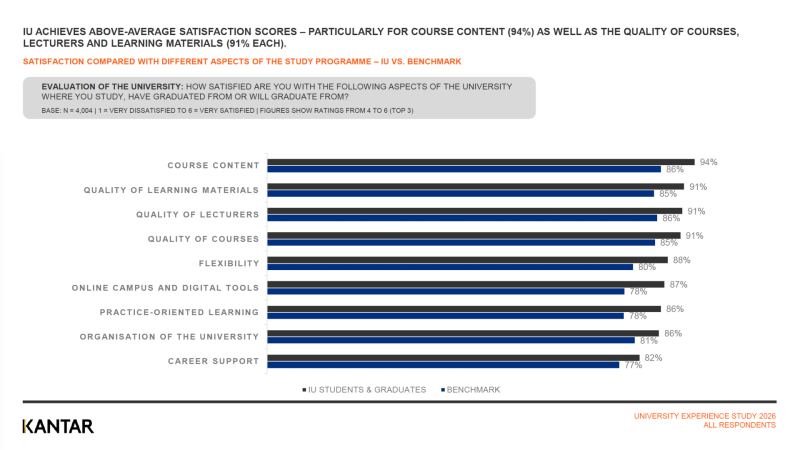
85 per cent of respondents from private universities are satisfied with the flexibility of their degree programme, compared with 79 per cent at public universities. Among IU respondents, almost nine in ten (88 per cent) rate the flexibility of their studies positively (benchmark: 80 per cent).
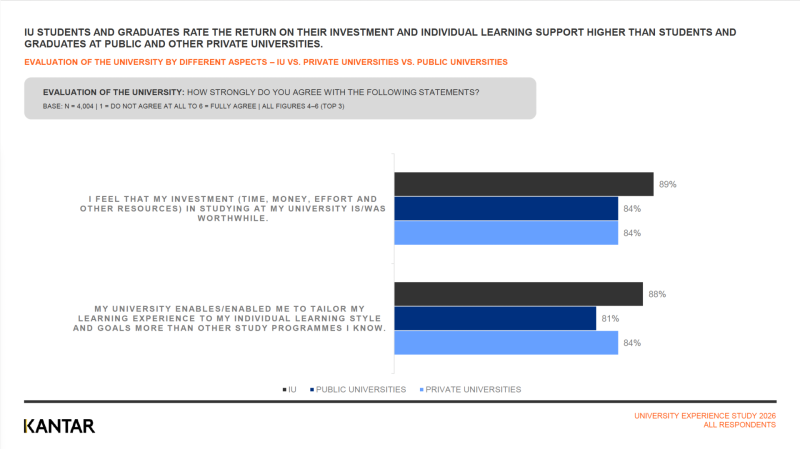
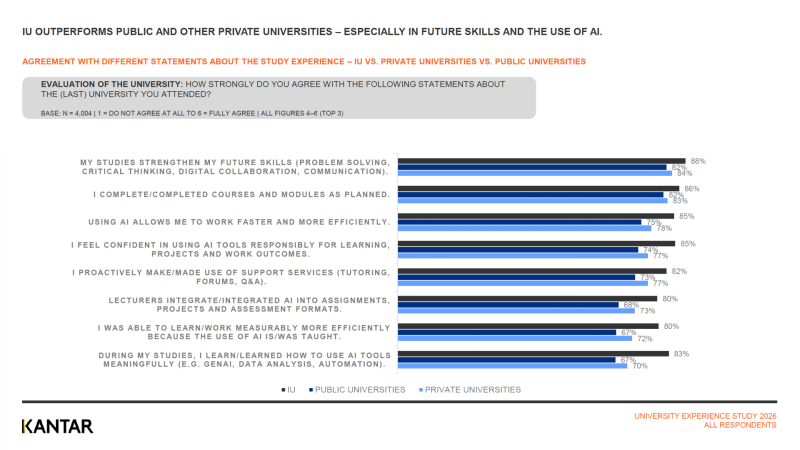
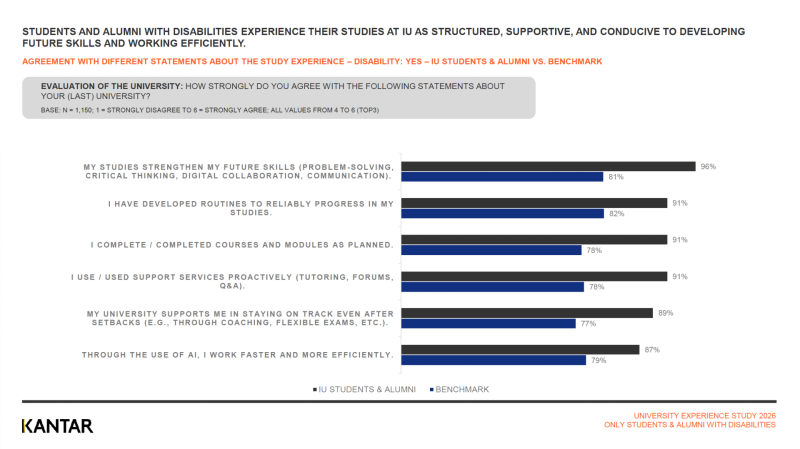
Furthermore, 88 per cent of IU respondents say that, through IU, they can or were able to tailor their learning experiences more closely to their individual learning style and goals than with other study programmes they are familiar with (pulic universities: 81 per cent, private universities (excl. IU): 84 per cent). Support services are also in high demand: 82 per cent of IU students and alumni proactively use formats such as tutorials (public universities: 73 per cent, private universities (excl. IU): 77 per cent). Among IU respondents with disabilities, 91 per cent make use of these services (benchmark: 78 per cent), and among IU respondents from non-academic backgrounds, the figure is just over three-quarters (IU: 76 per cent vs. benchmark: 67 per cent).
“For access to education to be meaningful not just in theory but in practice, more is needed than simply gaining a place at university. Educational equity is achieved where degree programmes are relevant to the labour market, supportive and flexible – and where students can tailor their studies to their individual goals and life circumstances,” says Schütt, summarising the findings of the “University Experience Study 2026”.
See figures 7 - 11 below
ABOUT THE SURVEY
The survey was conducted by Kantar Profiles between 27 August and 20 October 2025. A total of 4,004 students and graduates from public and private universities were surveyed, including 1,597 alumni, representative in terms of age and gender. The target group was alumni from the last five years, students and university dropouts. The survey was commissioned by IU International University from Kantar Profiles. The data was collected independently by Kantar Profiles in accordance with internal quality standards.
Methodology:
To ensure the best possible comparability between universities, three different comparisons were chosen: a) Comparison of ‘public university vs. private university (excl. IU) vs. IU’ and b) ‘IU vs. benchmark’ and c) Public vs. private universities: In a), IU is compared with public and private universities. Individuals who study or have studied at IU are considered separately and are not assigned to private universities. In IU vs. benchmark (b), public and private universities are combined into one cohort and compared with IU students and alumni. In c), all public and private universities (including IU) are combined into one group.
ABOUT THE NEW STUDENT SURVEY
Since 2024, the New Student Survey has been sent out regularly to all new students commencing a dual or distance-learning programme at IU International University. In addition to demographic details, the survey asks, for example, about students’ motivation for studying, their chosen subjects and their professional backgrounds. In September 2026, a total of n = 3,830 first-year students took part in and completed the survey, including n = 3,530 distance learners (as at 10 September 2026).
[1] [3] IU New Student Survey, first-year students on distance-learning and dual study programmes, survey period 2024 to 2026, as at September 2026, n = 3,830.
[2] IU New Student Survey, first-year distance learning students — this question is only asked of distance learning students; survey period: 2024 to 2026; as at September 2026; n = 3,530.
With nearly 130,000 students, IU International University of Applied Sciences (IU) is the largest university in Germany. The private, state-recognised educational institution, based in Erfurt, began teaching in 2000 and now has 37 campuses. IU stands for maximum flexibility in study: whether through dual study, distance learning or on campus – students from over 160 nations tailor their educational path to suit their individual circumstances. With more than 200 degree programmes at bachelor’s, master’s and MBA level, IU imparts practical skills. Innovative learning concepts foster targeted, future-proof skills for an increasingly AI-driven world of work. A modern, digitally supported learning environment and the use of artificial intelligence enable effective, personalised learning. As a pioneer in this field, IU has developed its own digital learning companion, ‘Syntea’, which has been in use since 2023. A network of over 15,000 companies – including Motel One, Vodafone, AWO and Deutsche Bahn – makes IU a strong partner in the training of skilled workers and consistently links academic teaching with practical experience. Further information at: iu.org
Contact

|
IU International University of Applied Sciences Press Department |