
Kira Liebe receives IU Diversity Award 2026 for her work on femicides and patriarchal violence
IU graduate examines femicides in Leipzig, highlighting areas for action in violence prevention and social workn
IU graduate examines femicide in Leipzig and identifies areas for action in protecting people from violence and in social work.
Leipzig, 6 November 2026. 308 girls and women were killed in Germany in 2024 – according to the latest report by the Federal Criminal Police Office on gender-based crimes against women. There is still no nationwide police definition of the term “femicide”. This is precisely the issue addressed by the work for which Leipzig resident Kira Liebe has received an award: the 23-year-old dedicated her bachelor’s thesis to the topic “Femicide as an expression of patriarchal violence – risk factors, media representations and implications for violence prevention in social work, using Leipzig as a case study” as part of her BA in Social Work at IU International University of Applied Sciences. She received the IU Diversity Award 2026 for her work. The award is presented by IU twice a year and recognises outstanding theses that explore diversity, equal opportunities and social participation in a well-researched and practical way.
“Kira Liebe succeeds in moving a highly charged social issue beyond the examination of individual cases and making its structural causes visible,” says Ariane Weber, a member of the Equality Office at IU International University of Applied Sciences and project lead for the IU Diversity Award. “Her work combines academic rigour with practical approaches and shows where social work can take action to prevent violence. Particularly valuable is her perspective on women who are often not adequately considered in existing support services.”
Focus on structural causes
In her bachelor’s thesis, Liebe examines how gender-based violence is connected to social hierarchies, stereotypical gender norms and institutional shortcomings. Her intersectional perspective shows how different experiences of discrimination and disadvantage can affect women’s vulnerability to violence.
The work goes beyond theoretical analysis. Liebe uses cases from Leipzig to explore the issue, focusing in particular on the role of social work in preventing violence.
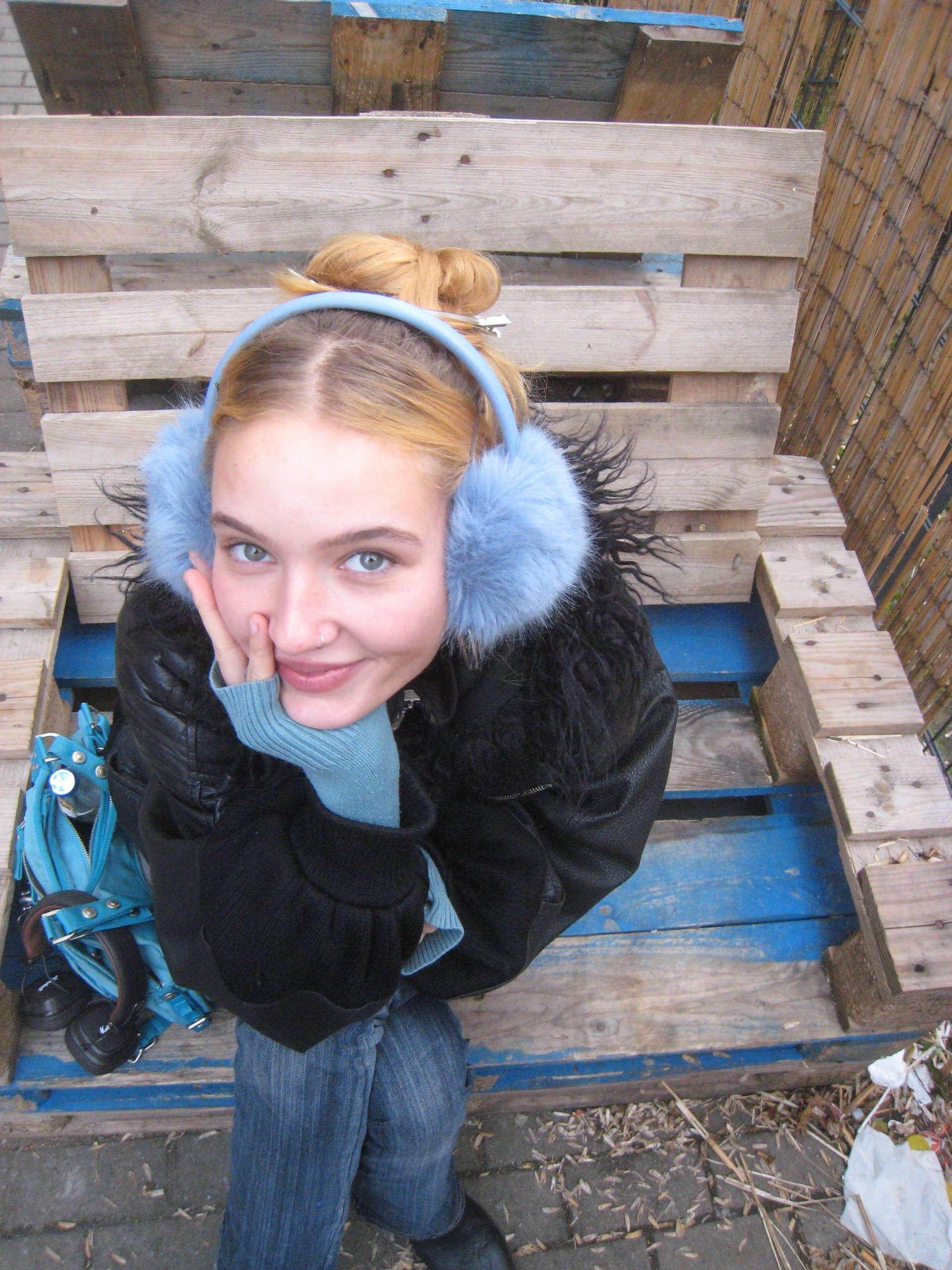
“Femicide is the end of a long chain – and social work could intervene at many points along that chain, if the structures were in place,” says Liebe.
One key finding of the study is that protection plans and shelters need to be further developed. Liebe was particularly struck by the fact that protecting women from violence often also means protecting children – support services for affected children should therefore be given greater consideration and expanded. She also criticises the fact that many refugee women are unable to access women’s refuges or other shelters because of residence requirements.
From undergraduate dissertation to practice
Kira Liebe does not intend to leave it at academic study. She is currently exploring the findings of her undergraduate dissertation in greater depth in her master’s thesis on the Practice Development and Research in Social Work degree programme at HTWK Leipzig, which she chose primarily because of its strong focus on research. She hopes to undertake her next placement at a women’s refuge, with the aim of working there long term and supporting women and children.
Alongside her studies, Liebe works in a bar and volunteers in child and youth services. Her interest in the subject grew out of her commitment to women’s rights and equality. It also has personal significance for her: she was influenced by many women who played important roles in her life during her childhood and adolescence.
Flexible study as a prerequisite
For Kira Liebe, studying social work while remaining in Leipzig would have been hardly possible by the traditional route: with a grade requirement of 1.0, securing a place at a local university was not a realistic option for her. IU’s flexible, digitally supported study model enabled her to combine her preferred course of study with work and volunteering.
“At what other university could I sit my exams at 3 am or from abroad?” says Liebe. She says that the material on psychology and sociology in particular helped her develop her research topic.
IU as Germany’s largest academic training provider for social work
IU International University of Applied Sciences currently educates around 30,000 people in health and social care, making it the largest academic training provider in this field. Through distance learning (bachelor’s, master’s, MBA), through dual study programmes and through professional development courses at the IU Academy, those interested can gain or develop qualifications for a wide range of careers in the social sector.
Event notice: Queer lecture series running since 15 October
How social work can address discrimination is also the subject of IU’s nationwide “Queer Lecture Series”. Since 15 October 2026, experts from academia, politics and professional practice have been discussing queer realities and the professional responsibilities of social work in five free online lectures running until early January. No registration is required, and everyone is welcome to attend. Find out more at: https://www.iu.de/news/queerfeindlichkeit-unter-druck-begegnen-iu-setzt-queere-ringvorlesung-ab-15-oktober-fort/
About the IU Diversity Award
IU International University of Applied Sciences has presented the IU Diversity Award twice a year since 2018. It recognises undergraduate and master’s theses by IU students that explore diversity, equality and social participation from an academic perspective. The jury consists of a ten-member team of staff from various departments. The award carries a prize of €500 and helps raise public awareness of diversity research.
Most recently, Jenny Pabst from Hamburg was recognised for her guidelines for inclusive practice in early years settings.
Further information on equality and diversity at IU: https://www.iu.de/hochschule/diversity-und-gleichstellung/
With over 120,000 students, IU International University of Applied Sciences (IU) is the largest university in Germany. The private, state-recognised educational institution, based in Erfurt, began teaching in 2000 and now has 24 campuses as well as a virtual campus. IU stands for maximum flexibility in study: whether through dual study, distance learning or on campus – students from over 160 nations tailor their educational path to suit their individual circumstances. With more than 200 degree programmes at bachelor’s, master’s and MBA level, IU imparts practical skills. Innovative learning concepts foster targeted, future-proof skills for an increasingly AI-driven world of work. A modern, digitally supported learning environment and the use of artificial intelligence enable effective, personalised learning. As a pioneer in this field, IU has developed its own digital learning companion, ‘Syntea’, which has been in use since 2023. A network of over 15,000 companies – including Motel One, Vodafone, AWO and Deutsche Bahn – makes IU a strong partner in the training of skilled workers and consistently links academic teaching with practical experience. Further information at: iu.org
Contact

|
IU International University of Applied Sciences Press Department |