
Recognition for Volunteer Work: AI-based PR Assistant to Boost Visibility
The project Comms4Good conducted a study to explore how non-profit organisations envision their public relations work and what they need. Based on these findings, a virtual PR assistant was developed, which organisations can use free of charge.
The project Comms4Good conducted a study to explore how non-profit organisations envision their public relations work and what they need to implement it effectively. Based on these findings, a virtual PR assistant was developed, which any organisation in any community can use free of charge.
Erfurt, 17 December 2024. Whether it’s a fire brigade, tennis club, arts group, or nature conservation organisation – many people engaged in voluntary work feel they don’t receive enough recognition. However, board members and presidents of these organisations often lack the time or expertise in public relations.

“The goal of our research project is to make the contributions of non-profit organisations in Germany more visible,” says Prof. Dr Josef Arweck, the initiator of Comms4Good and Professor for Media Management at IU International University of Applied Sciences. “The results of our survey of nearly 1,300 participants not only highlight the status quo but also form the basis for a practical tool that enables even those without prior knowledge to conduct professional communication. The result is the prototype of an AI-based PR assistant, which is available free of charge to support the public relations efforts of non-profit organisations.”
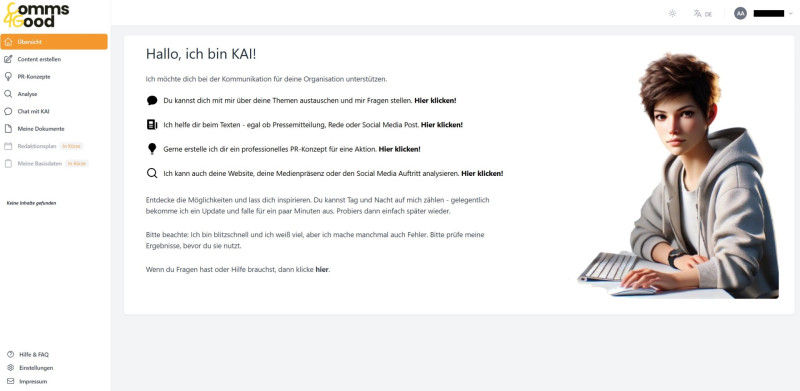
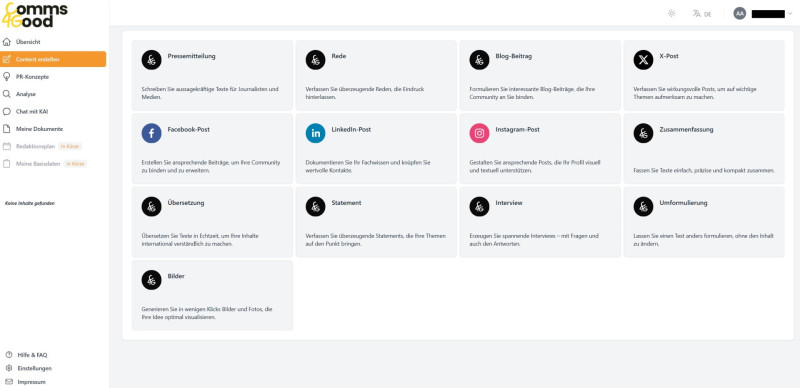
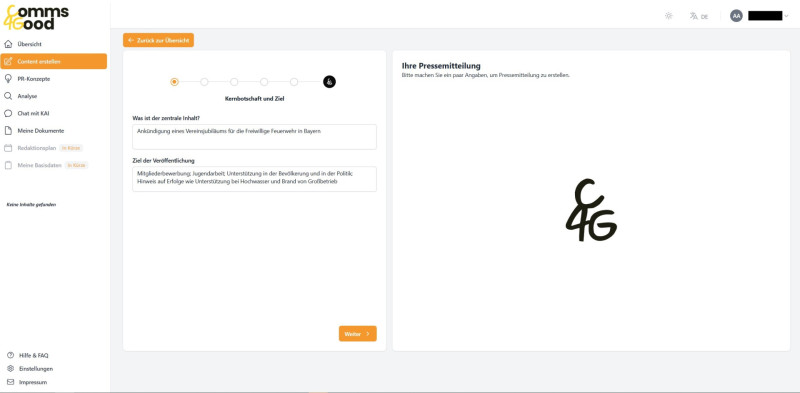
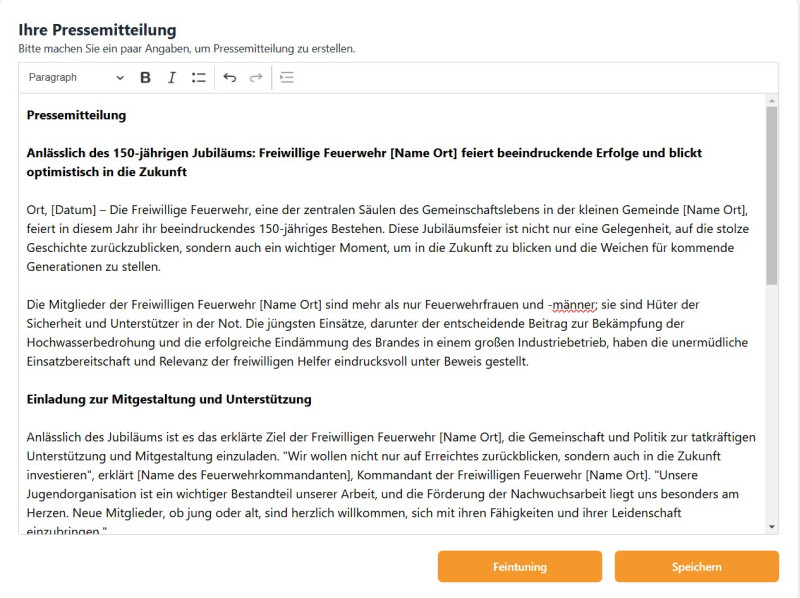
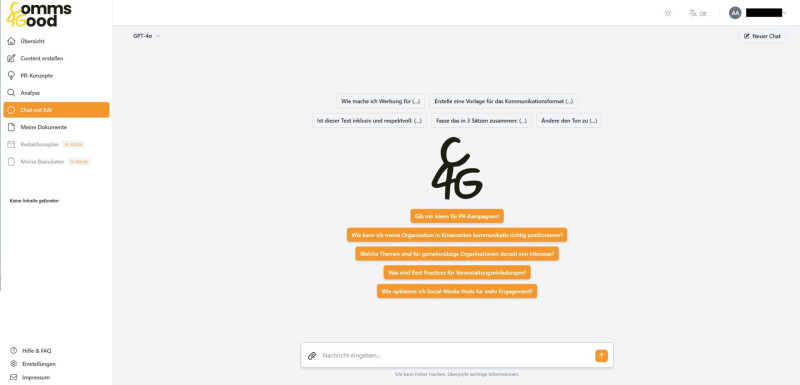
The PR assistant aids communication by helping draft all kinds of texts and even develop PR concepts. A chat function allows for conversations and targeted questions. The tool is GDPR-compliant, does not use input data for training purposes, and does not require prior knowledge of prompting. Most importantly, it has an "NPO mindset" (Non-Profit Organisation), offering an understanding of the specific needs of its target group.
Non-profit organisations seek visibility above all
The primary communication goals identified are “increasing public visibility” (88%) and “informing the public” (80%). According to the survey, organisations most commonly communicate for planned events (93%) or to report on past events (84%). Around two-thirds (65%) use communication to highlight the impact of their organisation or showcase their achievements (60%). Overall, public relations efforts rarely appear to be strategically planned, which is likely due to limited resources, unclear responsibilities, or inadequate structures.
Non-profit organisations use various communication channels, including their own websites (96%), events, lectures, workshops, or panel discussions (90%), personal contacts (88%), social media (86%), coverage in traditional media (72%), and messenger services like WhatsApp and Signal (45%).
What an AI tool should offer non-profit organisations
The study identified key features that a new AI tool should have to be suitable for the communication needs of non-profit organisations. The top requirements include free availability (89%), the ability to “quickly learn the organisation’s language” (88%), and providing “suggestions for meaningful communication strategies” (80%). Additionally, 78% of respondents want a tool that anyone can use without training.
Respondents would most prefer to use the AI tool for social media management, text revisions, analysing public relations efforts, and converting texts into simplified language.
Clear majority sees potential for professional communication with AI
The survey revealed a high level of openness: 69% of respondents welcomed the use of AI in their organisations, while only 15% were firmly opposed, and 16% were undecided. Nearly half see potential in AI for attracting new members and generating donations; about one-fifth remain undecided, while a third see no benefit from AI in these areas.
Many organisations hope AI will enhance their communication efforts and effectiveness. More than two-thirds (72%) believe they could communicate more professionally with AI, and 81% expect more efficient communication. Only 14% and 10%, respectively, disagreed, while 15% and 10% were undecided.
Non-profit organisations across Germany can use the virtual PR assistant.
Its free usage is limited to 15,000 words per month, equivalent to approximately 50 A4 pages.
ABOUT COMMS4GOOD (C4G)
C4G is an initiative of IU International University of Applied Sciences, Phineo gAG and Producer Media UG. The research project is funded by the Federal Ministry of Labour and Social Affairs as part of the Civic Innovation Platform. In summer/autumn 2024, 1,272 representatives of non-profit organisations from all over Germany took part in the online survey, 814 of whom completed the questionnaire in full; the study was supplemented by qualitative guided interviews. Representatives of registered associations (69 percent), non-profit corporations (16 percent), foundations (9 percent) and non-profit organizations without a legal form (3 percent) took part. They come from all areas – but one focus is on "education and upbringing" (45 percent), followed by "social services" (27 percent). The survey was based on 22 interviews in spring 2024 with representatives of 15 associations, 5 foundations, 2 non-profit corporations, representing a total of organizations with membership numbers between 18 and 55,000. The study paints a comprehensive picture of the current public relations work of non-profit organizations in Germany.
With over 120,000 students, IU International University of Applied Sciences (IU) is the largest university in Germany. The private, state-recognised educational institution, based in Erfurt, began teaching in 2000 and now has 24 campuses as well as a virtual campus. IU stands for maximum flexibility in study: whether through dual study, distance learning or on campus – students from over 160 nations tailor their educational path to suit their individual circumstances. With more than 200 degree programmes at bachelor’s, master’s and MBA level, IU imparts practical skills. Innovative learning concepts foster targeted, future-proof skills for an increasingly AI-driven world of work. A modern, digitally supported learning environment and the use of artificial intelligence enable effective, personalised learning. As a pioneer in this field, IU has developed its own digital learning companion, ‘Syntea’, which has been in use since 2023. A network of over 15,000 companies – including Motel One, Vodafone, AWO and Deutsche Bahn – makes IU a strong partner in the training of skilled workers and consistently links academic teaching with practical experience. Further information at: iu.org
Contact

|
IU International University of Applied Sciences Press Department |