
A representative study shows that private universities score highly for their practical relevance
A representative study shows that private universities score particularly highly in terms of practical focus, career support and quality.
- Graduates and students at private universities are satisfied with the strong labour market relevance and quality of teaching.
- Regardless of the type of university, respondents agree that studying pays off (public and private universities excl. IU: 84 per cent each, IU: 91 per cent).
- “Especially in a tight labour market, high-quality education and practical future skills determine who gets a job,” says Dr Sven Schütt, CEO of IU International University of Applied Sciences.
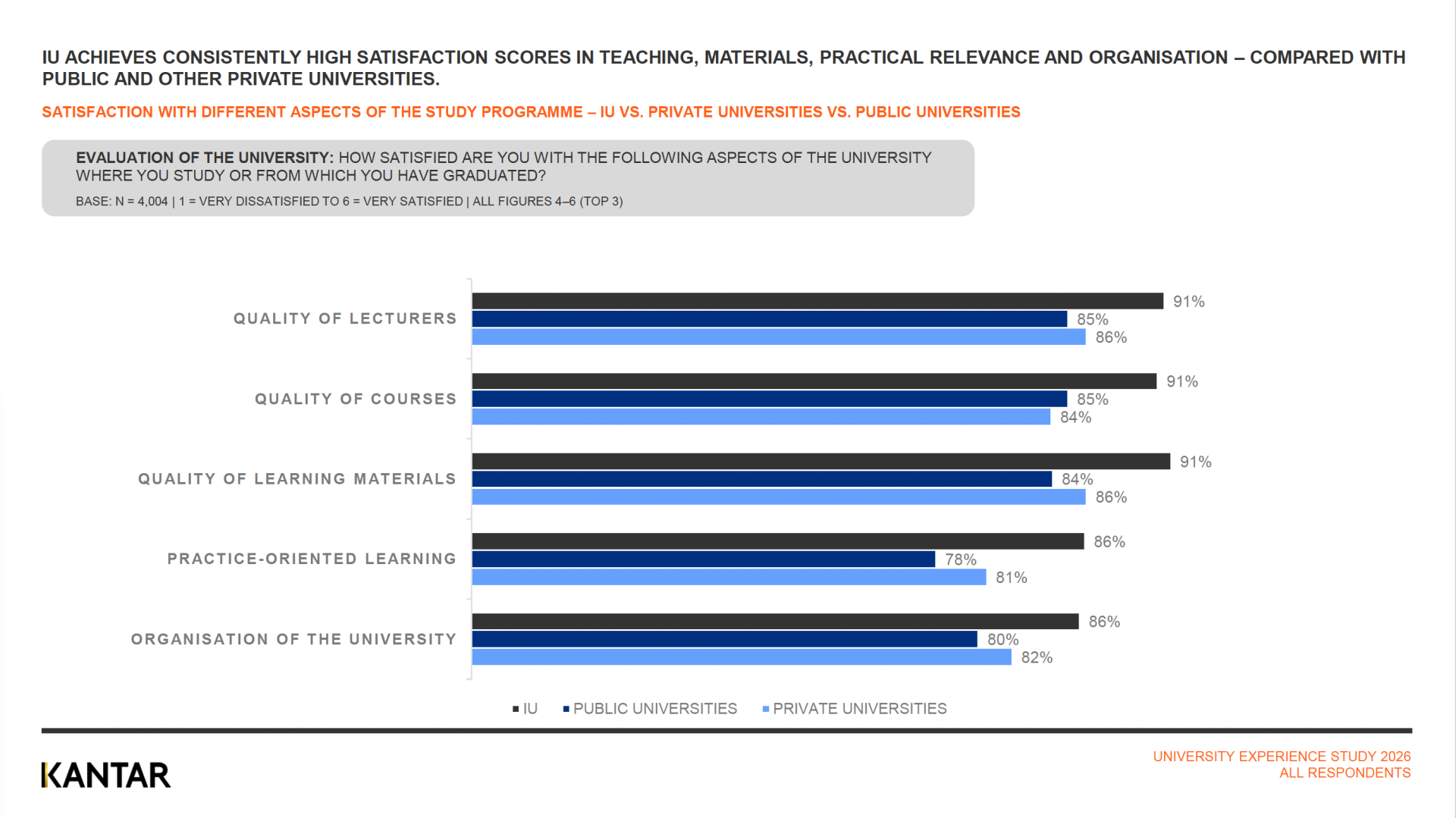
Erfurt, 18 March 2026. Acquiring the skills that are really in demand on the job market as early as possible is becoming even more crucial, especially against the backdrop of a tight labour market (BMAS January 2026). A strong practical focus in your studies can be a major lever for a successful career start. The representative study ‘University Experience Study 2026’ found that 81 percent of graduates and students at private universities (excl. IU) appreciate the close integration of teaching and practical experience – at IU International University, the figure is almost 9 out of 10 (86 per cent). Among students and graduates of state universities, the figure is slightly more than three-quarters (78 per cent). Kantar Profiles surveyed over 4,000 students and graduates on behalf of IU International University of Applied Sciences.
“Private universities are a useful addition to the state university system and make a valuable contribution, particularly in terms of integrating study and work,” says Dr Sven Schütt, CEO of IU, Germany's largest university.
High satisfaction with quality and career support
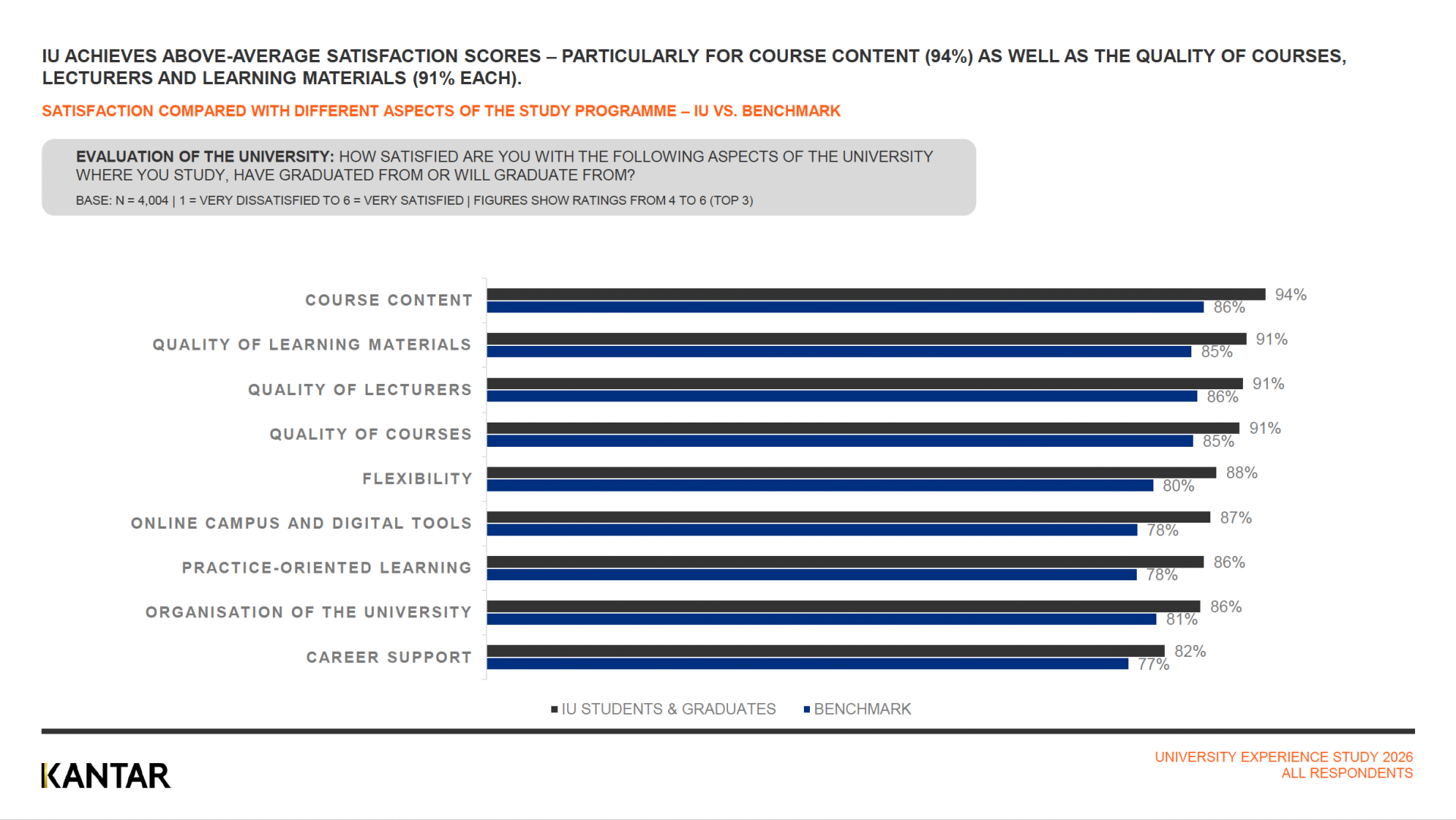
Financed by public funds, state universities form the foundation of the German educational landscape. Around 2.4 million students are enrolled at state universities, and around 384,000 at private universities (as of the 2024/25 winter semester, Federal Statistical Office/CHE). Overall, the quality of teaching at Germany's universities enjoys a high level of satisfaction at both state and private universities: courses are rated positively by the majority of students and graduates surveyed (state universities: 85 per cent, private universities (excl. IU): 84 per cent) ) and they are also satisfied with the lecturers and professors (public universities: 85 per cent, private universities (excl. IU): 86 per cent) – a strong sign for the higher education landscape in Germany as a whole. With satisfaction ratings of 91 per cent, IU is above the average for private and public universities. Most students and alumni are also satisfied with the organisation of their university overall. At 86 per cent, IU has the highest satisfaction rating in the comparison – ahead of state universities (80 per cent) and private universities (excl. IU) (82 per cent). “We attach great importance to the smooth running of our studies,” emphasises Schütt.
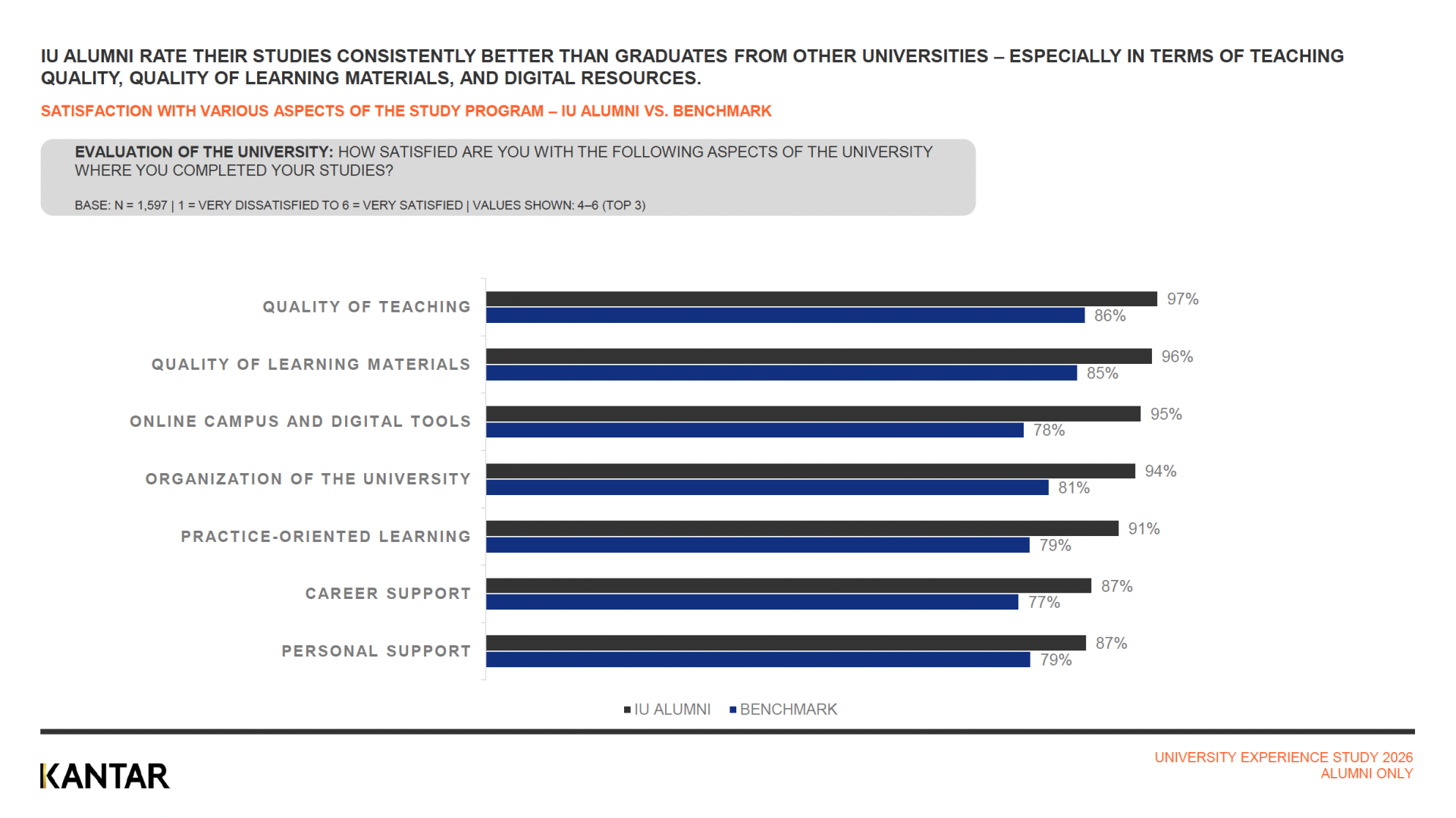
Private universities in particular have another strength in their proximity to the labour market and in the individual support they offer students. This is also the case at IU: 82 per cent of students and alumni perceive the support they receive or have received in starting their careers positively (benchmark: 77 per cent), and among alumni, the figure is almost nine out of ten respondents (IU: 87 per cent vs. benchmark: 77 per cent).
“No matter which educational path students choose, practical relevance and labour market-oriented training are popular – not only with companies, but also with students and graduates,” says Schütt. “At IU, we not only strengthen the potential of each and every individual by focusing on practical, high-quality teaching, but also Germany's economy by imparting digital skills for tomorrow's labour market.”
Graduates from IU enter the workforce earlier and receive more frequent pay rises
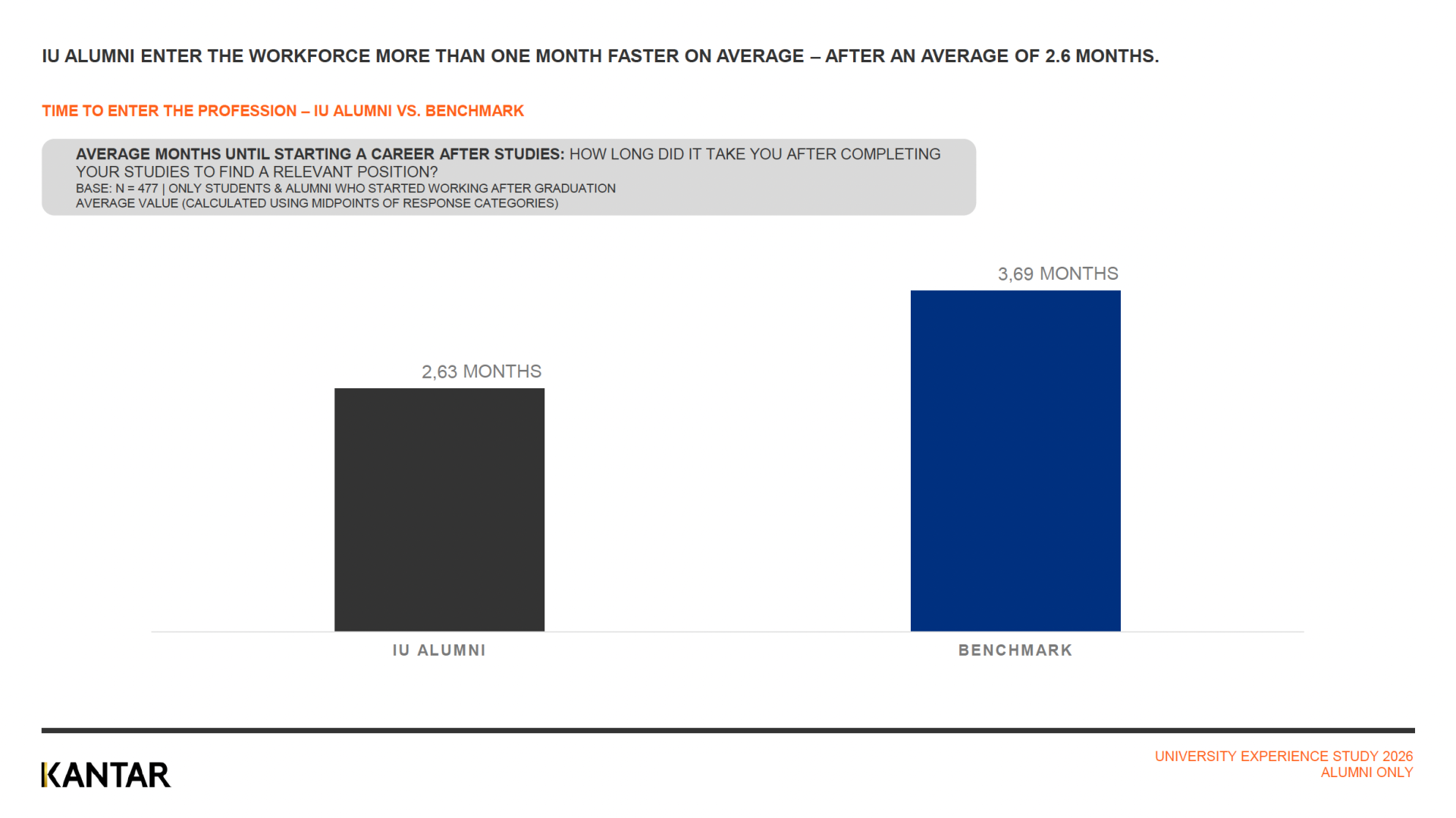
The attractiveness of people with a degree to the job market is particularly evident in how quickly they find a job or see changes in their salary. At IU, graduates find a job within an average of 2.63 months after graduation, which is about one month faster than graduates from other universities in the survey (benchmark: 3.69).
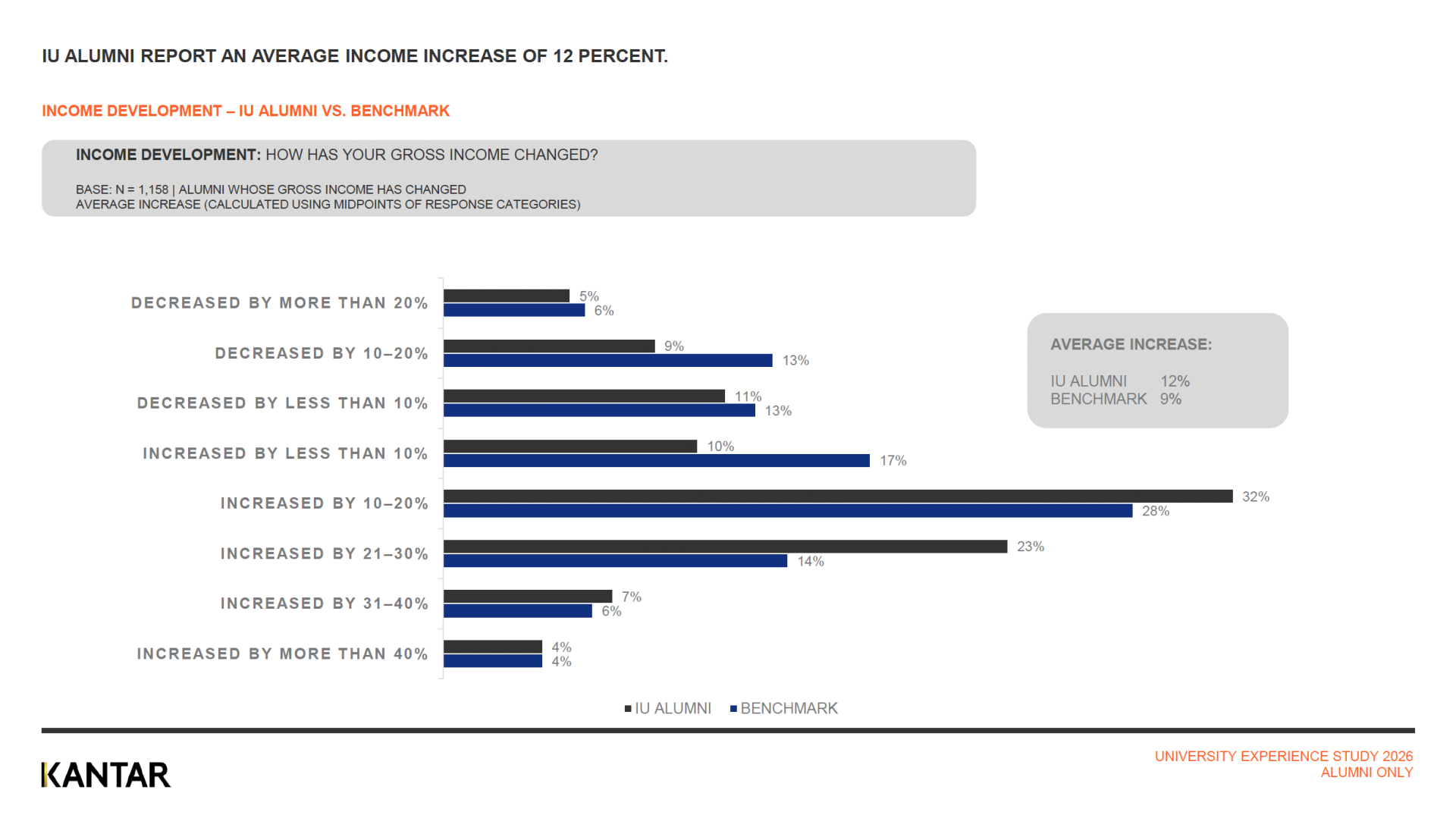
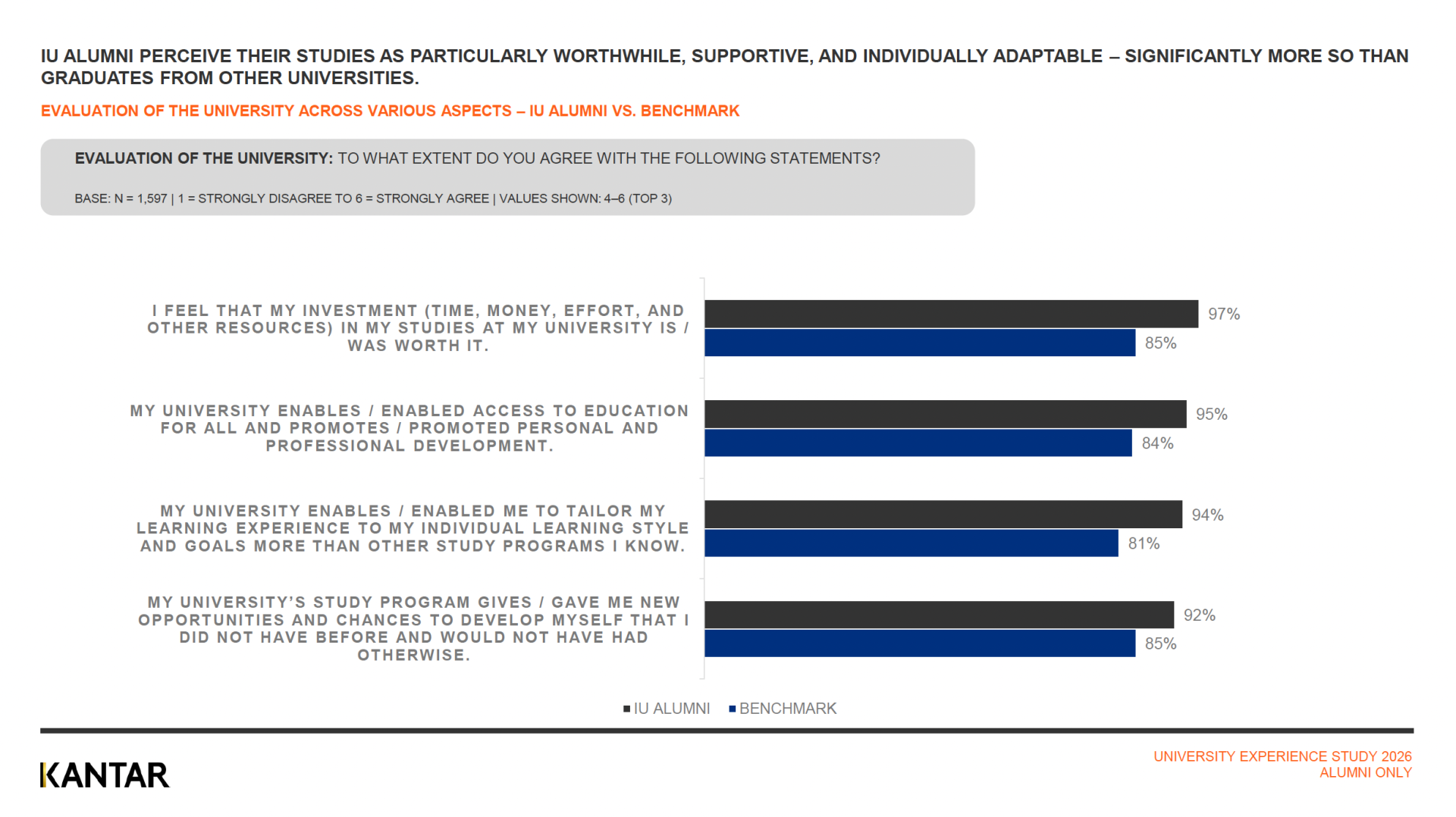
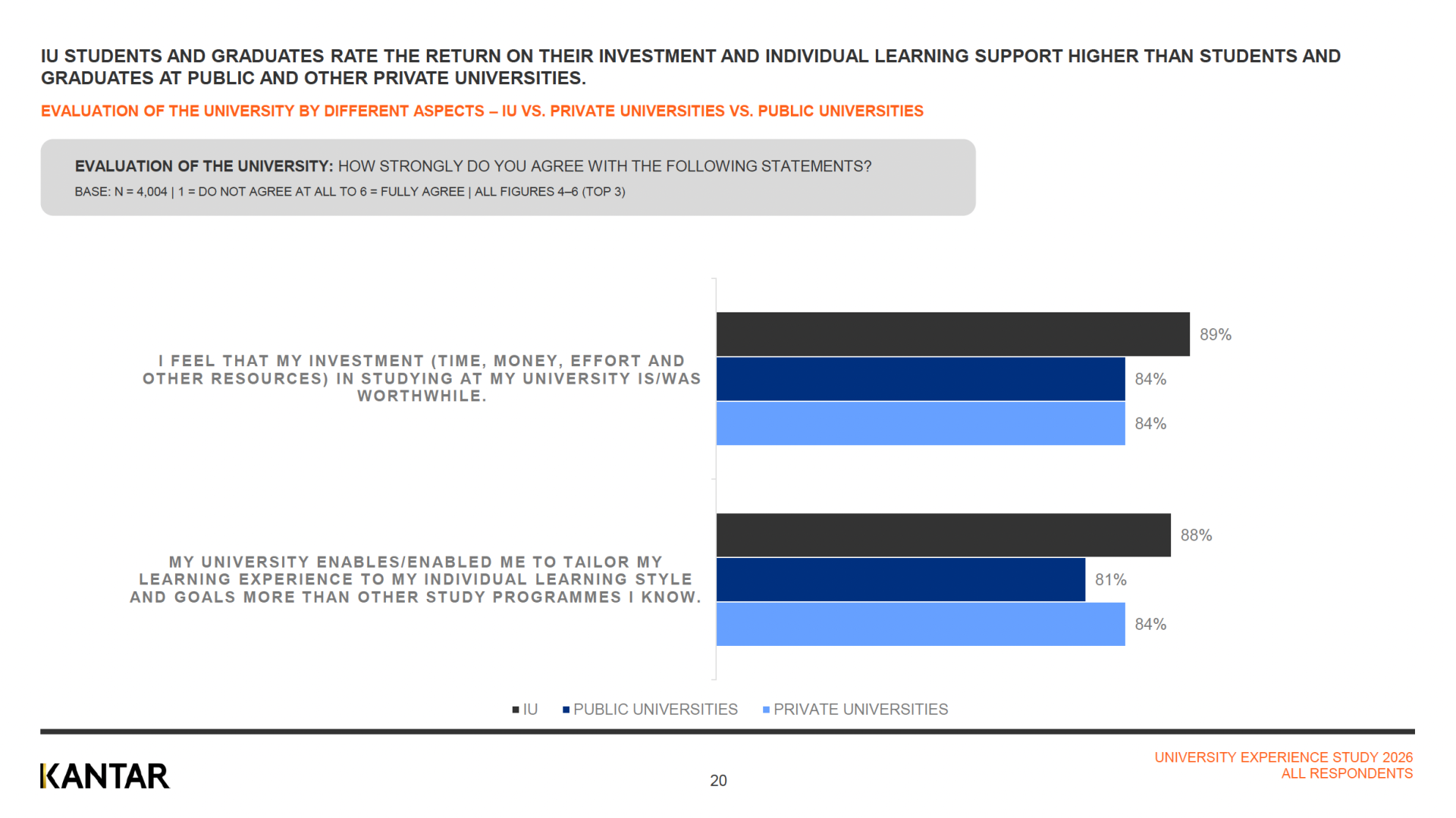
The added value of a degree is also often reflected in the pay packet: at IU, the average salary increase among graduates is 12 per cent since completing their studies – among the other universities, the average is 9 per cent. The vast majority of respondents agree: their studies have paid off. 84 per cent of all students and graduates from private and state universities say that their investment has been worthwhile. At IU, the figure is 89 per cent.
“Even in the face of a challenging labour market situation, we at IU firmly believe that good, labour market-oriented and high-quality education and training is essential – for starting a job and furthering your career,” says Schütt.
ABOUT THE SURVEY
The survey was conducted by Kantar Profiles between 27 August and 20 October 2025. A total of 4,004 students and graduates from public and private universities were surveyed, including 1,597 alumni, representative in terms of age and gender. The target group was alumni from the last five years, students and university dropouts. The survey was commissioned by IU International University from Kantar Profiles. The data was collected independently by Kantar Profiles in accordance with internal quality standards.
Methodology:
To ensure the best possible comparability between universities, three different comparisons were chosen: a) Comparison of ‘public university vs. private university (excl. IU) vs. IU’ and b) ‘IU vs. benchmark’ and c) Public vs. private universities: In a), IU is compared with public and private universities. Individuals who study or have studied at IU are considered separately and are not assigned to private universities. In IU vs. benchmark (b), state and private universities are combined into one cohort and compared with IU students and alumni. In c), all state and private universities (including IU) are combined into one group.

With over 120,000 students, IU International University of Applied Sciences (IU) is the largest university in Germany. The private, state-recognised educational institution, based in Erfurt, began teaching in 2000 and now has 24 campuses as well as a virtual campus. IU stands for maximum flexibility in study: whether through dual study, distance learning or on campus – students from over 160 nations tailor their educational path to suit their individual circumstances. With more than 200 degree programmes at bachelor’s, master’s and MBA level, IU imparts practical skills. Innovative learning concepts foster targeted, future-proof skills for an increasingly AI-driven world of work. A modern, digitally supported learning environment and the use of artificial intelligence enable effective, personalised learning. As a pioneer in this field, IU has developed its own digital learning companion, ‘Syntea’, which has been in use since 2023. A network of over 15,000 companies – including Motel One, Vodafone, AWO and Deutsche Bahn – makes IU a strong partner in the training of skilled workers and consistently links academic teaching with practical experience. Further information at: iu.org
Contact

|
IU International University of Applied Sciences Press Department |