
From TikTok to Theater
The distance learning programme in Culture and Media Education at IU qualifies students for the post-digital future
The distance learning programme in Culture and Media Education at IU qualifies students for the post-digital future.
- Students learn to understand cultural and media processes as interconnected, to analyse them and to shape them responsibly.
- One focus is on the specific needs of different target groups and their educational support.
- Project courses in each semester provide direct application and professional experience in contexts of cultural and media education.
Erfurt, 4 June 2025. Creativity, critical thinking, and teamwork are essential future-proof skills, particularly in light of the rapid transformations driven by digital technology, artificial intelligence, and contemporary media. The bachelor's degree programme in Culture and Media Education, offered by IU International University of Applied Sciences (IU) as a distance learning course, teaches precisely these skills in the context of cultural education, media knowledge and practical pedagogical experience. As future educators, it enables students to categorise media and cultural content in a social context, understand cultural forms of expression and adopt different perspectives.
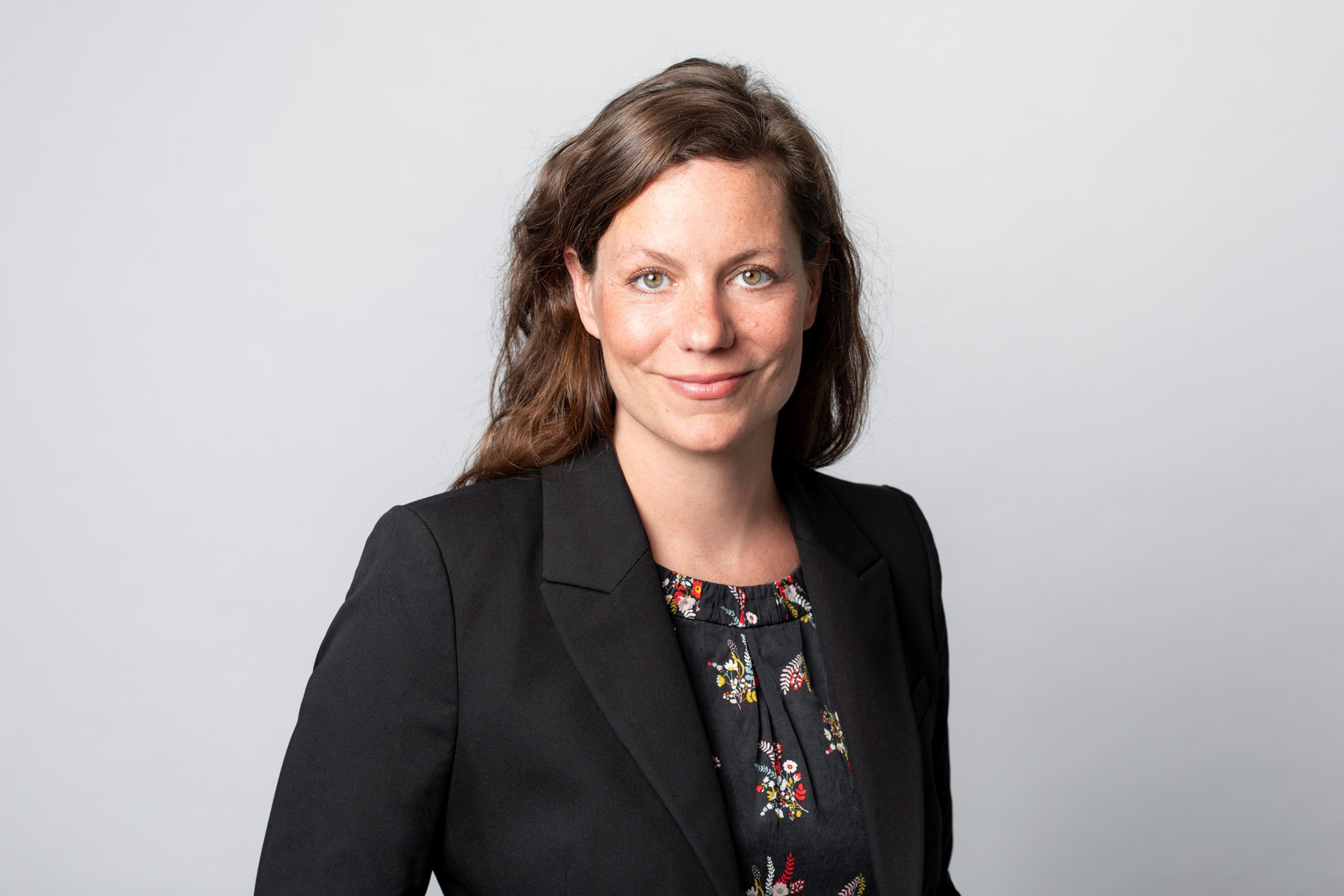
"Using digital media requires more than just technical skills," explains Professor Jule Korte, head of the bachelor's degree programme in Culture and Media Education at IU. "A reflected understanding of their significance for individual, cultural and social processes is crucial."
Graduates should foster media literacy and encourage active cultural participation
The professional fields of future graduates of this degree programme include, for example, media educators in schools or daycare centres, or educational staff in cultural mediation. For example, they support children, young people, adults and people with disabilities in consciously and creatively utilising cultural and media offerings, reflecting on content and developing their own point of view. "Our aim is to train the active creators of tomorrow. This means: professionals who are able to convey media culture as something that can be shaped collaboratively as part of their educational work. They also learn to promote diversity, enable social participation and thus also strengthen democratic values to a certain extent," says Korte.
Online vs. offline - media and reality merge
"For young people, the boundaries between digital and analogue life have long since disappeared. One striking example is trends such as TikTok dance videos, in which dances from video games such as Fortnite are adopted, performed and in turn shared via TikTok. Current studies also show that the distinction between online and offline worlds no longer really works for children and young people," explains Korte. "As future professionals, our students should not judge young people's living environments and their media practices, but above all understand and actively help to shape them. Media skills are an important topic here, but not the only one," continues Korte.
Strongly practice-orientated - flexible study options
The degree programme is particularly practice-oriented thanks to the project courses that conclude each semester. Whether lighting design in exhibitions, conception of cultural festivals or media projects in schools and daycare centres: students analyse and design real settings and gain professional experience - often in cooperation with institutions in which they are already working. In longer projects, they have the opportunity to go through all stages of media-cultural educational work and reflect on them with the lecturers of the degree programme.
The degree programme is aimed at both first-year students and professionals in the education, media and culture sector, as well as anyone who would like to work in this field. The degree programme is flexibly structured as a distance learning course: Digital scripts, videos, podcasts and various part-time options enable individualised learning paths. Students at IU also have the personalised AI learning assistant Syntea at their side, for example for targeted preparation for exams.
Only a few universities in Germany offer this focus
With its undergraduate bachelor's degree programme in Culture and Media Education, IU is one of the few universities in Germany to offer this combination. The degree programme complements IU's broad portfolio in the field of education – including general education theory, childhood studies, inclusive pedagogy, health education, and nursing pedagogy.
Study programme with research contact
Professor Jule Korte heads IU Research Centre for Cultural Education and Digitality together with other colleagues and incorporates current research directly into teaching: "We report on our research in courses and students also take part in our lecture series - this is very well received by the students. Many of them say in their first semester that their view of media culture has differentiated and changed," says Korte.
Information on the Culture and Media Education degree programme can found at:
https://www.iu-fernstudium.de/en/bachelor/culture-and-media-education/
With over 120,000 students, IU International University of Applied Sciences (IU) is the largest university in Germany. The private, state-recognised educational institution, based in Erfurt, began teaching in 2000 and now has 24 campuses as well as a virtual campus. IU stands for maximum flexibility in study: whether through dual study, distance learning or on campus – students from over 160 nations tailor their educational path to suit their individual circumstances. With more than 200 degree programmes at bachelor’s, master’s and MBA level, IU imparts practical skills. Innovative learning concepts foster targeted, future-proof skills for an increasingly AI-driven world of work. A modern, digitally supported learning environment and the use of artificial intelligence enable effective, personalised learning. As a pioneer in this field, IU has developed its own digital learning companion, ‘Syntea’, which has been in use since 2023. A network of over 15,000 companies – including Motel One, Vodafone, AWO and Deutsche Bahn – makes IU a strong partner in the training of skilled workers and consistently links academic teaching with practical experience. Further information at: iu.org
Contact

|
IU Internationale Hochschule Pressestelle der IU |