
IU research project shows: Work and vacation are becoming increasingly intertwined
Bleisure travel and workation are becoming established in the German tourism market
The new “Bleisure and Workation Monitor Germany” launched in 2025 is the first research project to systematically examine the growing importance of bleisure travel and workations for German tourism.
Erfurt, 29 January 2026. The new "Bleisure and Workation Monitor Germany", launched in 2025, is the first research project to systematically examine the growing importance of bleisure travel and workation for German tourism. A nationwide online survey of tourism service providers, along with accompanying industry dialogues, is creating, for the first time, sound transparency in this segment of the business travel market. Following the completion of the fieldwork phase, the research team at IU International University of Applied Sciences is now beginning to analyse the extensive data. Initial findings indicate that bleisure travel and workation are not yet systematically integrated into the supply side. Clear product structures and consistent marketing approaches are often still under development.
Business travel is changing – and with it, the boundaries between work and leisure. Initial findings from the "Bleisure & Workation Monitor Germany" by IU International University of Applied Sciences show that bleisure travel, the combination of business travel and private extension, is already significantly more widespread in tourism practice than previously assumed.
For the current survey, over 1,000 tourism businesses across Germany were invited to participate. Nearly 300 usable questionnaires form the basis of these initial findings. These show that bleisure travel is already common practice among business travelers, even if many tourism businesses have not yet consciously recognised this type of travel as a distinct product. Supply and demand are developing more dynamically than current public discourse suggests.
Around two-thirds of businesses report having already hosted guests who used bleisure travel or workation (working while on vacation). Bleisure travel clearly dominates: More than half of the accommodation providers report such guests who extended their business trip for personal reasons. Bleisure travel thus generates additional value for both businesses and destinations without necessarily creating new cost structures. From a business perspective, this represents considerable, yet largely untapped, potential.
At the same time, the initial results reveal structural deficiencies: Only about a quarter of the establishments that have already hosted bleisure guests have explicitly formulated offers. In many cases, bleisure arises more spontaneously than strategically. Classic package deals, clear pricing structures, or systematic collaborations are currently rather the exception.
The picture regarding workation is more nuanced. The surveyed companies initially use the term "workation" less explicitly than "bleisure travel." At the same time, it becomes clear that some companies address both forms of hybrid travel simultaneously or do not clearly distinguish between them.
Furthermore, bleisure travel and workation are currently mostly marketed only on a company-specific basis. Destination-level actors such as destination management organisations or convention bureaus play only a minor role so far – even though almost 70 per cent of businesses assume that a sustainable market cannot emerge without local networks and coordinated approaches.
The results presented here offer an initial insight. A more in-depth analysis with regional evaluations and concrete recommendations for businesses, destinations, and policymakers will follow with the publication of the complete study in summer 2026.
About the project
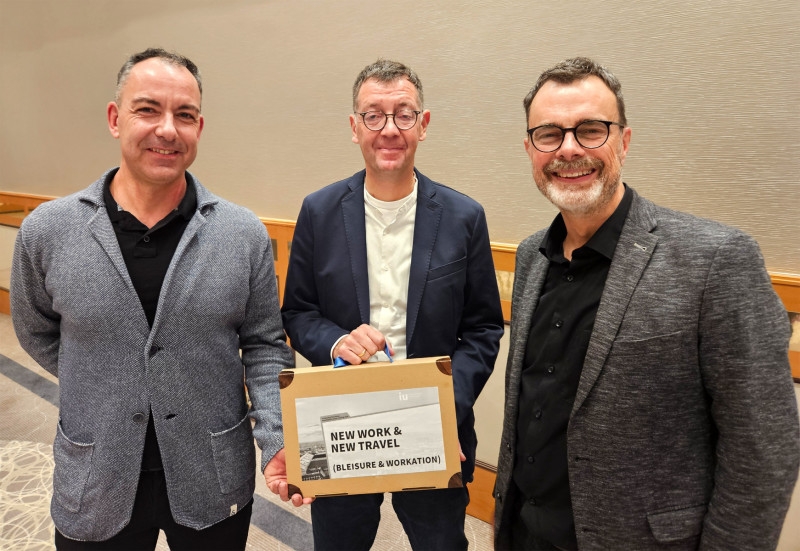
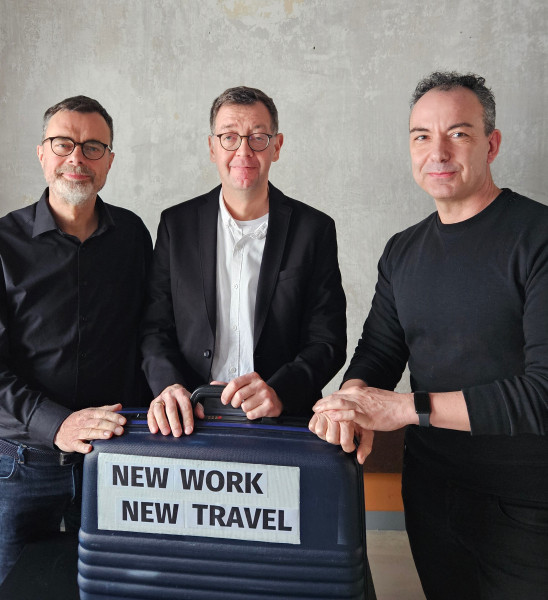
The Bleisure & Workation Monitor Germany is a joint research project by three professors from IU International University of Applied Sciences, specialising in hospitality, tourism & events, and economics. Its aim is to establish a long-term database on new hybrid forms of travel at the intersection of work, leisure, and vacation.
Contact person
Prof. Dr Peter Neumann
Professor of Tourism Economics
peter.neumann@iu.org
Prof. Dr Sven Pastowski
Professorship General Business Administration
sven.pastowski@iu.org
Prof. Dr Andreas Zimmer
Professorship in Tourism Management
andreas.zimmer@iu.org
Further information can be found at: https://www.bleisure-workation-monitor.de/
With over 120,000 students, IU International University of Applied Sciences (IU) is the largest university in Germany. The private, state-recognised educational institution, based in Erfurt, began teaching in 2000 and now has 24 campuses as well as a virtual campus. IU stands for maximum flexibility in study: whether through dual study, distance learning or on campus – students from over 160 nations tailor their educational path to suit their individual circumstances. With more than 200 degree programmes at bachelor’s, master’s and MBA level, IU imparts practical skills. Innovative learning concepts foster targeted, future-proof skills for an increasingly AI-driven world of work. A modern, digitally supported learning environment and the use of artificial intelligence enable effective, personalised learning. As a pioneer in this field, IU has developed its own digital learning companion, ‘Syntea’, which has been in use since 2023. A network of over 15,000 companies – including Motel One, Vodafone, AWO and Deutsche Bahn – makes IU a strong partner in the training of skilled workers and consistently links academic teaching with practical experience. Further information at: iu.org
Contact

|
IU International University of Applied Sciences Press Department |