
When design makes democracy visible
150 participants, eleven workshops, three days: The Design Democracy Camp at IU Frankfurt combined design, architecture and social work to create new forms of social participation
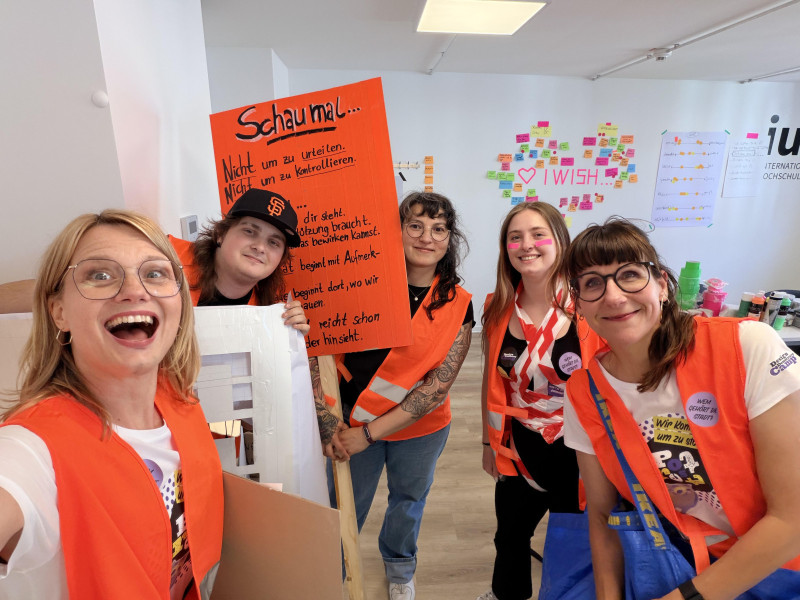
For three days, the IU campus in Frankfurt was transformed into an open workspace for future issues with its Design Democracy Camp.
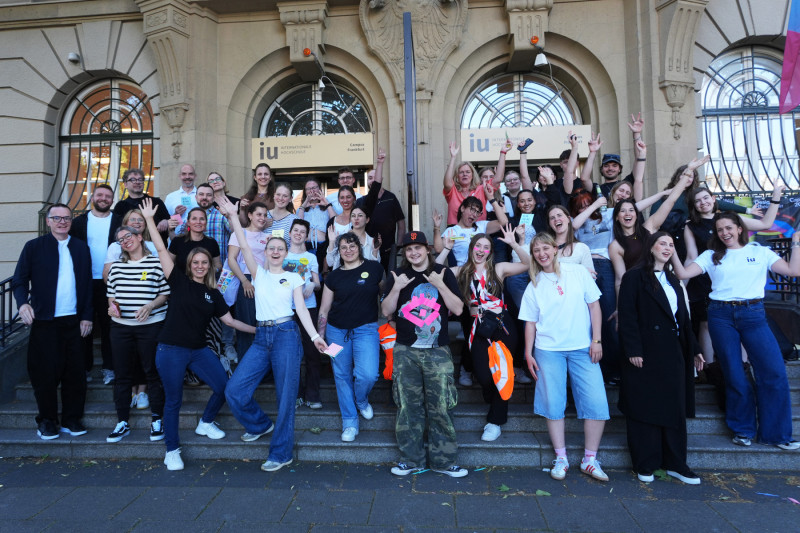
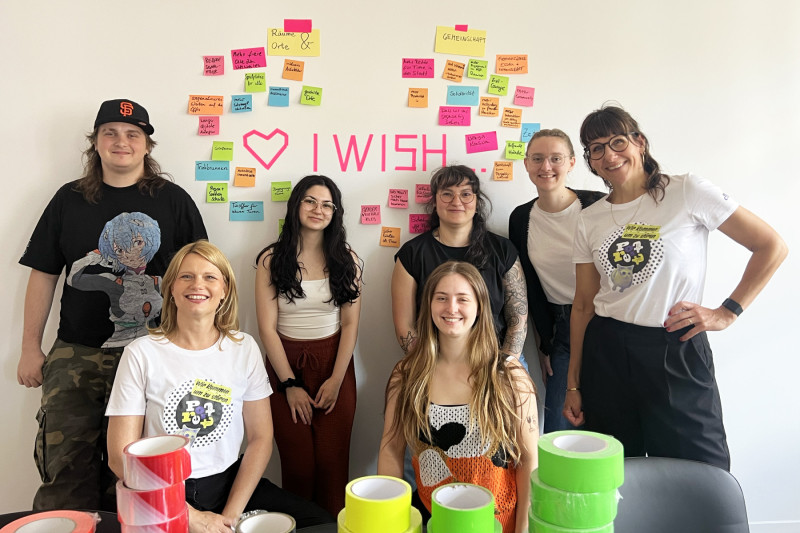
Frankfurt am Main, 23 July 2026. For three days, the campus of IU International University of Applied Sciences at Diesterwegplatz in Frankfurt was transformed into an open workspace for future-oriented questions. From 12 to 14 June 2026, around 150 people came together for the Design Democracy Camp to explore, through co-creative workshops, urban explorations, and other activities, what design can achieve when understood as a democratic practice. The three-day workshop format was an official part of the programme for World Design Capital Frankfurt RheinMain 2026.
In three thematic areas and eleven workshops, participants explored questions of democracy, participation, and social cohesion. These practical formats were complemented by public panels and discussion rounds that brought together perspectives from design, architecture, social work, and civil society. The focus was not on finding quick fixes, but rather on collaboratively examining how we want to shape the future.
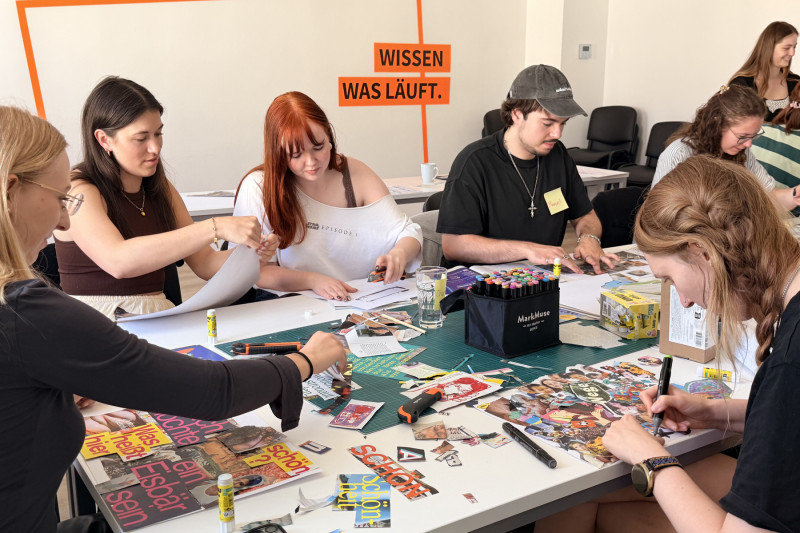
The participants developed interventions in public spaces, explored vacancy as a resource for community, created democratic visions of the future, translated voices into visual forms, and tested new avenues of participation. Conversations sparked ideas. Ideas gave rise to artifacts, installations, prototypes, actions, and discussions.
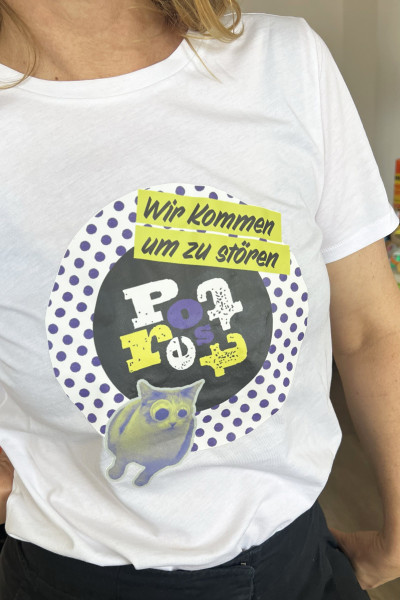
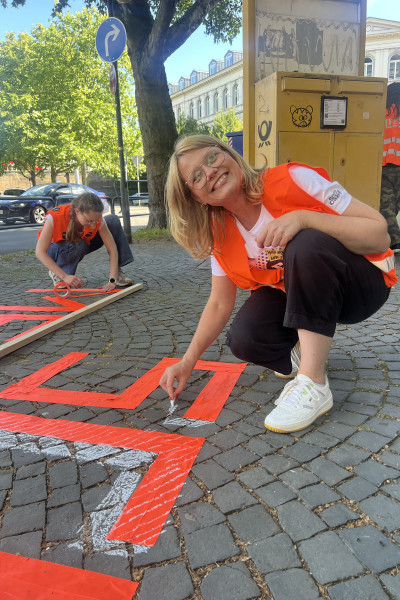
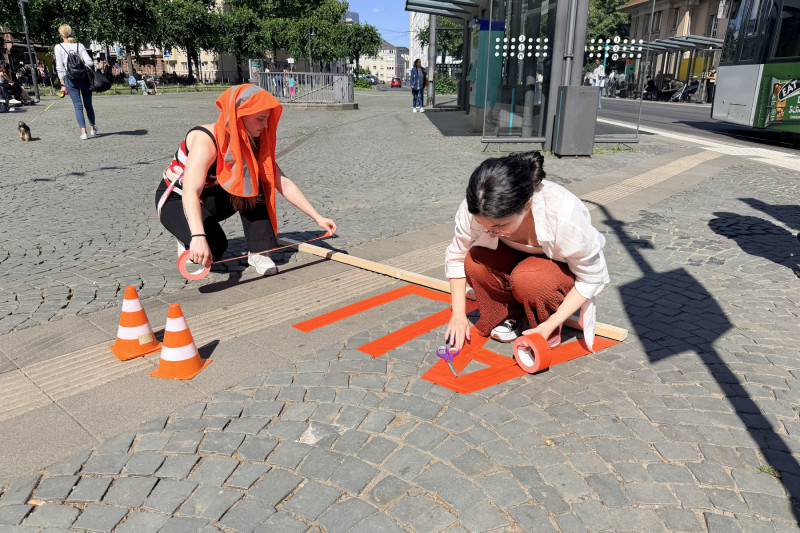
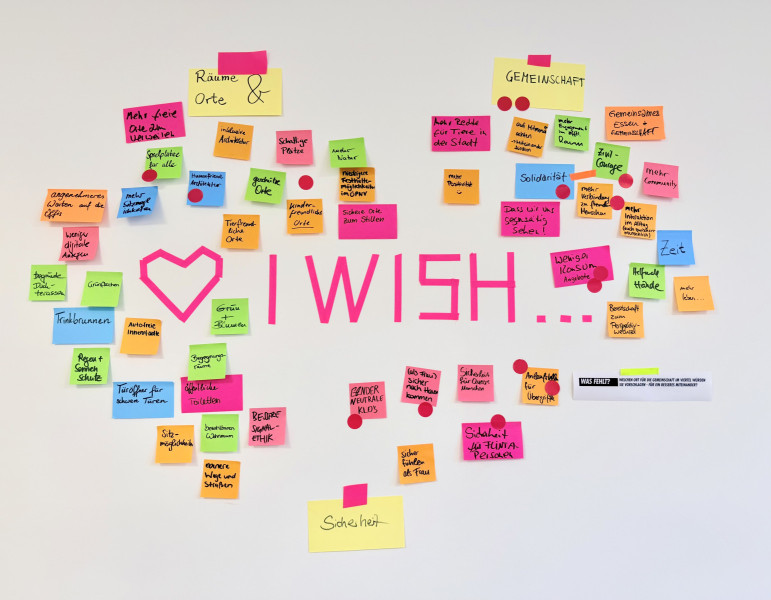
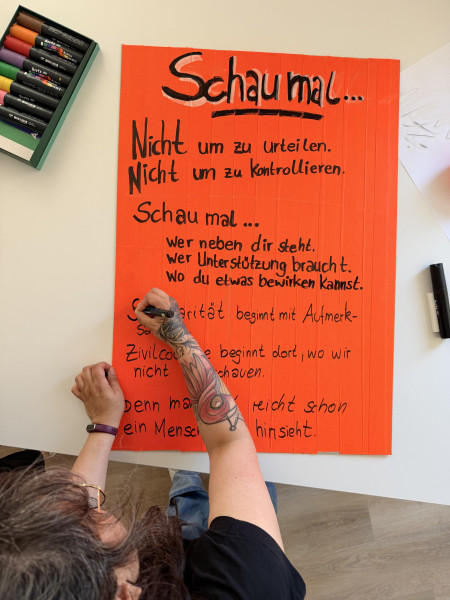
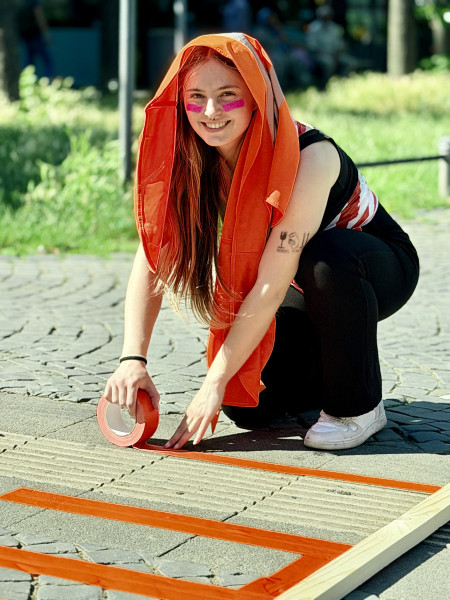
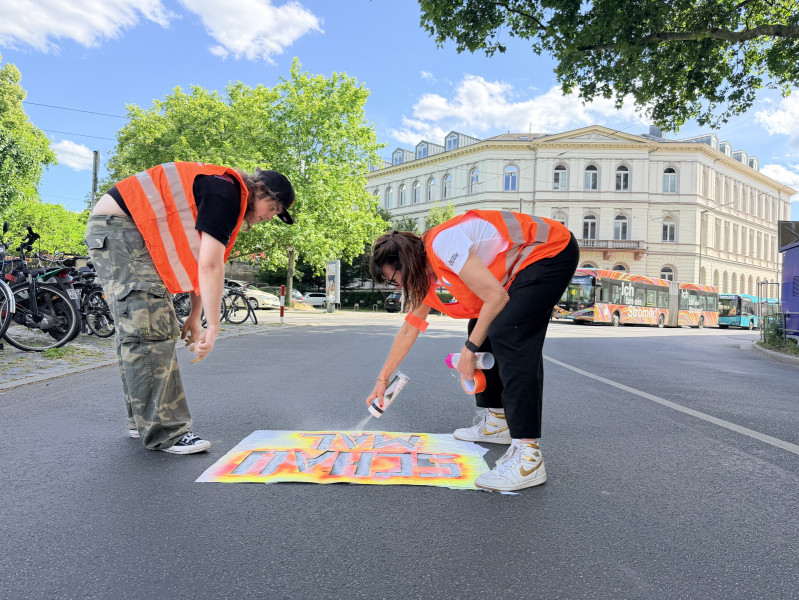
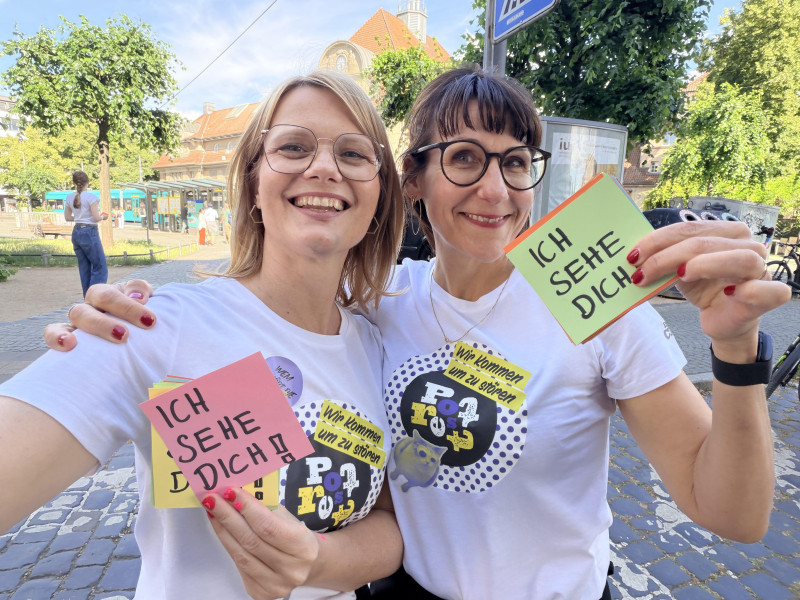
In the thematic area of “Protest & Intervention”, participants in the lab “We come to disturb!” used city walks, changes of perspective and temporary interventions to make urban exclusions visible.
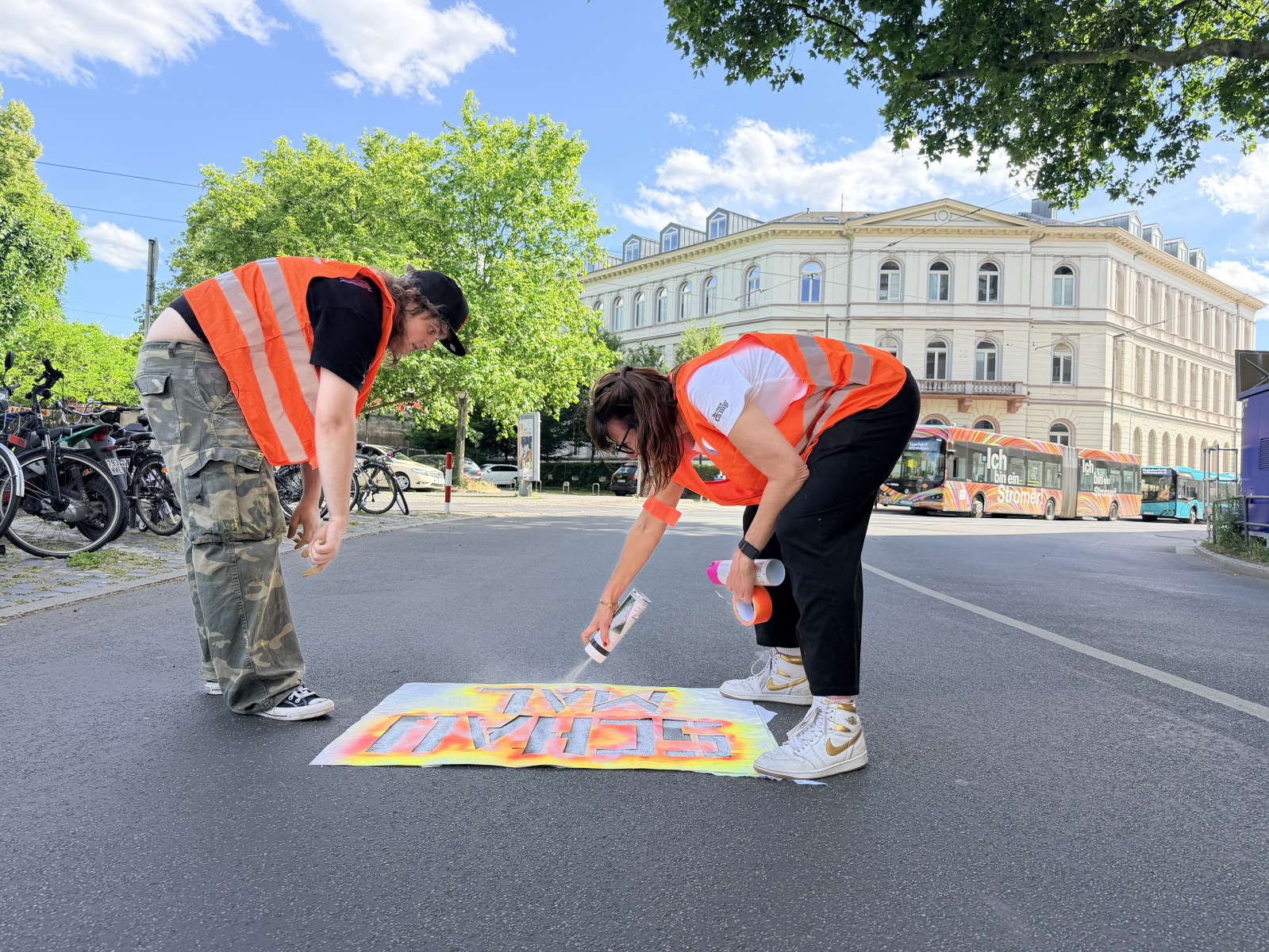
“Design can make visible what is systematically overlooked in urban space. In the ‘We come to disturb’ lab, we explored together who finds little space in public space and how solidarity and civic courage can be shaped through shared observation,” says Prof. Annelie Franke, Professor of Media Design at IU International University of Applied Sciences and initiator of the camp.
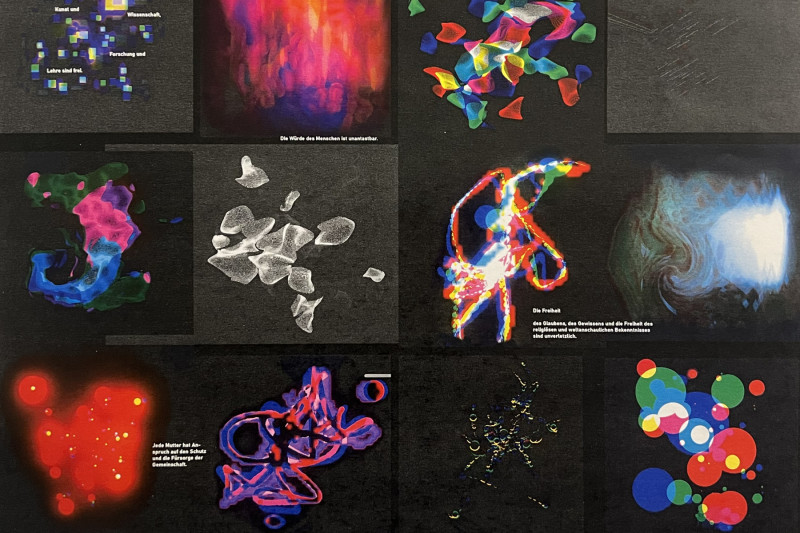
“Signs & Community” translated voices, speech and sounds into visual forms using audio-reactive techniques in the “Show Voice” lab.
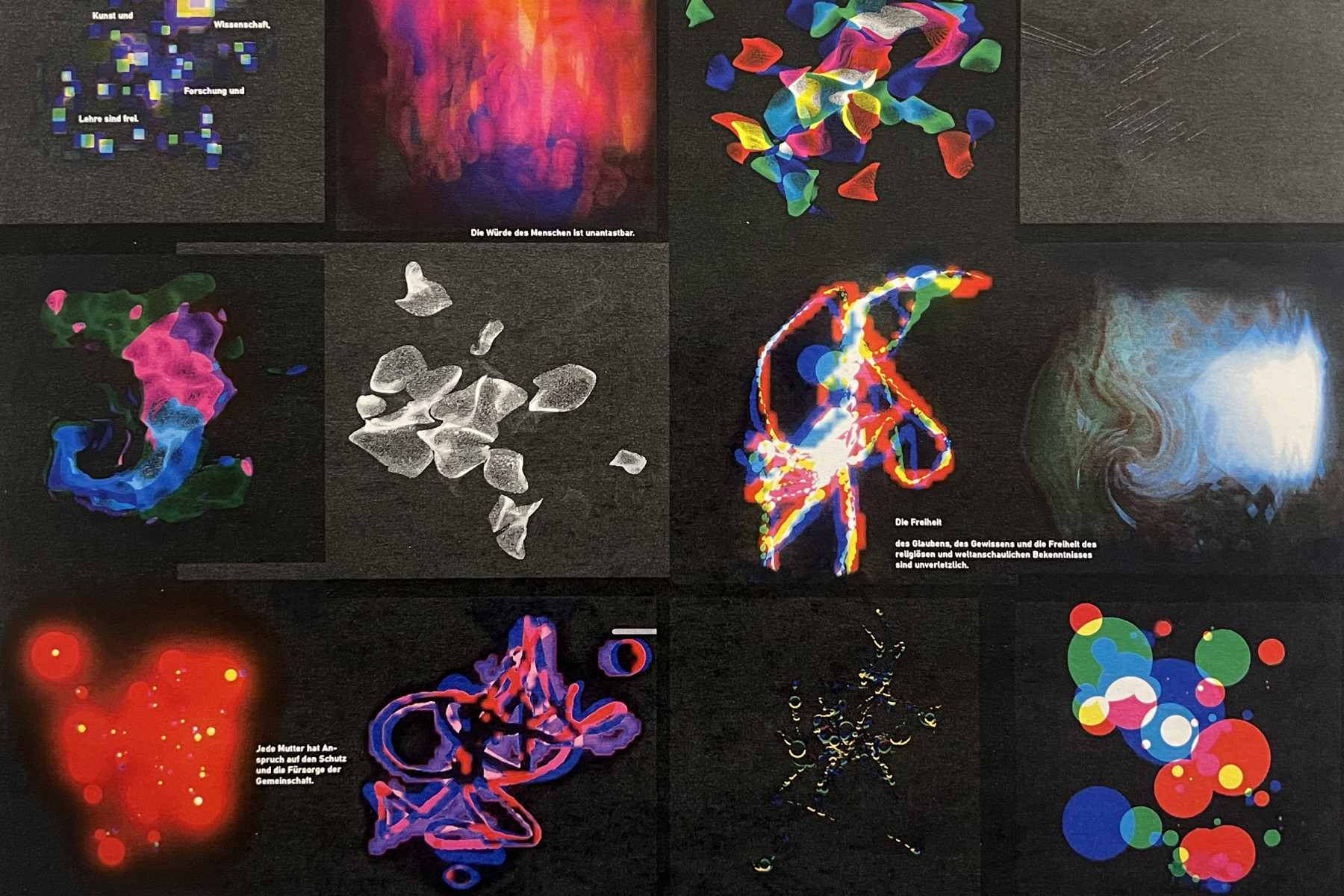
“A shared future emerges where different perspectives meet. Design creates the opportunities and spaces in which exchange gives rise to new ideas and visions of the future,” says Prof. Tanja Godlewsky, Professor of Media Design at IU International University of Applied Sciences.
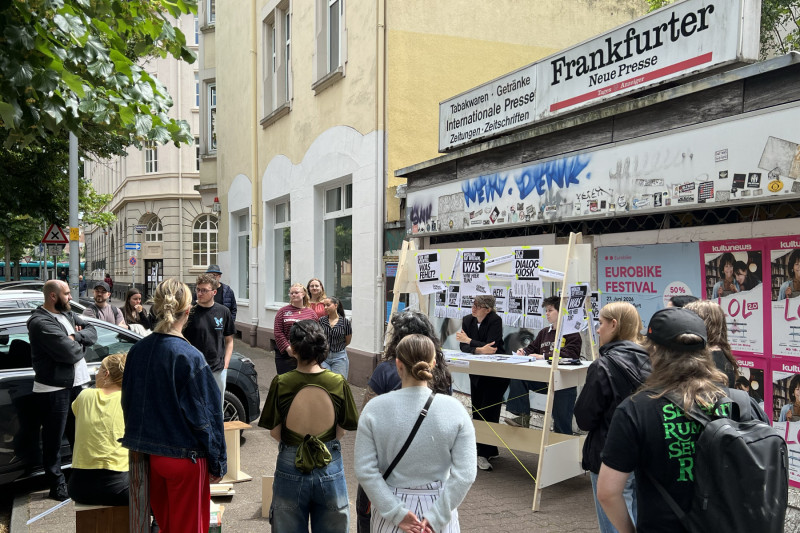
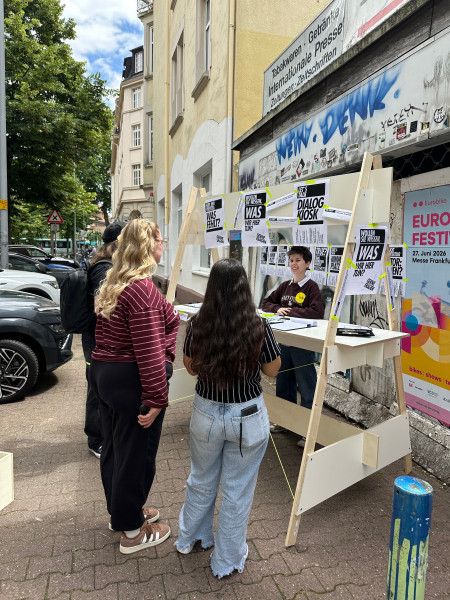
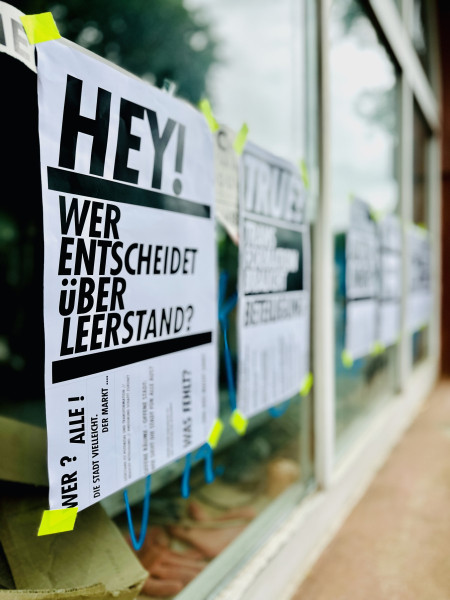
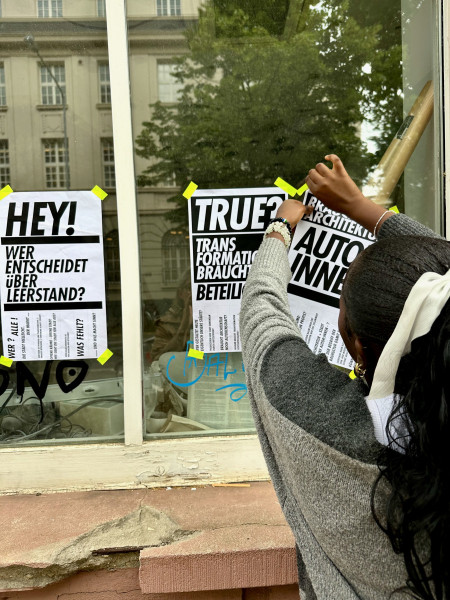
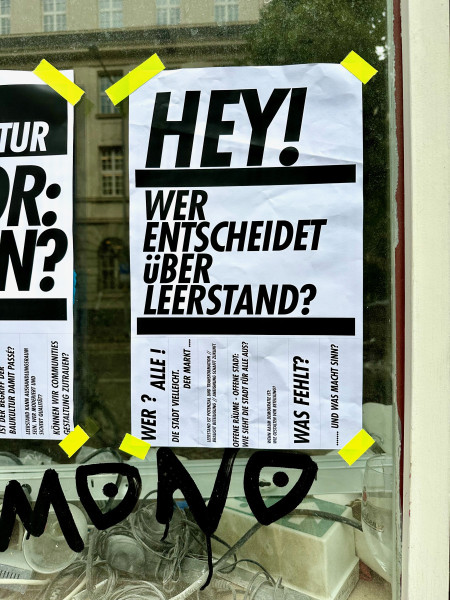
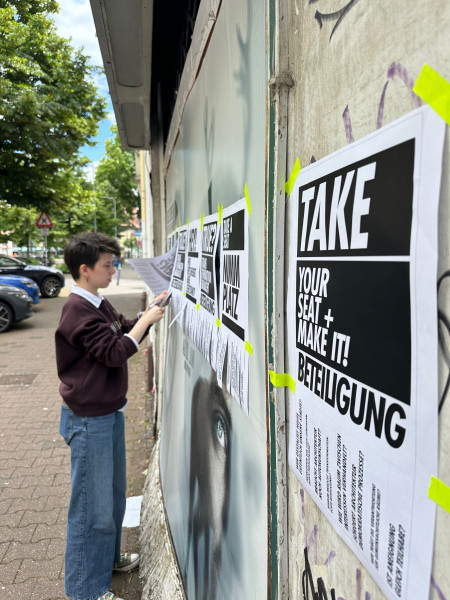
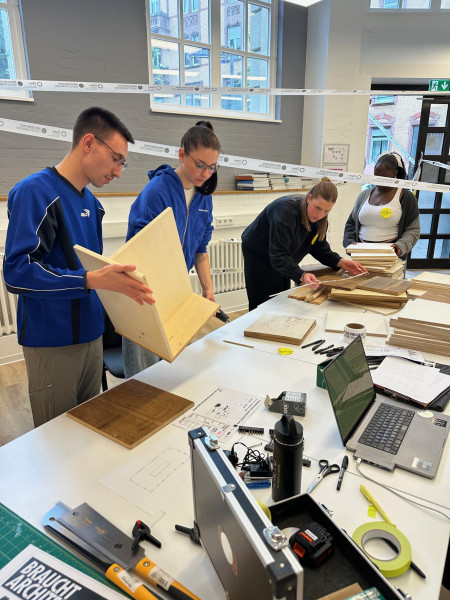
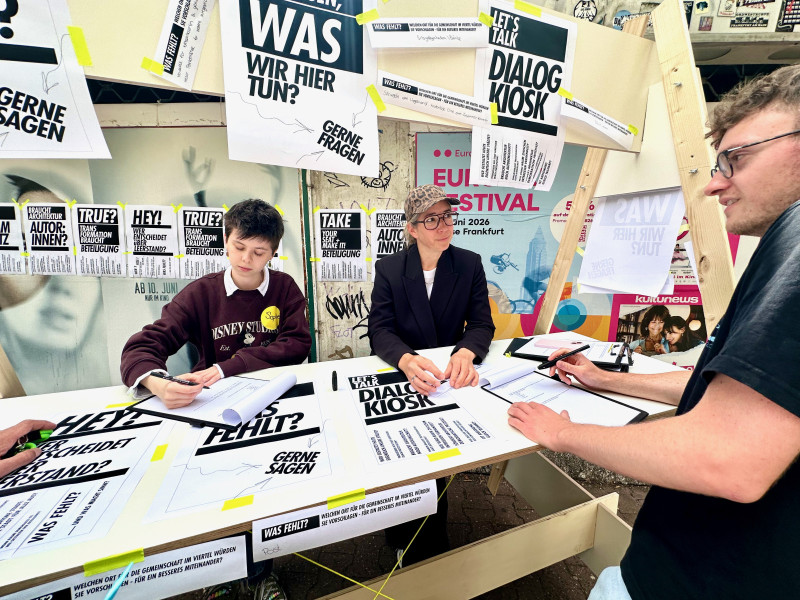
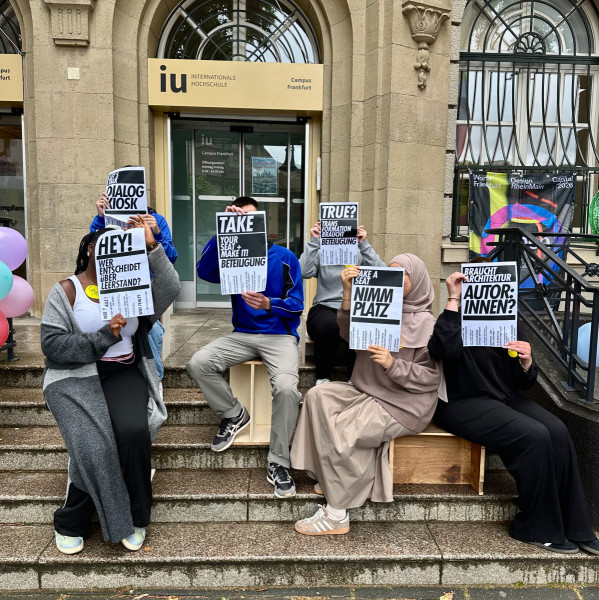
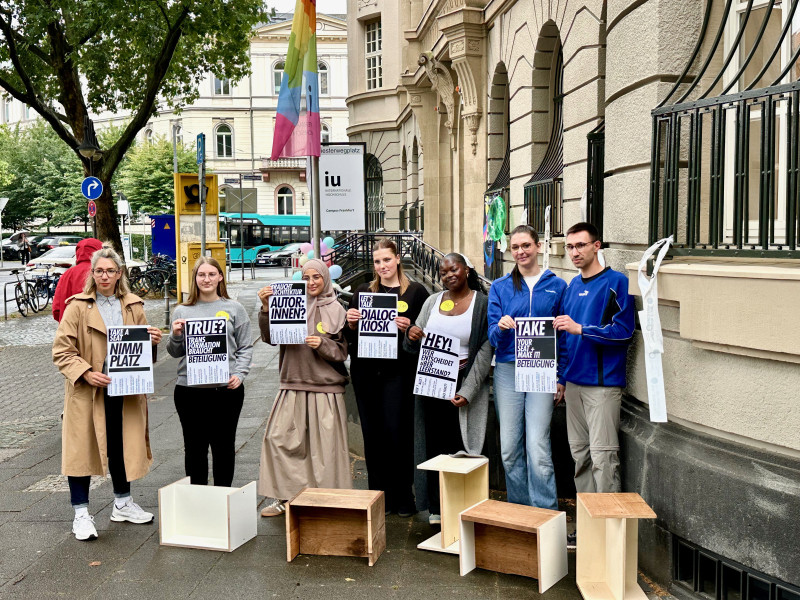
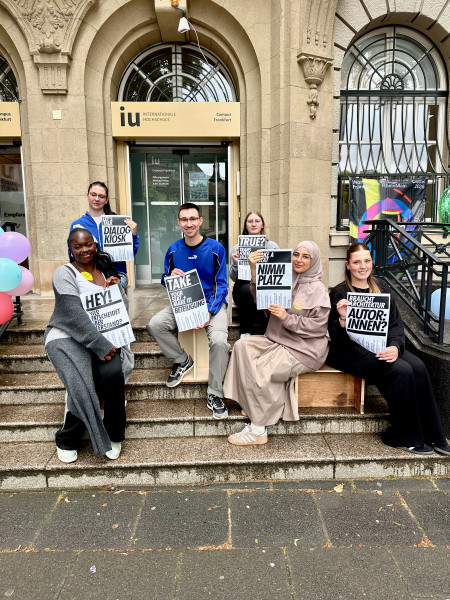
The "City & Participation" lab "Vacancy for All" understood the city as a space for negotiation and discussed existing buildings and obsolescence as resources for third places. This was complemented by the design-build project " Dialogue Kiosk," a temporary, modular piece of urban furniture made from reused materials, conceived as a public space for encounters and exchange.
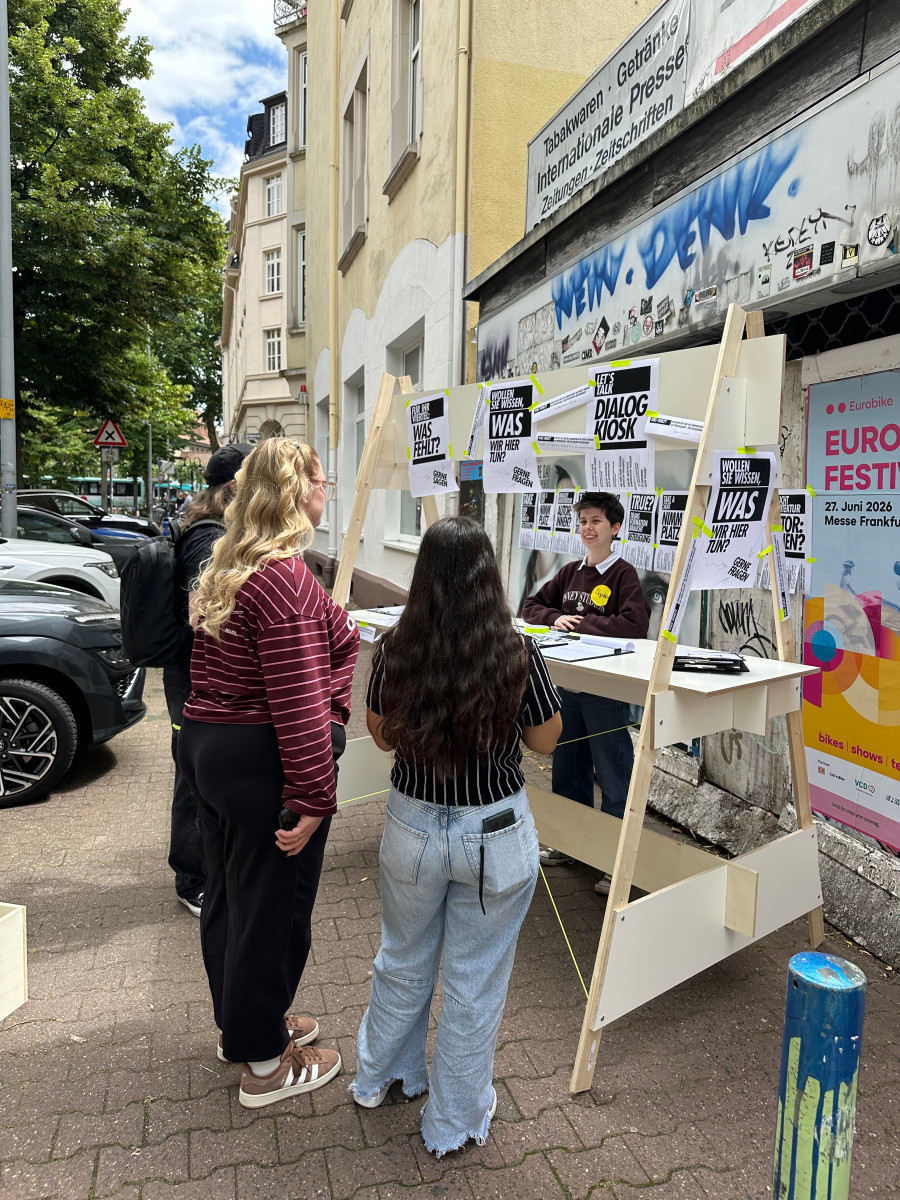
“Good architecture begins with listening. The Dialogue Kiosk shows how vacant spaces can be transformed into new places for learning, encounters, and transformation through exchange, participation, and collaborative action,” says Prof. Dr-Ing. Bettina-Maria Müller, Professor of Architecture at IU International University of Applied Sciences and Project Manager for Architecture.
The "Taking up space together" sprint of social work asked during a neighbourhood walk who takes up space in Frankfurt's neighbourhoods and who does not.
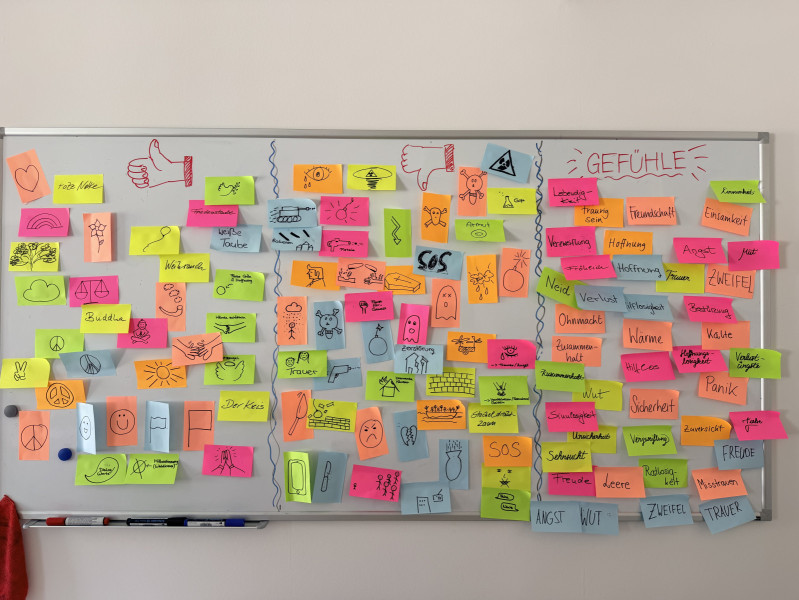
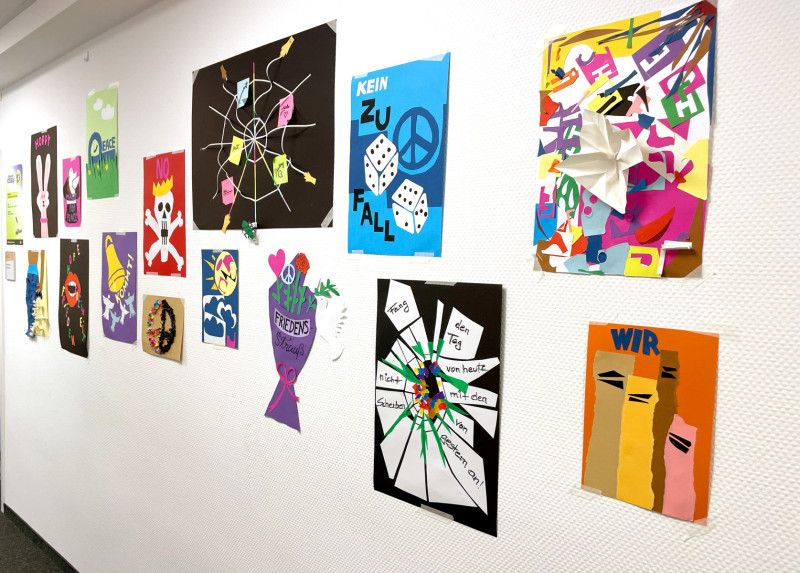
Further sprints focused on fundamental rights as a design task, the concept of "democracy in one word", "signs for peace" in the tradition of Matisse, the role of brands in democratic discourses, and democratic utopias in authoritarian times.
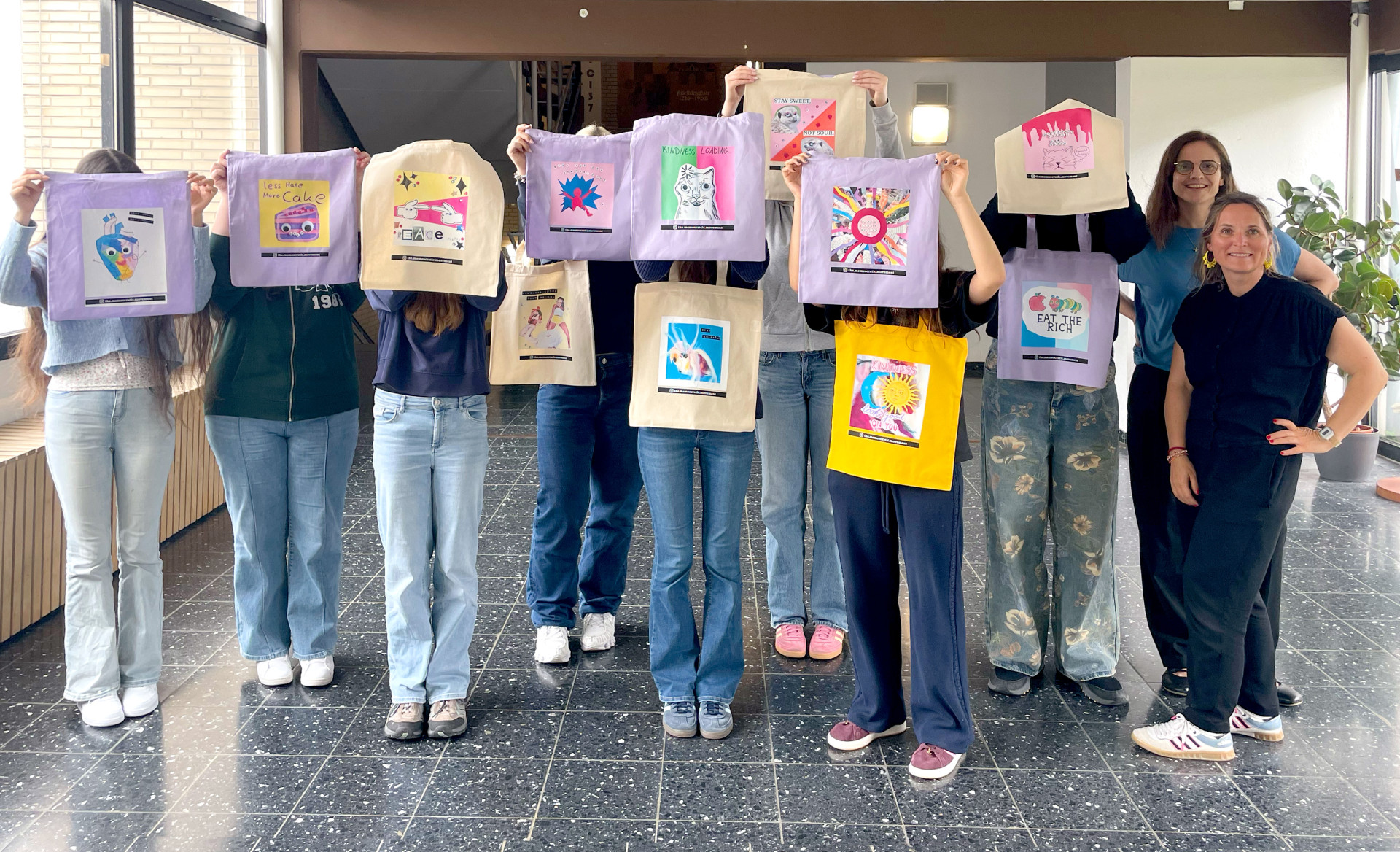
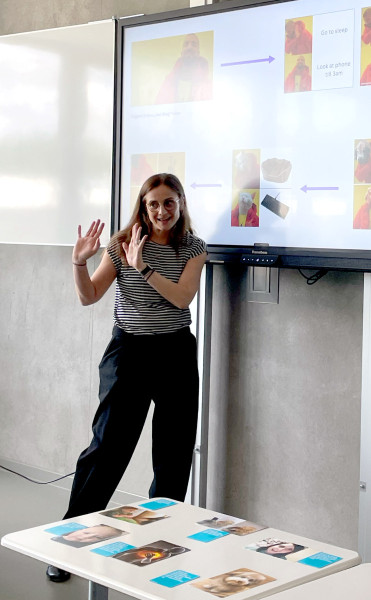
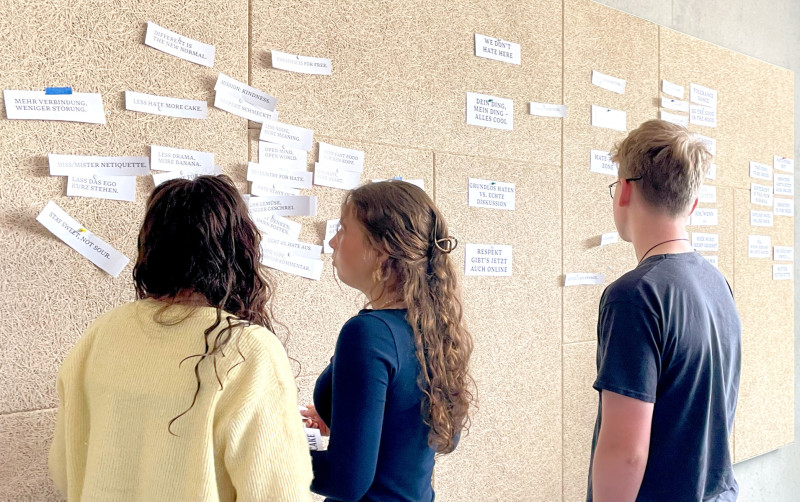
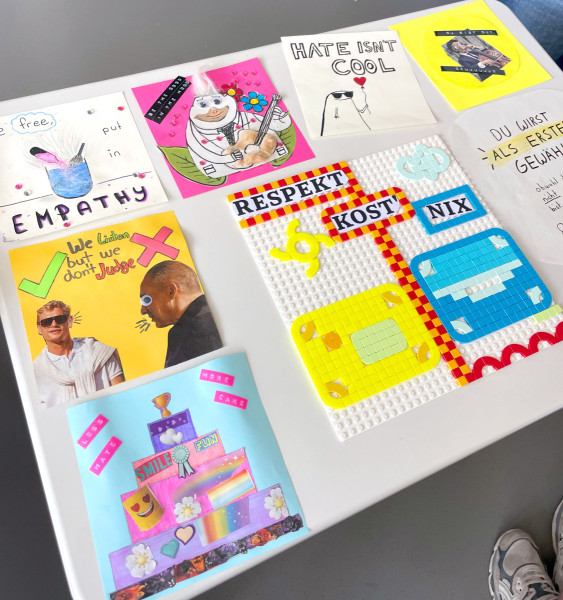
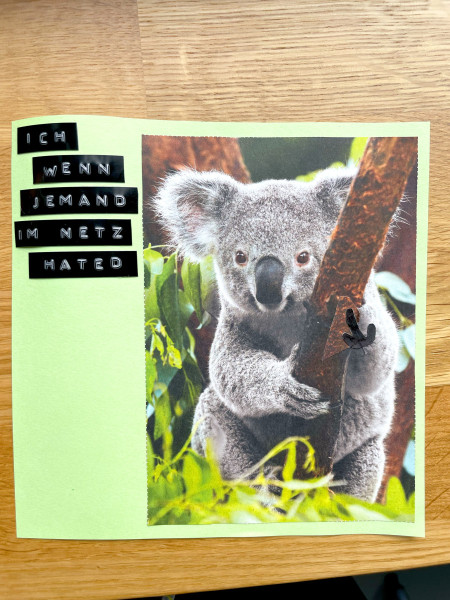
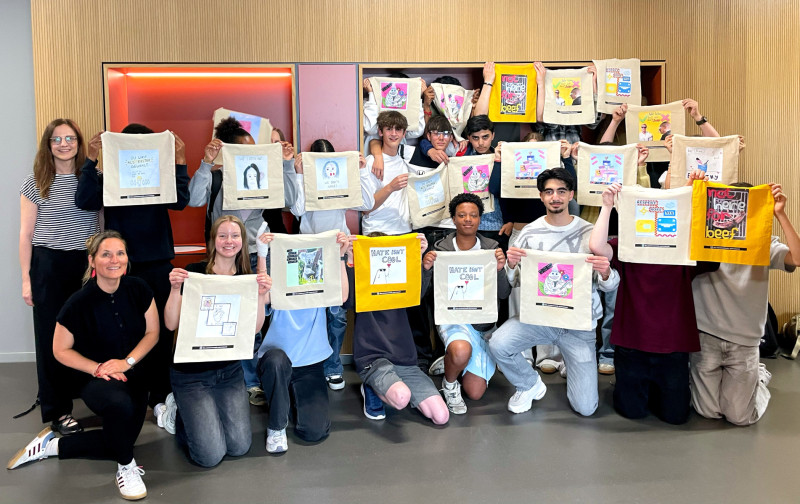
The programme was complemented by the school workshop "Memes for Democracy" . Students from Frankfurt developed their own visual responses to hate speech and fake news.
Current societal and social challenges require new, transdisciplinary approaches. Activating vacant spaces, in particular, holds potential. It can create so-called third places - open spaces for encounters, exchange, and participation - and thus strengthen democratic processes in everyday life.
Design plays a central role in this process. Design makes issues visible, translates ideas into concrete experiences, and opens up new forms of participation. In conjunction with architecture and social work, formats emerge that promote social engagement and bring together diverse perspectives.
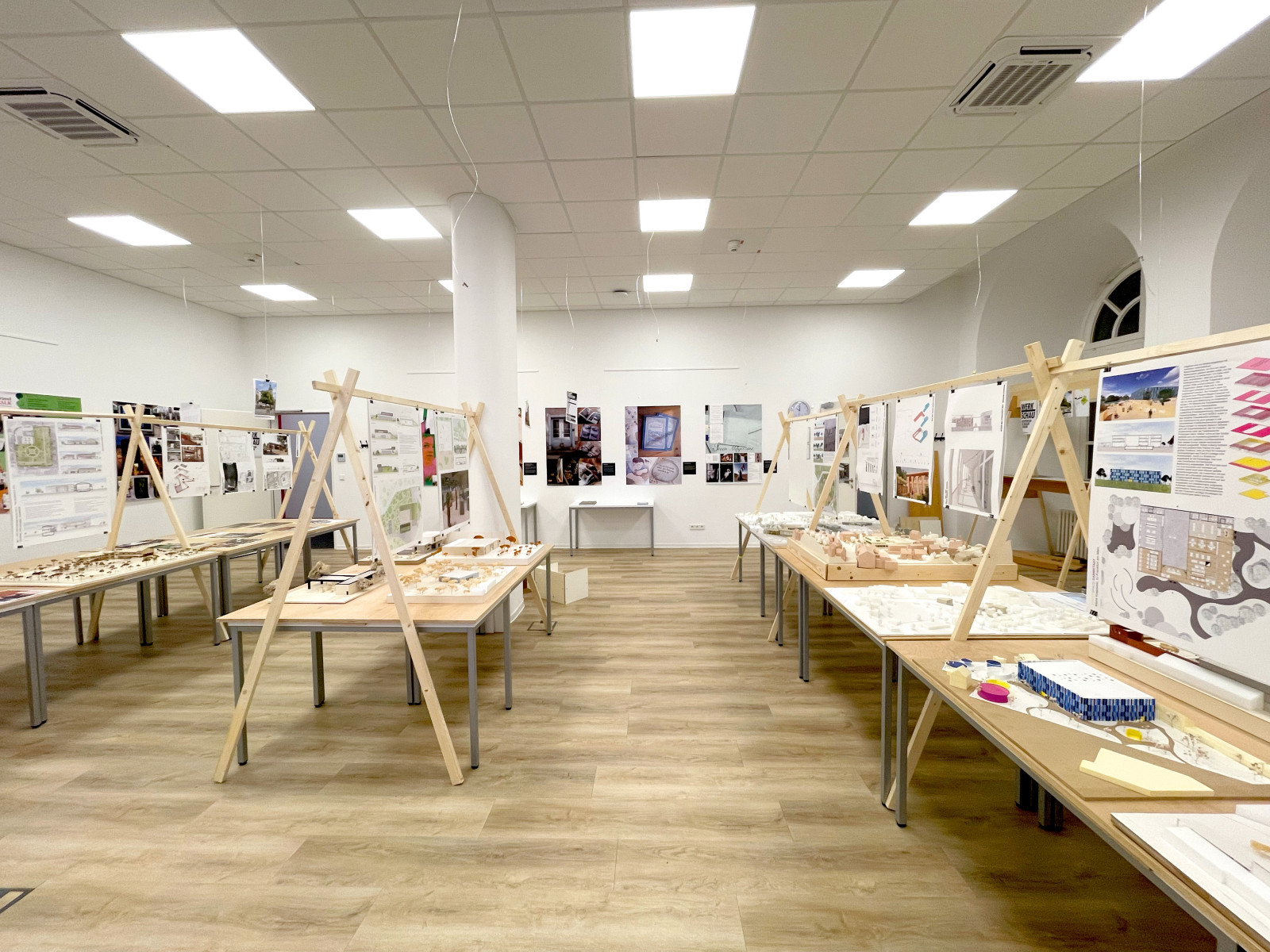
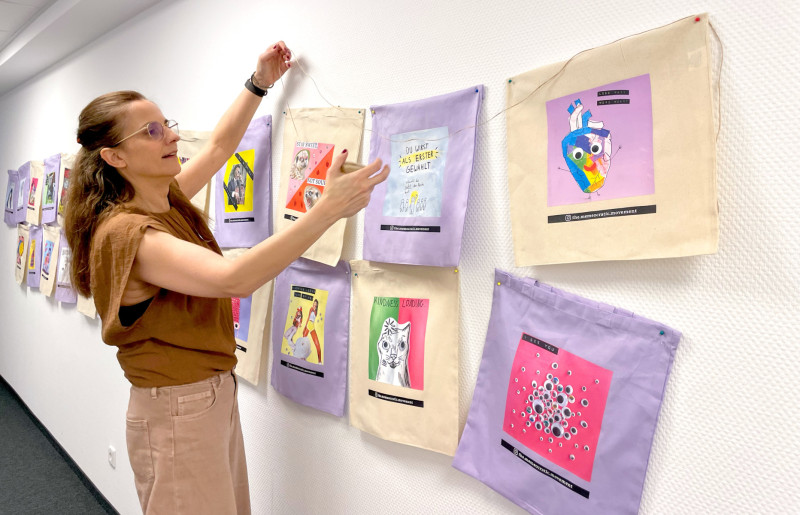
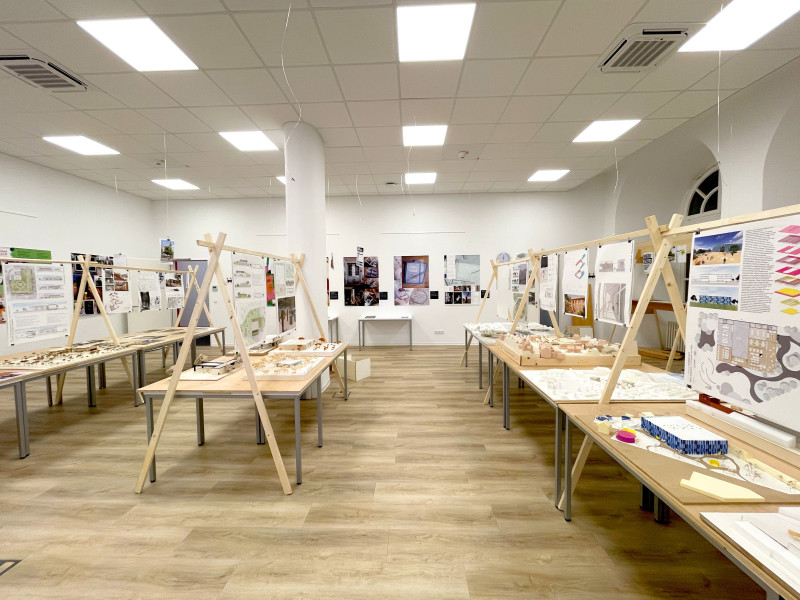
The Design Democracy Camp combined discussion, design, and public presentation. Ideas were developed in workshops and labs, discussed in panels, and made visible through interventions, prototypes, and a public exhibition.
The potential of this approach became particularly evident in the numerous encounters with passersby and visitors. The developed works served as conversation starters and opened up spaces for exchange, reflection, and collaborative thinking about social issues. The public final exhibition demonstrated the great interest in such formats and the strong desire of many people to participate, contribute their ideas, and help shape the future.
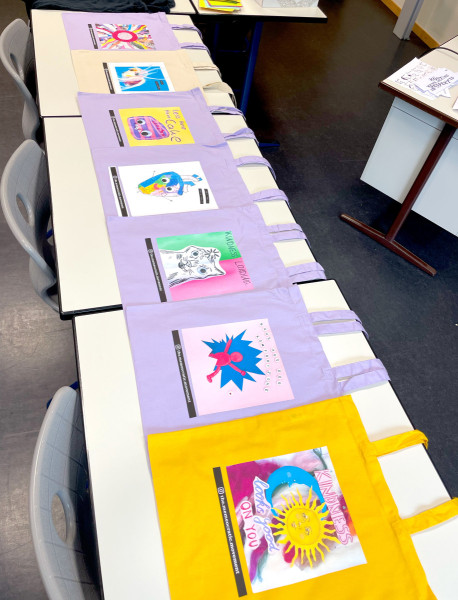
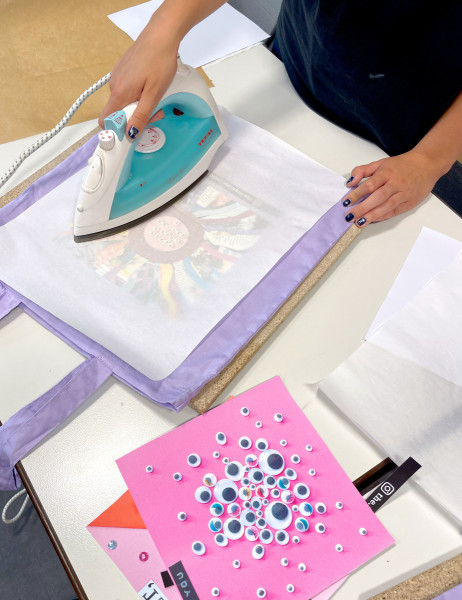
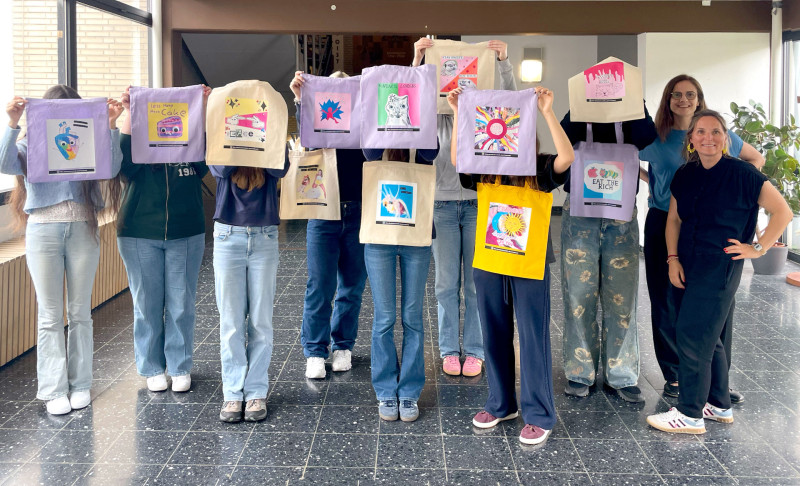
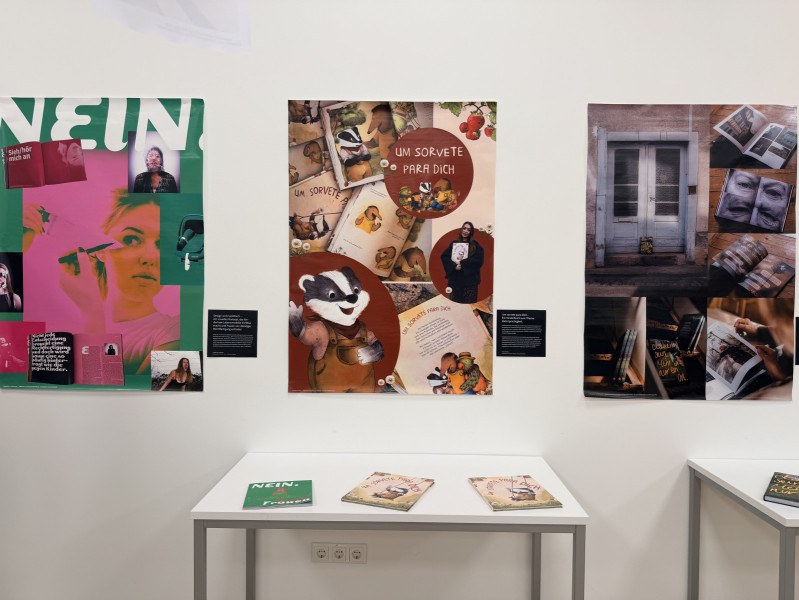
The results of all workshops, including posters, mappings, interventions, installations, the dialogue kiosk and visual statements, were presented in a public exhibition on campus on the last evening.
A key insight from the camp is that thinking arises not only through discussion, but also through collaborative action. Design creates concrete opportunities for exchange, makes different perspectives visible, and opens up spaces in which the future of society can be designed together.
The Design Democracy Camp is therefore not intended as a one-off event. The format is designed as a prototype for new forms of learning, research, and collaboration, and is thus transferable to other cities and contexts. It demonstrates the potential that arises when universities open their doors and become places where the future of society is shaped together.
The camp was supported by approximately 16 professors from the fields of media design, architecture, and social work. The project was led by Prof. Dr Annelie Franke, Prof. Tanja Godlewsky, Prof. Dr-Ing. Bettina-Maria Müller, and Prof. Holger Ziemann. Participation was free of charge.
Background: World Design Capital 2026
The World Design Organisation awards the title "World Design Capital" every two years to a city or region that uses design specifically for social, environmental, and economic development. In 2026, the Frankfurt Rhine-Main region will hold this title under the motto "Design for Democracy — Atmospheres for a better life".
With over 120,000 students, IU International University of Applied Sciences (IU) is the largest university in Germany. The private, state-recognised educational institution, based in Erfurt, began teaching in 2000 and now has 24 campuses as well as a virtual campus. IU stands for maximum flexibility in study: whether through dual study, distance learning or on campus – students from over 160 nations tailor their educational path to suit their individual circumstances. With more than 200 degree programmes at bachelor’s, master’s and MBA level, IU imparts practical skills. Innovative learning concepts foster targeted, future-proof skills for an increasingly AI-driven world of work. A modern, digitally supported learning environment and the use of artificial intelligence enable effective, personalised learning. As a pioneer in this field, IU has developed its own digital learning companion, ‘Syntea’, which has been in use since 2023. A network of over 15,000 companies – including Motel One, Vodafone, AWO and Deutsche Bahn – makes IU a strong partner in the training of skilled workers and consistently links academic teaching with practical experience. Further information at: iu.org
Contact

|
IU International University of Applied Sciences Press Department |