
IU International University of Applied Sciences awards special prize for AI at Jugend forscht
IU International University and Jugend forscht will present a special AI prize to up-and-coming talent at the national competition, which will take place from 28 to 31 May 2026 in Herzogenaurach.
- IU and Jugend forscht to award a special AI prize to up-and-coming talent at the national competition in Herzogenaurach from 28 to 31 May 2026
- 16 AI projects honoured at regional competitions
- Winners developed, among other things, an AI language model to assist with learning difficulties (Magnus Schlinsog, aged 18) and to identify fake news (Elena Reinhold, aged 18, and Fiona Feike, aged 17)
Erfurt, 7 May 2026. In 2026, IU International University of Applied Sciences will sponsor the “Artificial Intelligence Special Prize” at the prestigious Jugend forscht competition for school pupils and young people, which will be awarded for the first time this year. With this special prize, the university is establishing an award for outstanding projects in the field of artificial intelligence. In the regional competitions of Jugend forscht, 16 projects have already been awarded an AI prize. From 28 to 31 May 2026, the regional winners, including the recipients of the “Artificial Intelligence” Special Prize, will take part in the 61st national final at Schaeffler AG in Herzogenaurach.
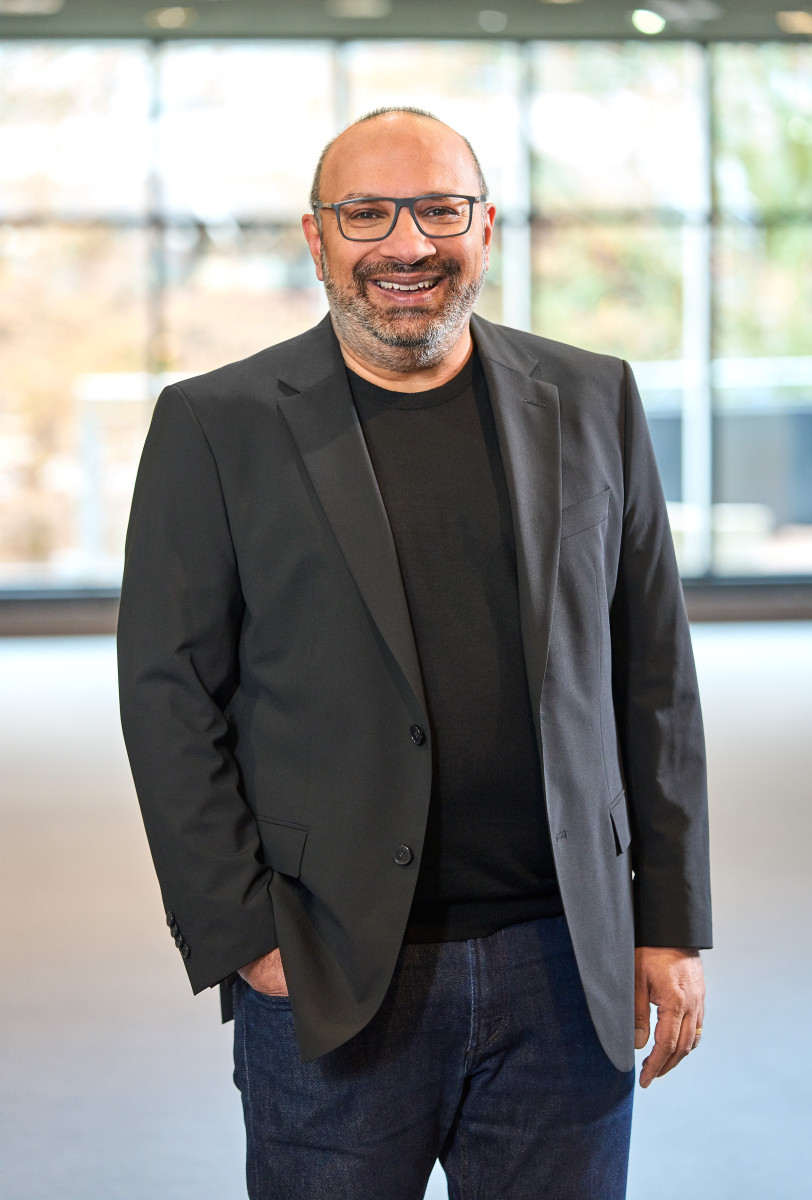
“Young talents who are exploring the positive and responsible use of artificial intelligence should be given special support. They represent the future for Germany as a centre of research and innovation,” says Dr Kamal Bhattacharya, Vice-Rector for Research and Transfer and Professor of Computer Science at IU, and its patron for the AI Special Prize at Jugend forscht. “We at IU are delighted to be making a contribution to this by launching a special AI prize in collaboration with Germany’s best-known competition for young researchers.”
IU sees itself as a pioneer in integrating artificial intelligence into its courses and teaching. Since 2023, IU has been using the AI-powered learning companion Syntea, which supports over 90,000 distance learners and trains them in the professional use of AI. With the Job Readiness Framework , IU has also recently created a framework for teaching that specifically prepares students for an AI-driven job market.
Award-winning AI projects that add value to research and society
By establishing the special AI prizes at Jugend forscht, the IU is specifically supporting young talents who view AI as a key interdisciplinary skill in their projects and who make a contribution to society. Sixteen projects from the fields of technology, mathematics/computer science, earth and spatial sciences, the world of work, biology and chemistry have already met these criteria in the regional competitions.
One example is the “Jacob” project by Magnus Schlinsog (18) from Humboldt-Gymnasium Potsdam. He developed an AI language model that masters the rules of “easy language”, thereby making it easier for people with learning difficulties to access AI applications. The project is a powerful example of digital inclusion and education for all, key priorities for the IU. Magnus was awarded first prize in the mathematics/computer science category in Brandenburg, as well as a special prize for artificial intelligence.
Elena Reinhold (18) and Fiona Feike (17) from Eichsfeld Gymnasium in Duderstadt carried out research as part of the project: “Real, AI or Fake? Artificial Intelligence and its Role in Fake News,” looking at how well people can distinguish between genuine news, AI-generated texts and fake news. This is a topic that has also recently been researched at the IU: according to a representative IU study from 2025, 90 per cent of respondents now regard fake news as a serious threat to democracy and freedom. Developing media literacy and dealing effectively with disinformation are therefore key priorities for the IU. Elena and Fiona were awarded second prize in the ‘Working World’ category in Lower Saxony, the special prize for Artificial Intelligence and the special prize from the Lower Saxony Ministry of Education and Cultural Affairs. These awards underscore the project’s high social relevance.
“On behalf of the IU, I would like to offer my warmest congratulations to all the regional winners of Jugend forscht! It is impressive to see the depth of specialist knowledge with which young people are already exploring AI today, and how their projects have demonstrated that their research can solve scientific, social and economic problems,” says Dr Bhattacharya. “I am eager to see which of the numerous AI-related projects will take home the national title – the range is vast. I wish all participants every success!”
In total, over 11,000 young researchers have registered for Jugend forscht 2026 with more than 6,000 projects. The IU is awarding a special AI prize of 1,000 euros at the national final, for which all state winners have qualified in their respective fields.
Overview: AI Special Prize winners in the regional rounds of the Jugend forscht 2026 competition
| Federal state | Project | Participant(s) | Subject area |
| Baden-Württemberg | SortiMate - Automated waste separation with AI | Justin Faltus | Engineering |
| Bavaria | Peptide doppelgangers: Limits of AlphaFold3 in predicting mirror-image drugs | Viyona Singh; Aarav Singh | Biology |
| Berlin | MultiMol: Perspective-contextualized neural networks for molecular ensembles | Nora Baiersdorf | Mathematics/Computer Science |
| Brandenburg | Jacob - AI in Easy Language | Magnus Schlinsog | Mathematics/Computer Science |
| Bremen | Our schoolyard - but inclusive | Lucy Wedemeyer; Lina Pohlmann | World of Work |
| Hamburg | AI-based molecule generation with experimental validation of organic semiconductors | Luka Ugrekhelidze; Panagiotis Mitakoudis | Chemistry |
| Hesse | ACOLOC - Advanced Climate Ocean simulation using deep learning for ocean currents | Lilly Schwarz | Earth and Space Sciences |
| Mecklenburg-Western Pomerania | Autonomous flight with machine learning and LiDAR | Georg Prudlo; Felix Kröger | Engineering |
| Lower Saxony | Real, AI or lie? Artificial intelligence and its role in fake news | Elena Reinhold; Fiona Feike | World of Work |
| North Rhine-Westphalia | Visioncap | Carlos Moreno Eidam; Ramón Gómez Flores; Alexander Echave Bär | Engineering |
| Rhineland-Palatinate | SPOON - System for Personal Optimized Organisation and Nutrition | Johanna Kellermann; Jonathan Westphal | World of Work |
| Saarland | Simulation of neural models with small neural networks | Kiru Speicher | Mathematics/Computer Science |
| Saxony | GROVER-fly: A language model for the genome of Drosophila melanogaster | Kenny Löffler | Mathematics/Computer Science |
| Saxony-Anhalt | LRO algorithm for image classification | Daniel Liko | Mathematics/Computer Science |
| Schleswig-Holstein | LaserVision - Optical UAV detection and marking | Matti Lüth; Mina Wilken | Engineering |
| Thuringia | Faster, better, more efficient - developing a custom file explorer | Nino Fischer; Jessica Nolle; Magnus Schultheis | Mathematics/Computer Science |
About the study
The study "Fact or Fake? Media Literacy in Germany" by IU International University of Applied Sciences (IU) examines people's trust in the media, the role of social media, and fake news and deepfakes and their impact. For the IU study, 1,999 people in Germany aged 16 to 65 were surveyed, representative of their age and gender. The survey took place from 14 to 25 April 2025.
Complete study at: https://www.iu.de/en/research/studies/media-literacy/
About the foundation Jugend forscht e. V.
Jugend forscht is Germany’s best-known competition for young talent and a joint initiative of the federal government, the federal states, stern magazine, industry, academia and schools. Every year, Jugend forscht organises 130 competitions across Germany to inspire young people to take an interest in mathematics, computer science, natural sciences and technology (MINT), to identify talent at an early stage and to provide targeted support. Jugend forscht is aimed at children and young people up to the age of 21. Participants choose their own research question, which they tackle using scientific, technical or mathematical methods. Cash and non-cash prizes worth over one million euros are awarded in each round of the competition. The Jugend forscht network, with around 250 partners, is the largest public-private partnership of its kind in Germany. More than 5,000 teachers support Jugend forscht on a voluntary basis as project supervisors and competition organisers, whilst over 3,000 subject teachers, university lecturers and experts from industry serve on the judging panels.
For more information on Jugend forscht, visit: Jugend-forscht.de
With over 120,000 students, IU International University of Applied Sciences (IU) is the largest university in Germany. The private, state-recognised educational institution, based in Erfurt, began teaching in 2000 and now has 24 campuses as well as a virtual campus. IU stands for maximum flexibility in study: whether through dual study, distance learning or on campus – students from over 160 nations tailor their educational path to suit their individual circumstances. With more than 200 degree programmes at bachelor’s, master’s and MBA level, IU imparts practical skills. Innovative learning concepts foster targeted, future-proof skills for an increasingly AI-driven world of work. A modern, digitally supported learning environment and the use of artificial intelligence enable effective, personalised learning. As a pioneer in this field, IU has developed its own digital learning companion, ‘Syntea’, which has been in use since 2023. A network of over 15,000 companies – including Motel One, Vodafone, AWO and Deutsche Bahn – makes IU a strong partner in the training of skilled workers and consistently links academic teaching with practical experience. Further information at: iu.org
Contact

|
IU International University of Applied Sciences Press Department |