
IU International University of Applied Sciences has integrated an AI competency framework into its curriculum
As Germany’s first university, IU adopts a systematic approach to making AI competencies measurable
IU is first German university to integrate systematic AI competency model. Job Readiness Framework makes AI fluency measurable. International study confirms.
- Five-level AI competency framework embedded in the curriculum: from basic usage to strategic collaboration with AI
- International survey confirms IU's approach: 61.5 per cent of all respondents rate the model as more effective than comparable frameworks, i.e. WEF
- IU students have been participating in initial project courses since April – comprehensive introduction across all courses planned by the end of 2026
Erfurt, 16 April 2026. IU International University of Applied Sciences is the first university in Germany to systematically and measurably integrate a self-developed competency model for the AI-driven world of work into its curriculum. This model is based on the "Job Readiness Framework", which specifically prepares students for the professional use of AI and structures their competency development in five measurable levels. Thus, graduates can demonstrate their ability to confidently and purposefully deploy AI in work contexts. According to an international comparative study¹ by IU with 4,063 participants, 55.8 per cent of recruiters prefer this type of qualification over traditional skills tests.
Following an initial pilot phase beginning in April 2026, the Job Readiness Framework will systematically be offered across all IU disciplines and degree programmes, in both distance learning and dual study formats. It is therefore intended for students from all disciplines, ranging from IT and social work to design. While the existing subject content will remain unchanged, it will be systematically complemented by the application of AI, the development of practical competencies, and practice-oriented decision-making formats.
The holistic framework specifically strengthens human capabilities such as judgement and critical and creative thinking. Humans excel in these areas over AI, and it is precisely for this reason that these competencies are crucial for meaningfully steering AI in professional contexts. In an increasingly AI-driven global labour market, they are the key to success.
Framework aims to close AI competency gap
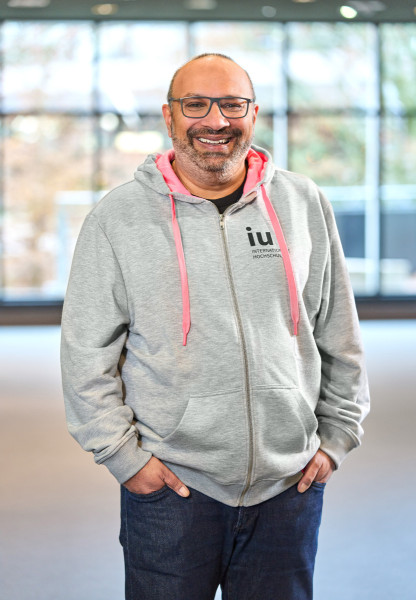
"Technology is developing faster than people can be upskilled," says AI expert Prof Dr Kamal Bhattacharya, Vice-Rector Research and Transfer at IU and professor for computer science.
"Only months often separate new generations of powerful AI models, whilst university curricula develop over years. This creates a growing gap between technological development and human competency – this is what we want to close," Bhattacharya continues.
The need for action is clear: in its 'Future of Jobs Report', the World Economic Forum (WEF) identifies skills gaps as the greatest barrier to business transformation (63 per cent of employers worldwide). Simultaneously, the WEF projects that 39 per cent of all core skills will need to be newly acquired by 2030.
With the Job Readiness Framework, students learn, amongst other things:
- To structure problems analytically
- To develop creative solutions
- To critically evaluate AI results
- To decide which tasks can be delegated to AI – and which cannot
The aim of the approach is to develop students from mere users to active designers in human-AI collaboration. They learn not only to use AI as a tool but to integrate it as a partner in work processes.
International survey confirms relevance
To validate the developed framework, IU conducted an international survey¹. Between 2 and 16 December 2025, a total of 4,063 working individuals – including 702 recruiters – aged 18 and above were surveyed in Germany, Canada, the USA, the United Kingdom and France.
Companies see clear benefits particularly in recruitment: 55.8 per cent of recruiters surveyed indicate they prefer AI-related competency credentials over traditional skills tests.
Overall, the approach is widely approved of: 61.5 per cent of respondents rate the IU framework as more effective than comparable models from other organisations, and 79.9 per cent consider it to be substantively complete.
The approach of defining competencies not as long lists of individual skills, but as "Professional Modes", is particularly well-received. IU understands these to be overarching ways of thinking and working that are applied in different professional situations and systematically developed.
The future competencies most frequently cited by respondents are creative thinking (56.6 per cent), analytical thinking (53.6 per cent) and empathy and active listening (46.9 per cent).
These can be directly mapped to the four "Professional Modes" of the Job Readiness Framework: Creative Problem Solving, Continuous Learning, Strategic Collaboration with humans and AI, and Responsible Decision-Making.
Measurable competency levels
The Job Readiness Framework structures these capabilities in a five-level competency model (from level 0 to level 4).
The framework's objective is for all IU students to reach the maximum level 4 by graduation.
"Every student leaving a university should be able to demonstrate a traceable assessment of their own AI competencies," demands Dr Sven Schütt, CEO of IU.
A recent IU survey² shows that IU students are already better equipped with AI skills today than students at other universities: 83 per cent of IU students and graduates agree with the statement that they have learnt the meaningful deployment of AI tools at IU. By comparison: at other private universities, the figure is 70 per cent, and at state universities it is 67 per cent.
"The results show: our efforts are working. With our AI-powered learning companion Syntea, students have been training reflective engagement with AI for years," emphasises Schütt.
Pilot phase already launched
The practical implementation of the Job Readiness Framework has already begun. Since early April, initial project courses have been running on the IU distance learning platform. These include 'Social Entrepreneurship' and 'Customer Journey', each with over 100 students, 'Business Start-up', with over 400 students, and 'Business Model Development', with over 50 students.
In some of these pilot courses, AI-assisted research forms part of the assessment: students compare different AI models, critically analyse their results and justify their selection, thereby learning when and how AI can be meaningfully deployed.
By the end of the year, the Job Readiness Framework will be available for courses across all degree programmes. Its modular design means it can be adopted incrementally by other universities and organisations without the need to rebuild the curriculum, providing a practice-oriented framework for systematic preparation for an AI-driven world of work.
Press enquiries for interviews
For interviews and background discussions, Dr Sven Schütt, CEO of IU International University of Applied Sciences, and Prof Dr Kamal Bhattacharya, Vice-Rector Research and Transfer and Transfer at IU, are available.
Contact:
Press Office – IU International University of Applied Sciences
Email: presse@iu.org
Phone: +49 (0)173/7426 113
1 The results are based on an international comparative study conducted by IU International University of Applied Sciences. Between 2 December and 16 December 2025, a total of 4,063 individuals aged 18 and above were surveyed across five countries: Germany (n = 850), the United States (n = 802), the United Kingdom (n = 811), France (n = 800), and Canada (n = 800). Participants included recruiters, executives, education professionals, and employees in general. All respondents were either employed or self-employed at the time of the survey. Data was collected via an international online panel (Cint) using a standardised online questionnaire.
2 The “University Experience Study 2026” was conducted by Kantar Profiles between 27 August and 20 October 2025. A total of 4,004 students and graduates from public and private universities were surveyed, including 1,597 alumni, with the sample being representative in terms of age and gender. The target group comprised alumni from the past five years, current students, and dropouts. The study was commissioned by IU International University of Applied Sciences and conducted independently by Kantar Profiles in accordance with its internal quality standards.
Methodology: To ensure the highest possible comparability between universities, three different comparison approaches were used:
(a) “Public universities vs. private universities (excluding IU) vs. IU”,
(b) “IU vs. benchmark”, and
(c) “Public vs. private universities”.
In (a), IU is compared separately with public and private universities. Individuals studying or having studied at IU are considered as a distinct group and are not included within the category of private universities.
In (b), public and private universities are grouped into a single cohort and compared against IU students and alumni.
In (c), all public and private universities are grouped together in each category (including IU).

With over 120,000 students, IU International University of Applied Sciences (IU) is the largest university in Germany. The private, state-recognised educational institution, based in Erfurt, began teaching in 2000 and now has 24 campuses as well as a virtual campus. IU stands for maximum flexibility in study: whether through dual study, distance learning or on campus – students from over 160 nations tailor their educational path to suit their individual circumstances. With more than 200 degree programmes at bachelor’s, master’s and MBA level, IU imparts practical skills. Innovative learning concepts foster targeted, future-proof skills for an increasingly AI-driven world of work. A modern, digitally supported learning environment and the use of artificial intelligence enable effective, personalised learning. As a pioneer in this field, IU has developed its own digital learning companion, ‘Syntea’, which has been in use since 2023. A network of over 15,000 companies – including Motel One, Vodafone, AWO and Deutsche Bahn – makes IU a strong partner in the training of skilled workers and consistently links academic teaching with practical experience. Further information at: iu.org
Contact

|
IU International University of Applied Sciences Press Department |