
IU supports more than 650 first-generation students with around two million euros
Beyond financial support, IU relies on personal study guidance and flexible study models – research findings back this approach
More than 650 first-generation students have received financial support of around two million euros through IU’s “FirstGen Scholarship” since February 2026.
Erfurt, Germany, 24 November 2026. People from families with no university experience are less likely to enter higher education in Germany, even with comparable school grades. This is shown by the Bildungstrichter 2024 (education funnel) of the German Centre for Higher Education Research and Science Studies (DZHW). According to IU’s own surveys, around 70 per cent of first-year students at IU belong to the first generation in their family to study1. Nationwide, the share at German universities is around 45 per cent, according to the DZHW.
Since February 2026, IU International University of Applied Sciences has been supporting students who are the first in their family to take up a degree with its own ‘FirstGen Scholarship’. This year, more than 650 people have already received financial support, which to date corresponds to a funding volume of around two million euros2.
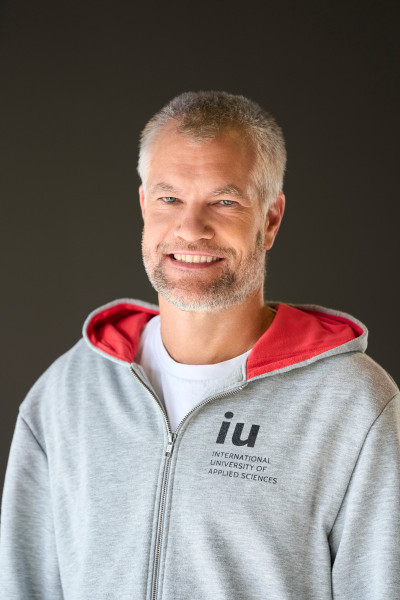
“Whether someone studies should not depend on whether their parents have already attended a university. With our funding, we want to help reduce this inequality and open the path to a degree for more people”, says Dr Sven Schütt, CEO of IU International University of Applied Sciences.
Personal guidance makes the path into higher education easier
IU is also investigating, together with Otto von Guericke University Magdeburg, how the chances of studying can be improved for people without an academic family background. The joint project ‘FiPHo – First-Generation Students as a Target Group of Private Universities – Forms and Conditions of Organisational Support’, funded by the Federal Ministry of Research, Technology and Space, is led on IU’s side by Prof. Dr Stefanie Kessler and Prof. Dr Karsten König. Both are professors of Social Work at IU.
First results of the qualitative research project show that personal contact persons can make it easier to find one’s bearings at the start of studies. What support students need depends strongly on their individual life situation.
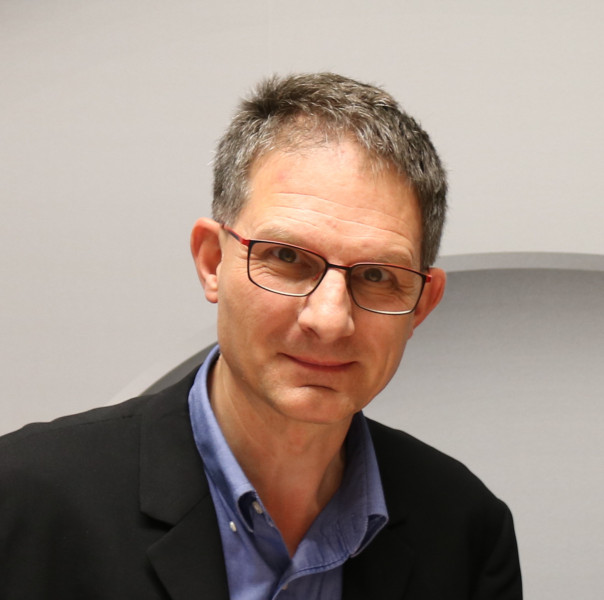
So-called guide persons, who provide orientation and support decisions, are particularly helpful: "These can be teachers, academic advisors or career counsellors, for example – especially when people have little contact with higher education in their individual biographies", says Prof. Dr Karsten König, professor at IU and member of the FiPHo research team.
The research project also shows that students without an academic family background need different forms of support. While some value fixed processes and structures, others prefer to organise their studies as independently as possible.
“Not every person without an academic family background needs the same support. What matters is to personally accompany students, especially at the start, and to respond to their individual life situation. It is therefore beneficial if academic advising addresses all students and builds on their previous educational experiences. Possible challenges arising from employment and family obligations should also definitely be taken into account in advising”, says Prof. Dr Stefanie Kessler, who has overall leadership of the FiPHo research project.
Seven out of ten first-generation students work alongside their studies
IU’s own surveys also show how different the life situations of first-generation students are. Around 70 per cent of first-year students from the first generation of students work alongside their studies. Of these, 57 per cent are employed full-time3. Many already bring professional experience with them at the start of their studies: 73 per cent have completed vocational training4, and around three-quarters study a subject that fits their profession5.
Family obligations also shape everyday student life. More than a quarter of respondents have children living in their household6, 37 per cent of whom are of kindergarten age or younger7.
The results show why study programmes with different time and organisational requirements are relevant for this target group. To this end, IU offers distance learning programmes, part-time options and dual study programmes, among others. New students also receive personal study guidance.
“Many of our students combine their studies with a job or have family obligations. That is why they need study conditions that fit into their everyday lives – not the other way around. Only in this way can we open educational pathways for as many people as possible”, says Schütt.
About the FiPHo research project
FiPHo (‘First-Generation Students as a Target Group of Private Universities – Forms and Conditions of Organisational Support’) is a joint project of IU International University of Applied Sciences and Otto von Guericke University Magdeburg, funded by the Federal Ministry of Research, Technology and Space. The qualitative research makes typical experiences and recurring patterns visible and provides important insights into which conditions influence access to higher education and the course of studies. For this purpose, group discussions were held in early 2024, and advising sessions and information events were observed and documented through participant observation. No conclusions can be drawn from this about how frequent these patterns are or about graduation rates.
Prof Dr Stefanie Kessler (IU Hannover) is the overall head of the FiPHo research project. She is a professor of Social Work and works on organisational support and advising practices. Prof Dr Karsten König (IU Dresden) leads the subproject on the perspective of first-generation students within the FiPHo research project and is a professor of Social Work. His research focuses on educational equity, higher education development and educational pathways. Both are available for interviews, background conversations and expert statements.
Further information about FiPHo.
About the Study Start Survey
The Study Start Survey has been sent regularly since 2024 to all students starting a dual or distance learning programme at IU International University of Applied Sciences. Besides demographic characteristics, it asks, for example, about motivation for studying, fields of study and professional backgrounds. Up to and including 6 November 2026, a total of n = 4,228 first-year students took part in and completed the survey, including n = 2,924 students without an academic family background.
[1] IU International University of Applied Sciences study start survey, first-year students in distance learning and dual study programs, survey period 2024 to 2026, as of: November 6, 2026, n = 4,228
[2] As of October 2026
[3] IU Study Start Survey, first-year students in distance learning — question asked in distance learning only, survey period 2024 to 2026, as of: November 6, 2026, n = 2,325
[4] IU Study Start Survey, first-year students in distance learning and dual study programs, survey period 2024 to 2026, as of: November 6, 2026, n = 2,925
[5] IU Study Start Survey, first-year students in distance learning — question asked in distance learning only, survey period 2024 to 2026, as of: November 6, 2026, n = 2,325
[6] IU Study Start Surveyy, first-year students in distance learning and dual study programs, survey period 2024 to 2026, as of: November 6, 2026, n = 2,925
[7] IU Study Start Survey, first-year students in distance learning and dual study programs, survey period 2024 to 2026, as of: November 6, 2026, n = 826

With over 120,000 students, IU International University of Applied Sciences (IU) is the largest university in Germany. The private, state-recognised educational institution, based in Erfurt, began teaching in 2000 and now has 24 campuses as well as a virtual campus. IU stands for maximum flexibility in study: whether through dual study, distance learning or on campus – students from over 160 nations tailor their educational path to suit their individual circumstances. With more than 200 degree programmes at bachelor’s, master’s and MBA level, IU imparts practical skills. Innovative learning concepts foster targeted, future-proof skills for an increasingly AI-driven world of work. A modern, digitally supported learning environment and the use of artificial intelligence enable effective, personalised learning. As a pioneer in this field, IU has developed its own digital learning companion, ‘Syntea’, which has been in use since 2023. A network of over 15,000 companies – including Motel One, Vodafone, AWO and Deutsche Bahn – makes IU a strong partner in the training of skilled workers and consistently links academic teaching with practical experience. Further information at: iu.org
Contact

|
IU International University of Applied Sciences Press Department |