
What you get for free
Information on study content & electives
Information on career prospects
Information on financing options

"Applicants are often completely unaware of the use of AI in the application process. In addition, the area of artificial intelligence in recruiting evokes a skeptical response from some respondents, because many of them are unaware of where in the application process AI is even used. Those who are aware of having experienced AI in the past are generally more open to its use. Therefore, it is advisable to provide transparency in the use of AI technologies in the application process. Being open about the use of AI helps to build up trust and break down reservations about it in the application process."
Prof Dr Katharina-Maria Rehfeld
Professor in Human Resource Management at IU International University of Applied Sciences
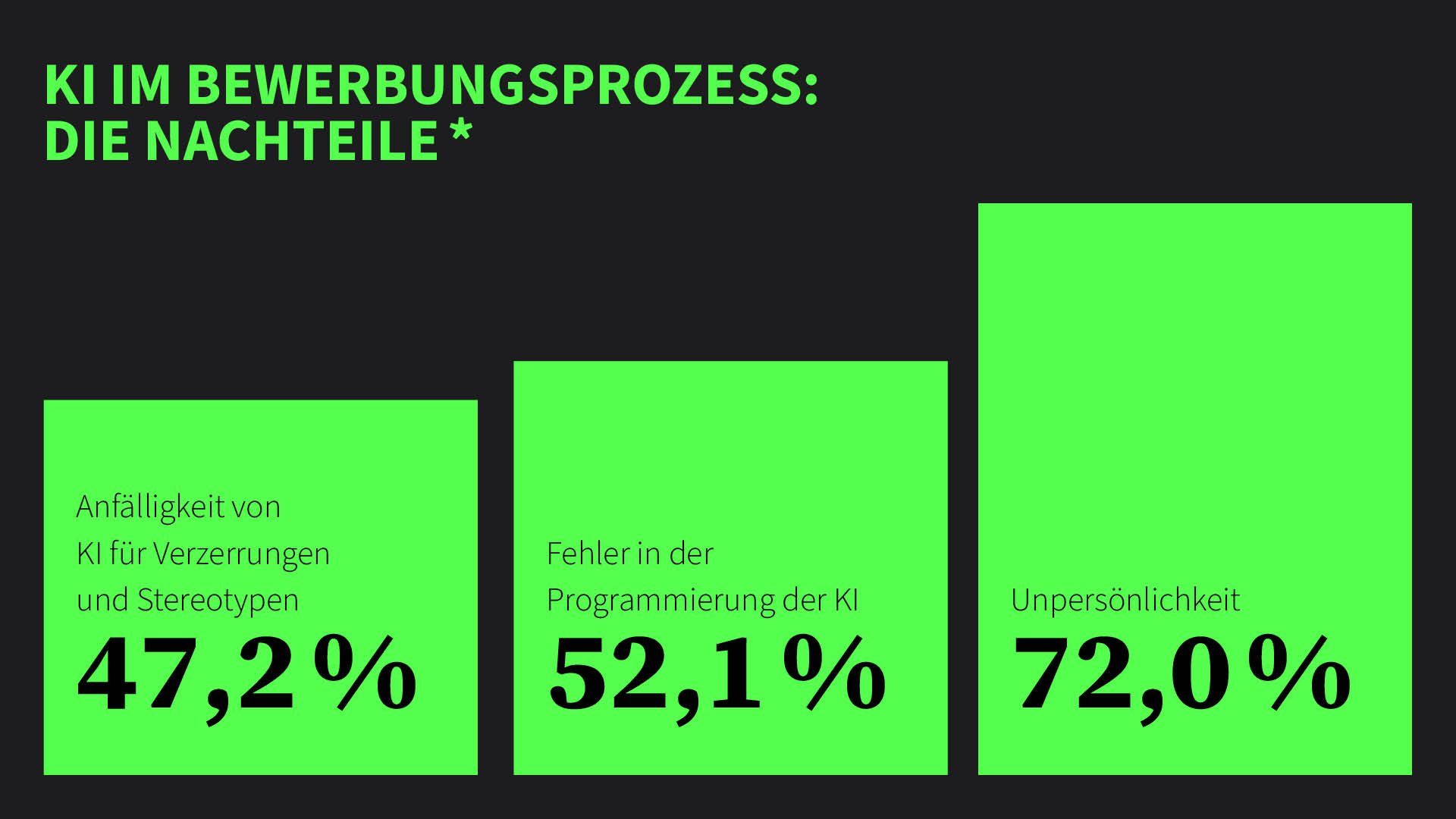
Almost two-thirds of respondents have negative associations with AI in recruiting. The IU study details which fears lie behind this - and in which areas potential applicants see the advantages of artificial intelligence. Here are some examples:
The "impersonality" of AI in the application process is seen as its biggest disadvantage by potential applicants, followed by possible errors in programming and susceptibility to bias and stereotypes. The lack of transparency about when and how AI is used in the application process is also seen as a disadvantage by 41.5 percent of respondents.
*Excerpt of responses to the question: „Which disadvantages do you see generally in the use of AI in the application process?“
Source : IU study "AI in recruiting: Emotions, beliefs, expectations."
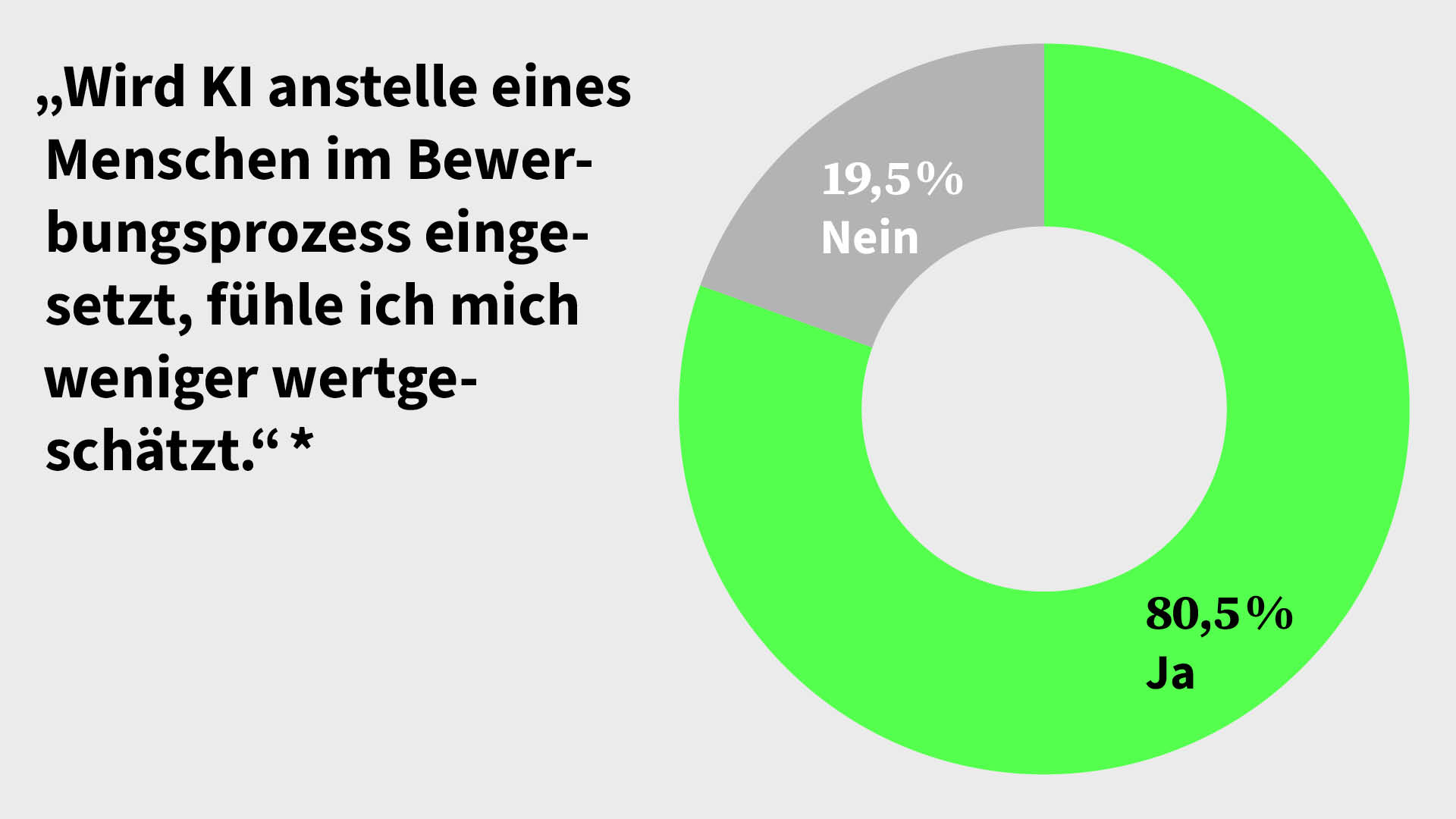
According to the respondents, interpersonal aspects suffer from the use of AI in recruiting, as shown by several findings of the study. Among other things, 80.5 percent of respondents feel less valued when AI is used instead of a human in the application process.
*Excerpt of responses to the question: „To what extent do you agree or disagree with the following statements?“
Source : IU study "AI in recruiting: Emotions, beliefs, expectations."
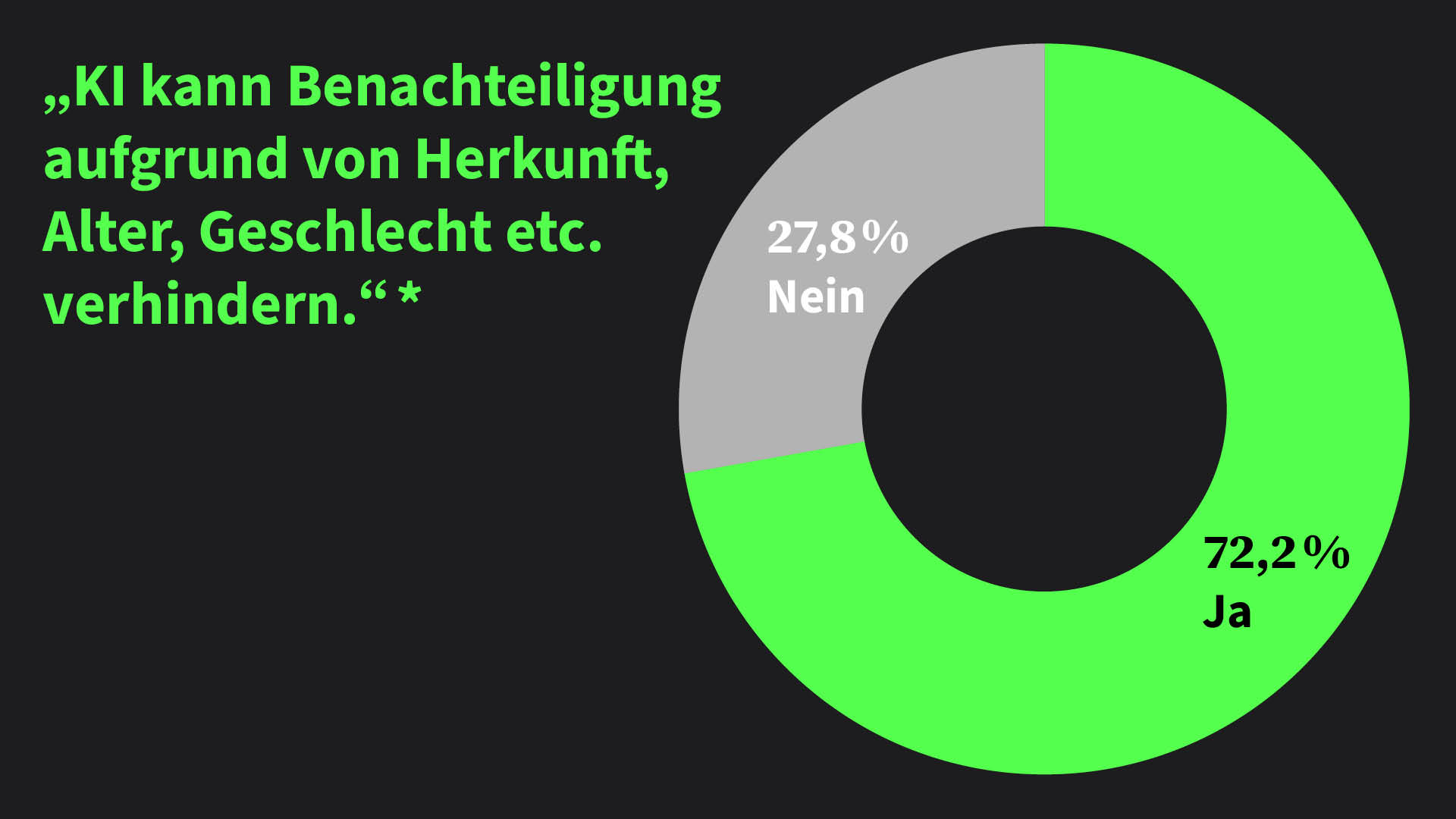
Despite the fears and disadvantages mentioned, the respondents also see opportunities in the use of AI in recruiting: almost three out of four agree with the statement that AI can prevent discrimination, e.g. due to origin, age or gender.
According to the respondents, AI is, on the one hand, susceptible to bias and stereotypes but can also increase equal opportunities. It's all a question of programming, explains IU professor Michaela Moser.
*Excerpt of responses to the question: „To what extent do you agree or disagree with the following statements?“
Source : IU study "AI in recruiting: Emotions, beliefs, expectations."

"Artificial Intelligence can help to avoid discrimination and, therefore, make choosing employees fairer. This assumes that the AI Algorithms have been programmed without prejudice. Because the algorithm specifies how the AI shout work. But artificial intelligence has a crucial advantage over humans when it comes to equality: It thinks in ones and zeroes. Prejudice and subjective judgements are foreign to it, it makes decisions based purely on facts."
Prof Dr Michaela Moser
Professor of Human Resource Management at IU International University of Applied Sciences
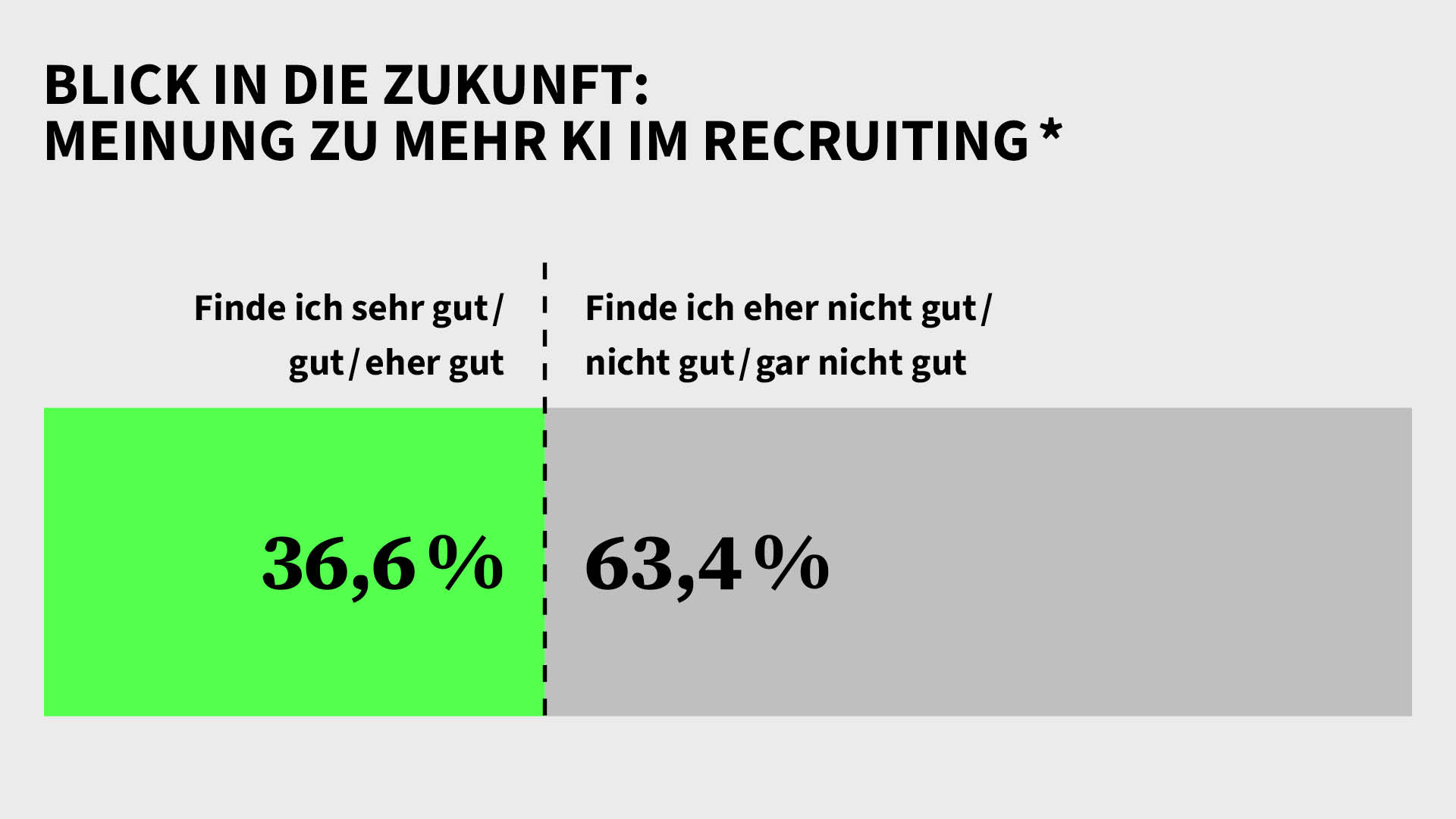
Almost two-thirds of respondents expect the use of artificial intelligence in recruiting to increase. However, only 36.6 percent of them have a positive attitude towards this development.
*Excerpt of responses to the question: „What do you think of this development? (Only respondents who believe that AI will be used more often in future.)
Source : IU study "AI in recruiting: Emotions, beliefs, expectations."
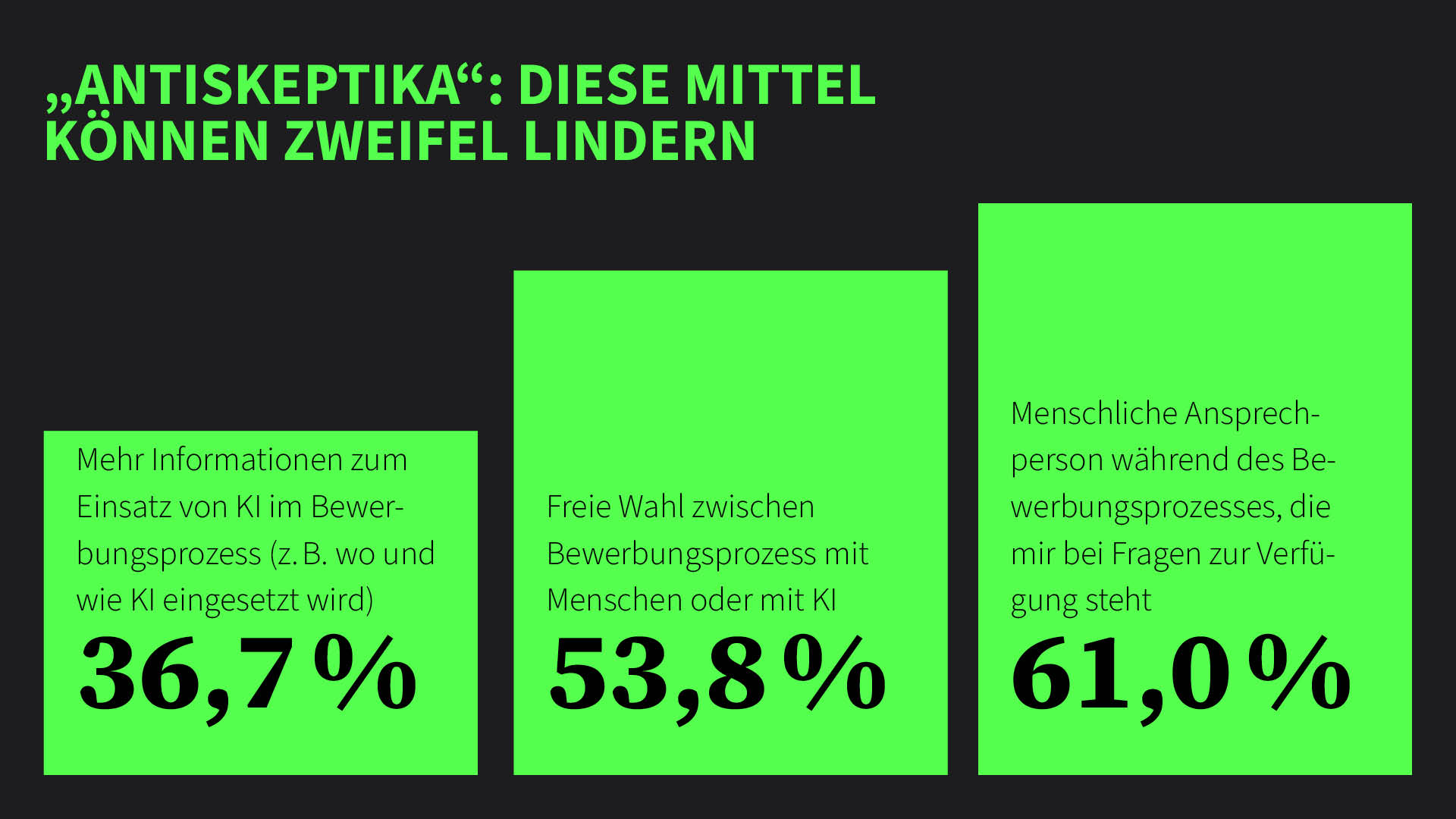
Companies that use AI in recruiting can reduce the scepticism of most applicants, especially if a personal contact person accompanies the application process or if applicants can choose between humans and AI. More transparency can also reduce doubts.
*Excerpt of responses to the question: „Which of the following measures would relieve your doubts about an application process that included AI?“ (Only respondents who believe that AI will be used more often in future and find this development to be quite bad / bad / very bad.)
Source : IU study "AI in recruiting: Emotions, beliefs, expectations."
„Artificial Intelligence is the future, and there is no stopping this development, including in HR management our aim must be to use the opportunities provided by the technology wisely and reduce the risks. This will only work if new technologies are accepted by applicants, which requires explanation and transparency from HR departments.“
Prof Dr Michaela Moser
Professor of Human Resource Management at IU International University of Applied Sciences
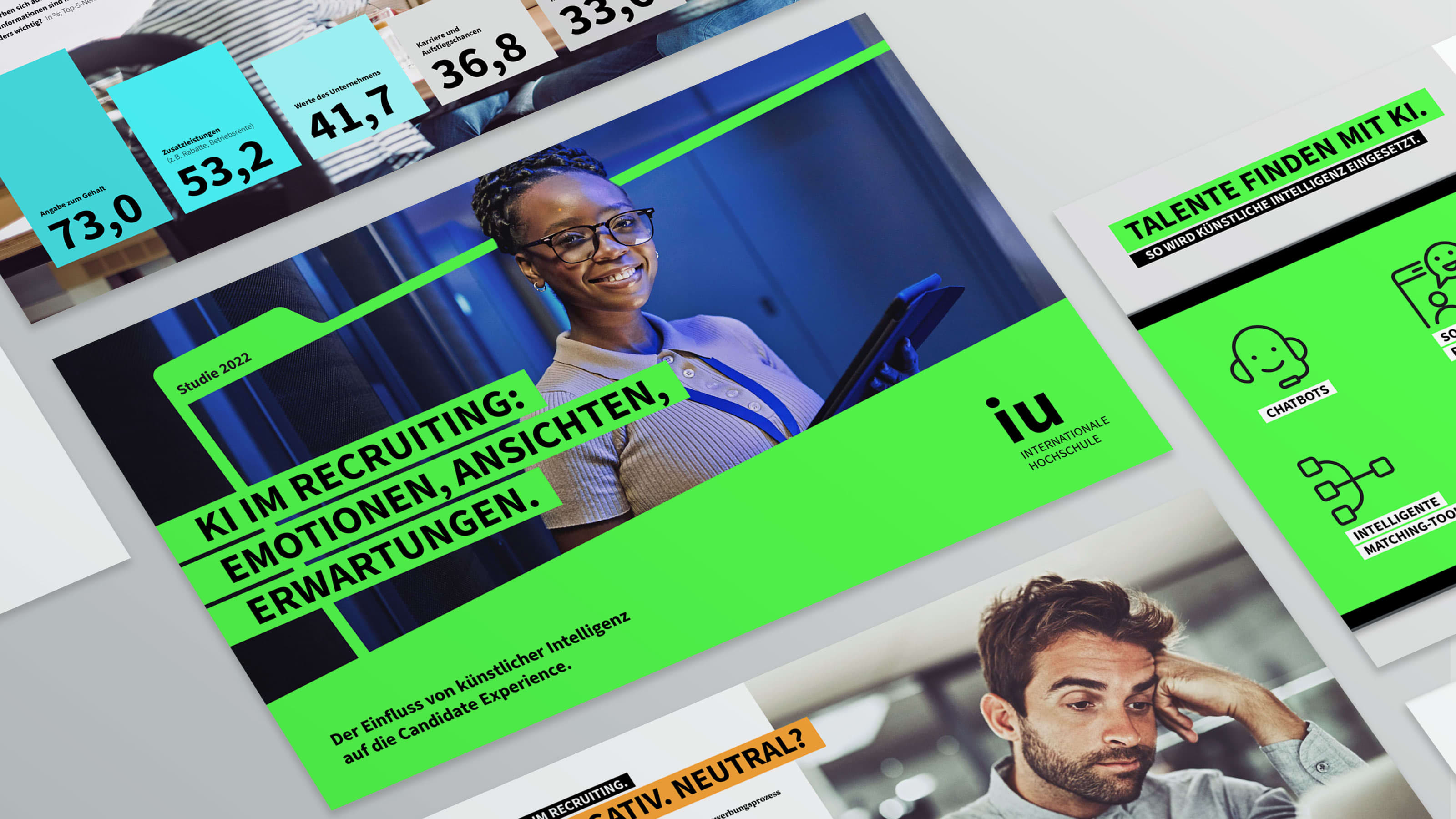
Read all the study results and expert opinions now - in the IU study on AI in recruiting.


